Faculty of Life and Social Sciences, Swinburne University of Technology, Hawthorn, Victoria, Australia.
PLoS One. 2013 Jul 9;8(7):e67893. doi: 10.1371/journal.pone.0067893. Print 2013.
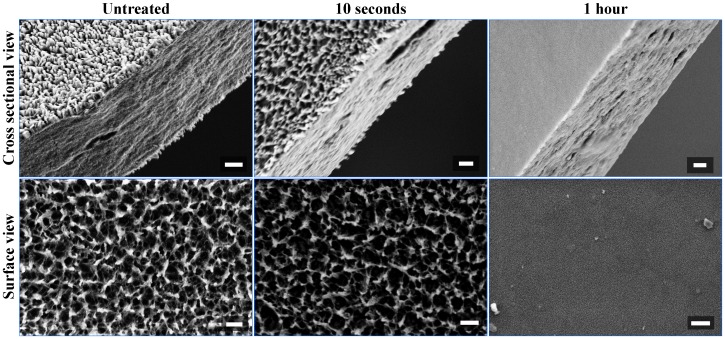
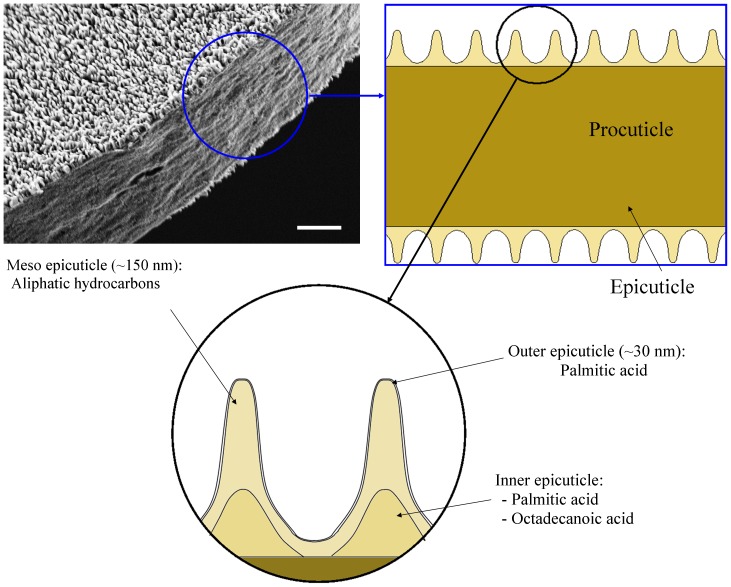
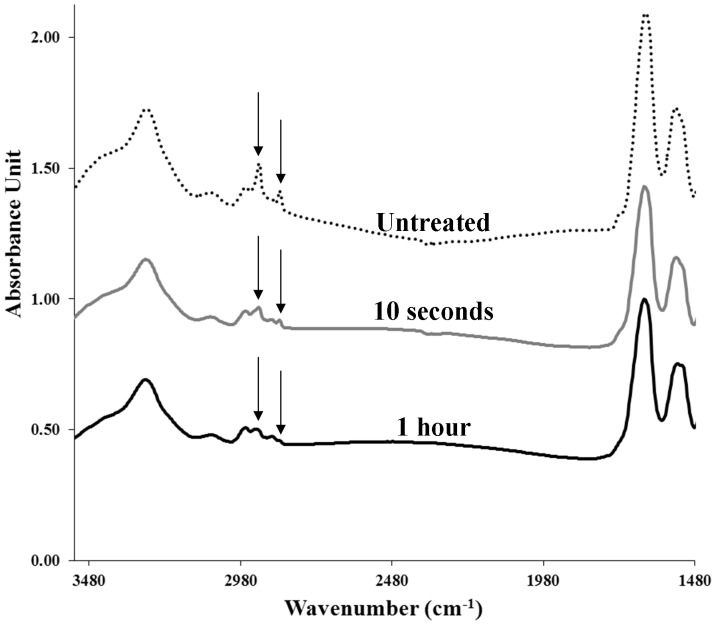
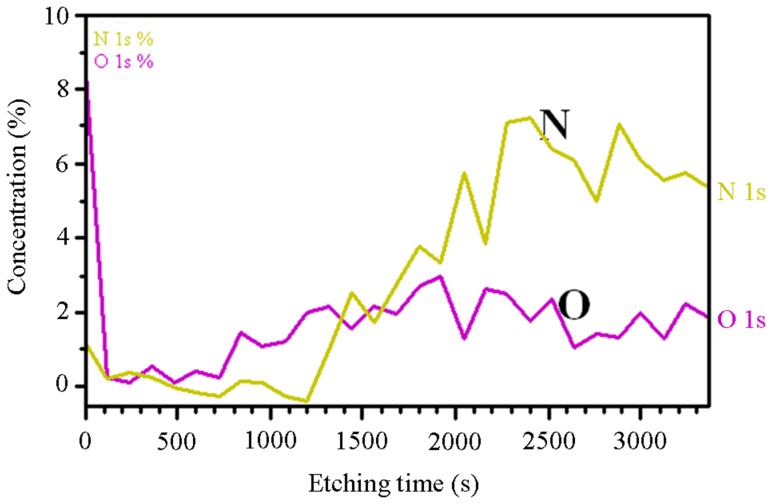
The molecular organization of the epicuticle (the outermost layer) of insect wings is vital in the formation of the nanoscale surface patterns that are responsible for bestowing remarkable functional properties. Using a combination of spectroscopic and chromatographic techniques, including Synchrotron-sourced Fourier-transform infrared microspectroscopy (FTIR), x-ray photoelectron spectroscopy (XPS) depth profiling and gas chromatography-mass spectrometry (GCMS), we have identified the chemical components that constitute the nanoscale structures on the surface of the wings of the dragonfly, Hemianax papuensis. The major components were identified to be fatty acids, predominantly hexadecanoic acid and octadecanoic acid, and n-alkanes with even numbered carbon chains ranging from C14 to C30. The data obtained from XPS depth profiling, in conjunction with that obtained from GCMS analyses, enabled the location of particular classes of compounds to different regions within the epicuticle. Hexadecanoic acid was found to be a major component of the outer region of the epicuticle, which forms the surface nanostructures, and was also detected in deeper layers along with octadecanoic acid. Aliphatic compounds were detected throughout the epicuticle, and these appeared to form a third discrete layer that was separate from both the inner and outer epicuticles, which has never previously been reported.
昆虫翅膀的表皮(最外层)的分子组织对于形成纳米级表面图案至关重要,这些图案赋予了昆虫翅膀显著的功能特性。我们使用了一系列光谱和色谱技术,包括同步辐射傅里叶变换红外显微镜(FTIR)、X 射线光电子能谱(XPS)深度剖析和气相色谱-质谱联用(GCMS),鉴定了蜻蜓 Hemianax papuensis 翅膀表面纳米结构的化学成分。主要成分被鉴定为脂肪酸,主要是十六烷酸和十八烷酸,以及碳链数从 C14 到 C30 的偶数碳原子的正烷烃。XPS 深度剖析获得的数据与 GCMS 分析获得的数据相结合,使特定类别的化合物能够在表皮的不同区域定位。十六烷酸是表皮外层的主要成分,它形成了表面纳米结构,同时也在更深的层中与十八烷酸一起被检测到。脂族化合物在整个表皮中都有被检测到,它们似乎形成了一个与内表皮和外表皮都不同的第三个离散层,这是以前从未报道过的。