DSE, World Health Organization, Western Pacific Regional Office, Manila, Philippines.
PLoS One. 2013 Jul 16;8(7):e70003. doi: 10.1371/journal.pone.0070003. Print 2013.
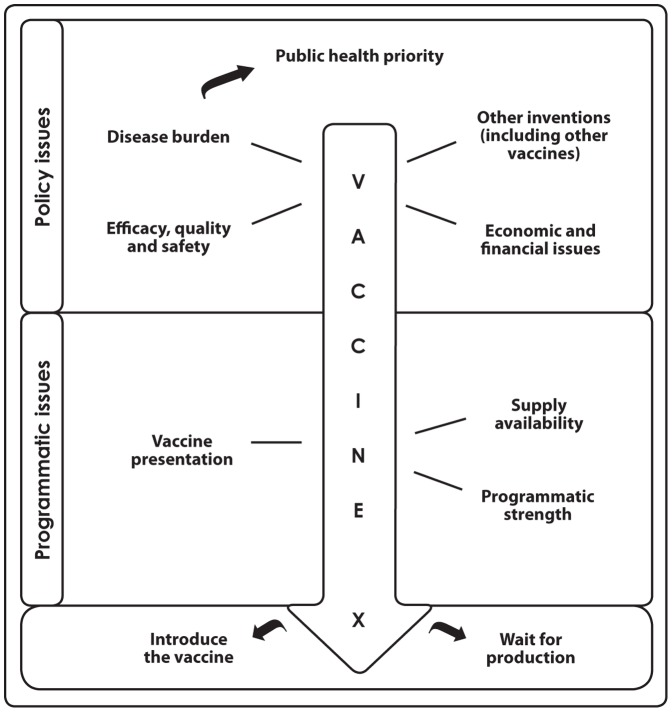
Immunization against influenza is considered an essential public health intervention to control both seasonal epidemics and pandemic influenza. According to the World Health Organization (WHO), there are five key policy and three key programmatic issues that decision-makers should consider before introducing a vaccine. These are (a) public health priority, (b) disease burden, (c) efficacy, quality and safety of the vaccine, (d) other inventions, (e) economic and financial issues, (f) vaccine presentation, (g) supply availability and (h) programmatic strength. We analyzed the body of evidence currently available on these eight issues in the WHO Western Pacific Region.
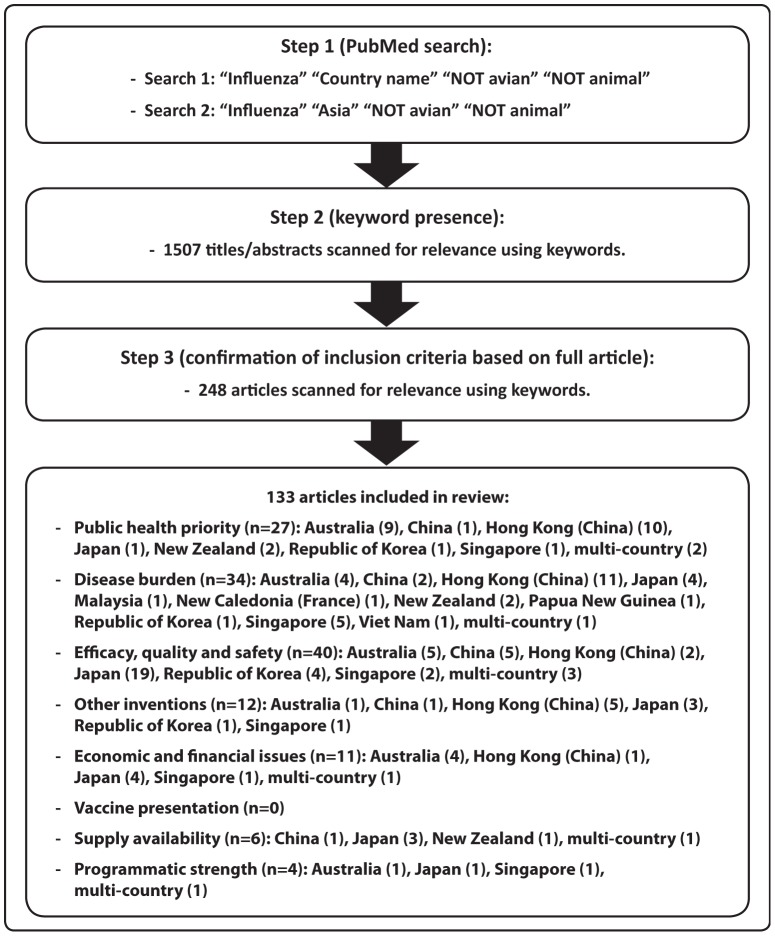
METHODOLOGY/PRINCIPAL FINDINGS: Studies indexed in PubMed and published in English between 1 January 2000 and 31 December 2010 from the 37 countries and areas of the Western Pacific Region were screened for keywords pertaining to the five policy and three programmatic issues. Studies were grouped according to country income level and vaccine target group. There were 133 articles that met the selection criteria, with most (90%) coming from high-income countries. Disease burden (n = 34), vaccine efficacy, quality and safety (n = 27) and public health priority (n = 27) were most frequently addressed by studies conducted in the Region. Many studies assessed influenza vaccine policy and programmatic issues in the general population (42%), in the elderly (24%) and in children (17%). Few studies (2%) addressed the eight issues relating to pregnant women.
CONCLUSIONS/SIGNIFICANCE: The evidence for vaccine introduction in countries and areas in this Region remains limited, particularly in low- and middle-income countries that do not currently have influenza vaccination programmes. Surveillance activities and specialized studies can be used to assess the eight issues including disease burden among vaccine target groups and the cost-effectiveness of influenza vaccine. Multi-country studies should be considered to maximize resource utilization for cross-cutting issues such as vaccine presentation and other inventions.
接种流感疫苗被认为是控制季节性流行和大流行性流感的重要公共卫生干预措施。根据世界卫生组织(世卫组织)的说法,决策者在推出疫苗之前应考虑五个政策重点和三个方案重点问题。这些问题是:(a)公共卫生重点;(b)疾病负担;(c)疫苗的效力、质量和安全性;(d)其他发明;(e)经济和财政问题;(f)疫苗接种方式;(g)供应的可得性;(h)方案实力。我们分析了世卫组织西太平洋区域目前关于这八个问题的证据。
方法/主要发现:在 2000 年 1 月 1 日至 2010 年 12 月 31 日期间,从西太平洋区域的 37 个国家和地区检索 PubMed 索引中发表的英文文献,筛选出与五个政策重点和三个方案重点问题相关的关键词。根据国家收入水平和疫苗目标人群对研究进行分组。有 133 篇文章符合选择标准,其中大部分(90%)来自高收入国家。在该区域进行的研究中,疾病负担(n = 34)、疫苗效力、质量和安全性(n = 27)和公共卫生重点(n = 27)最常被涉及。许多研究评估了一般人群(42%)、老年人(24%)和儿童(17%)中流感疫苗的政策和方案问题。很少有研究(2%)涉及与孕妇有关的八个问题。
结论/意义:该区域各国和地区疫苗接种的证据仍然有限,特别是在目前没有流感疫苗接种方案的低收入和中等收入国家。监测活动和专门研究可用于评估包括疫苗目标人群疾病负担以及流感疫苗的成本效益在内的八个问题。应考虑开展多国研究,以最大限度地利用资源解决交叉问题,如疫苗接种方式和其他发明。