Departamento de Bioquímica, Centro de Ciências Biológicas, Universidade Federal de Pernambuco (UFPE), Recife, Brazil.
PLoS Negl Trop Dis. 2013 Jul 18;7(7):e2314. doi: 10.1371/journal.pntd.0002314. Print 2013.
Schistosomiasis mansoni is an endemic parasitic disease and a public health problem in Northeast Brazil. In some patients, hepatic abnormalities lead to periportal fibrosis and result in the most severe clinical form, hepatosplenic schistosomiasis. This study aimed to evaluate whether abnormal blood coagulation and liver function tests in patients with hepatosplenic schistosomiasis (n = 55) correlate with the severity of their periportal fibrosis.
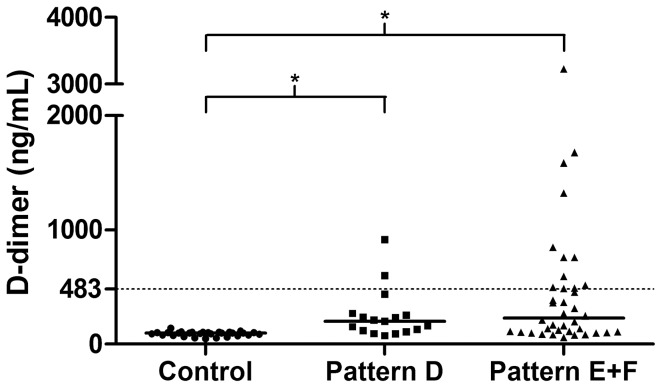
METHODOLOGY/PRINCIPAL FINDINGS: Blood samples were used for liver function tests, hemogram and prothrombin time (International Normalized Ratio, INR). The blood coagulation factors (II, VII, VIII, IX and X), protein C and antithrombin IIa (ATIIa), plasminogen activator inhibitor 1 (PAI-1) and D-dimer were measured by photometry or enzyme linked immunosorbent assay. Hyperfibrinolysis was defined on the basis of PAI-1 levels and a D-dimer concentration greater than a standard cut-off of 483 ng/mL. Standard liver function tests were all abnormal in the patient group compared to healthy controls (n = 29), including raised serum transaminases (p<0.001) and lower levels of albumin (p = 0.0156). Platelet counts were 50% lower in patients, while for coagulation factors there was a 40% increase in the INR (p<0.001) and reduced levels of Factor VII and protein C in patients compared to the controls (both p<0.001). Additionally, patients with more advanced fibrosis (n = 38) had lower levels of protein C compared to those with only central fibrosis (p = 0.0124). The concentration of plasma PAI-1 in patients was one-third that of the control group (p<0.001), and D-dimer levels 2.2 times higher (p<0.001) with 13 of the 55 patients having levels above the cut-off.
CONCLUSION/SIGNIFICANCE: This study confirms that hemostatic abnormalities are associated with reduced liver function and increased liver fibrosis. Of note was the finding that a quarter of patients with hepatosplenic schistosomiasis and advanced periportal fibrosis have hyperfibrinolysis, as judged by excessive levels of D-dimer, which may predispose them to gastrointestinal bleeding.
曼氏血吸虫病是东北巴西流行的寄生虫病和公共卫生问题。在一些患者中,肝脏异常导致门脉周围纤维化,并导致最严重的临床形式,即肝脾血吸虫病。本研究旨在评估肝脾血吸虫病患者(n=55)的凝血功能和肝功能异常是否与门脉周围纤维化的严重程度相关。
方法/主要发现:采集血样进行肝功能检查、血常规和凝血酶原时间(国际标准化比值,INR)。通过比色法或酶联免疫吸附试验测量凝血因子(II、VII、VIII、IX 和 X)、蛋白 C 和抗凝血酶 IIa(ATIIa)、纤溶酶原激活物抑制剂 1(PAI-1)和 D-二聚体。根据 PAI-1 水平和 D-二聚体浓度高于 483ng/mL 的标准截断值,定义高纤溶状态。与健康对照组(n=29)相比,患者组的所有标准肝功能检查均异常,包括血清转氨酶升高(p<0.001)和白蛋白水平降低(p=0.0156)。血小板计数比患者低 50%,而 INR 升高 40%(p<0.001),与对照组相比,患者的凝血因子 VII 和蛋白 C 水平降低(均 p<0.001)。此外,纤维化程度更严重的患者(n=38)的蛋白 C 水平低于仅有中央纤维化的患者(p=0.0124)。与对照组相比,患者的血浆 PAI-1 浓度降低了三分之一(p<0.001),D-二聚体水平升高了两倍(p<0.001),55 例患者中有 13 例高于截断值。
结论/意义:本研究证实,止血异常与肝功能降低和肝纤维化增加有关。值得注意的是,发现四分之一的肝脾血吸虫病和门脉周围纤维化严重的患者存在纤溶亢进,这可通过 D-二聚体水平升高来判断,这可能使他们容易发生胃肠道出血。