Foerch Christian, Ghandehari Kavian, Xu Gelin, Kaul Subash
Department of Neurology, Johann Wolfgang Goethe-University, Frankfurt am Main, Germany.
J Res Med Sci. 2013 Jan;18(1):10-6.
Gender distribution of acute stroke patients varies considerably among stroke registries throughout the world, but factors responsible for this phenomenon remained vastly unknown.
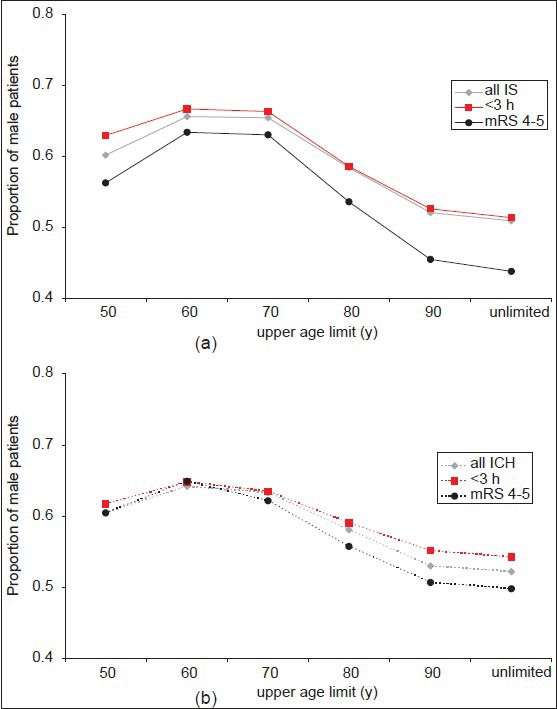
Using data from prospective hospital-based stroke registries in China (n = 752 acute stroke patients), Germany (n = 96054), India (n = 1500), and Iran (n = 1392), this descriptive study explored gender distribution of stroke patients and its determinants. In addition, the proportions of males and females to be expected in fictive study populations were calculated, and differences in gender distribution between stroke databases throughout the world were described.
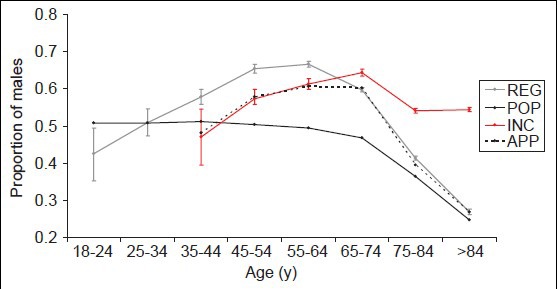
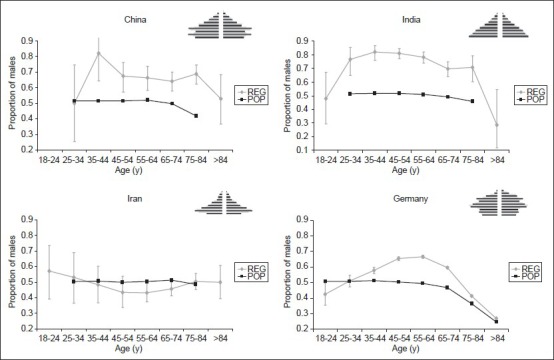
In the German dataset, a maximum male preponderance was found for patients aged between 55 and 64 years (proportion of male patients 0.67 [95% CI: 0.66-0.67]), whereas patients older than 84 years revealed a strong overbalance of females (0.27 [0.26-0.28]). In Germany, age-specific gender distribution of stroke patients is well explained by the numbers of females and males in the general population and by gender-specific stroke incidence rates. Both in China and India, a strong preponderance of male stroke patients was found for the majority of age categories with a maximum proportion of male patients of 0.82 in the 35-44 years age group. In contrast, the Iranian stroke register revealed an overbalance of females (0.13 [0.11-0.14]) in nearly all age categories. A total of 1392 Iranian ischemic stroke patients (738 female, 654 male) were investigated.
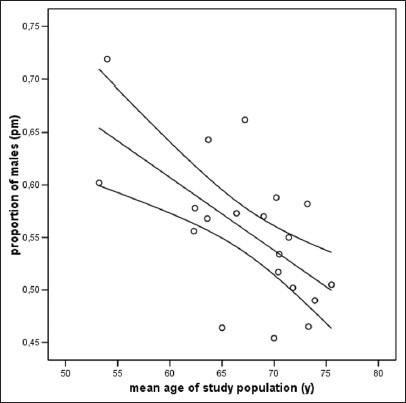
Gender distribution of acute stroke patients is highly variable. Gender distribution varied considerably between countries. Apart from demographic factors reflecting gender ratio in the general population and gender-specific stroke incidence rates, sociocultural peculiarities may also play an important role in this context.
全球范围内,急性中风患者的性别分布在不同的中风登记系统中差异很大,但造成这种现象的因素仍大多未知。
本描述性研究利用中国(n = 752例急性中风患者)、德国(n = 96054例)、印度(n = 1500例)和伊朗(n = 1392例)基于医院的前瞻性中风登记系统的数据,探讨了中风患者的性别分布及其决定因素。此外,计算了虚拟研究人群中预期的男性和女性比例,并描述了全球中风数据库之间性别分布的差异。
在德国的数据集中,55至64岁的患者中男性占比最高(男性患者比例为0.67 [95% CI:0.66 - 0.67]),而84岁以上的患者中女性明显占多数(0.27 [0.26 - 0.28])。在德国,中风患者的年龄特异性性别分布可以通过一般人群中男性和女性的数量以及性别特异性中风发病率得到很好的解释。在中国和印度,大多数年龄组中男性中风患者占主导地位,在35 - 44岁年龄组中男性患者比例最高,为0.82。相比之下,伊朗的中风登记显示几乎所有年龄组中女性占多数(0.13 [0.11 - 0.14])。共调查了1392例伊朗缺血性中风患者(738例女性,654例男性)。
急性中风患者的性别分布高度可变。不同国家之间的性别分布差异很大。除了反映一般人群性别比例和性别特异性中风发病率的人口统计学因素外,社会文化特点在这方面也可能起重要作用。