Lee Weon Ju, Choi Yoon Hyuk, Sohn Mi Yeung, Lee Seok-Jong, Kim Do Won
Department of Dermatology, Kyungpook National University School of Medicine, Daegu, Republic of Korea.
Indian J Dermatol. 2013 Jul;58(4):327. doi: 10.4103/0019-5154.113959.
Inflammatory cytokines are the key factor in the pathophysiology of acne. It is well known that keratinocytes synthesize many kinds of inflammatory cytokines. In addition, it is reported that inflammatory cytokines are also expressed from sebocytes, which originate from the same stem cells with keratinocytes.
To clarify changes in the expression of inflammatory biomarkers from cultured sebocytes after treatment with vitamin D.
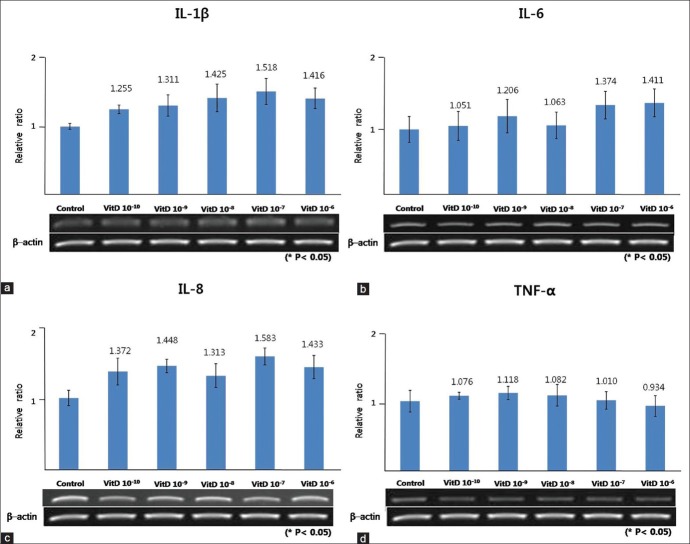
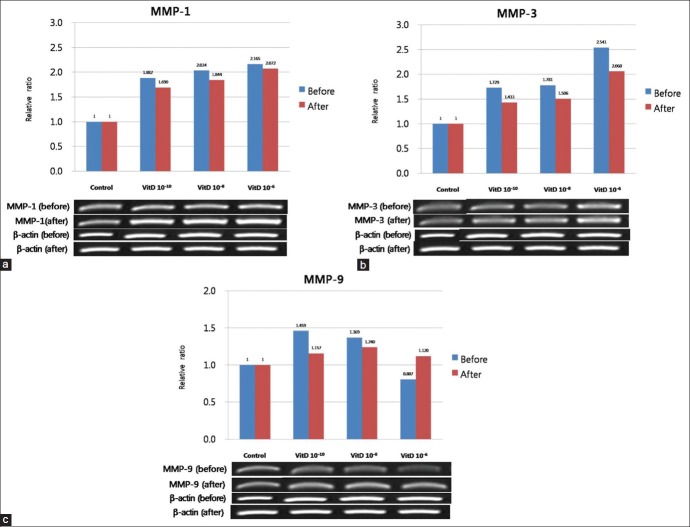
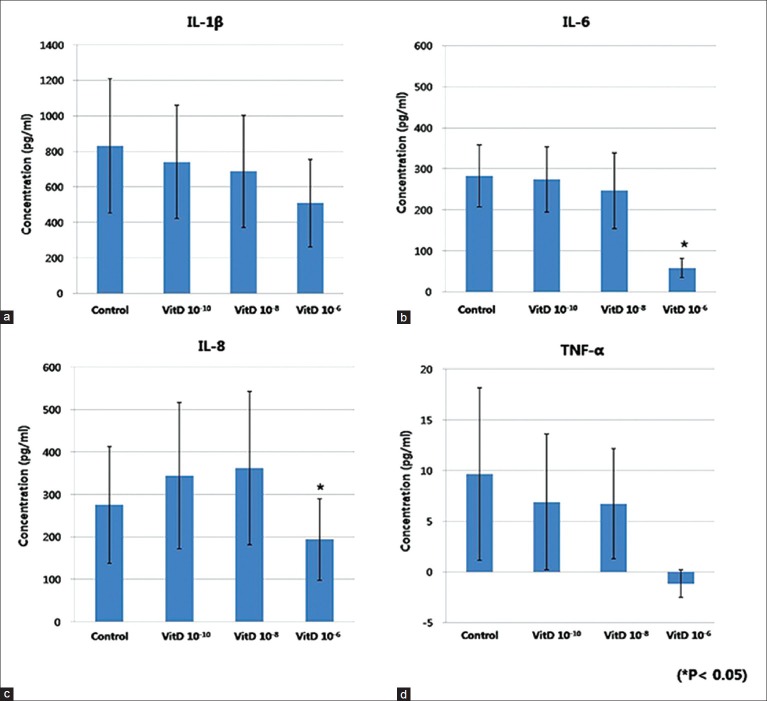
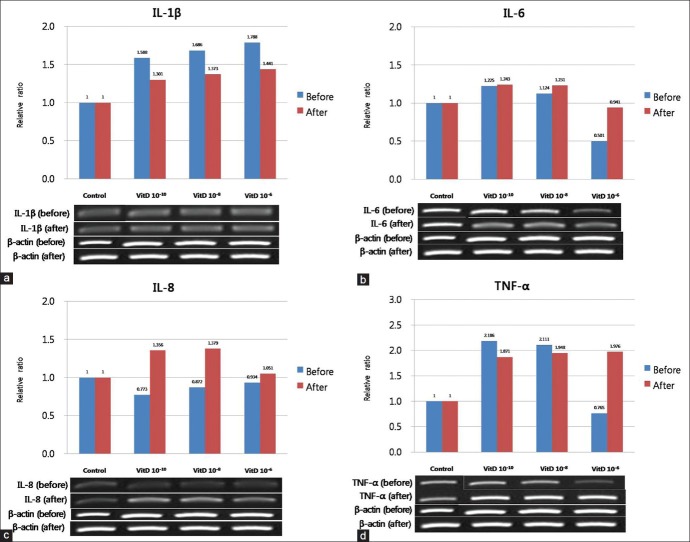
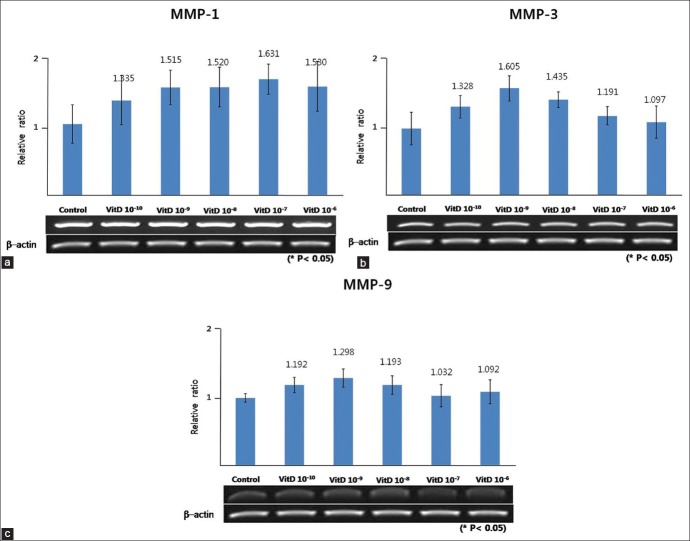
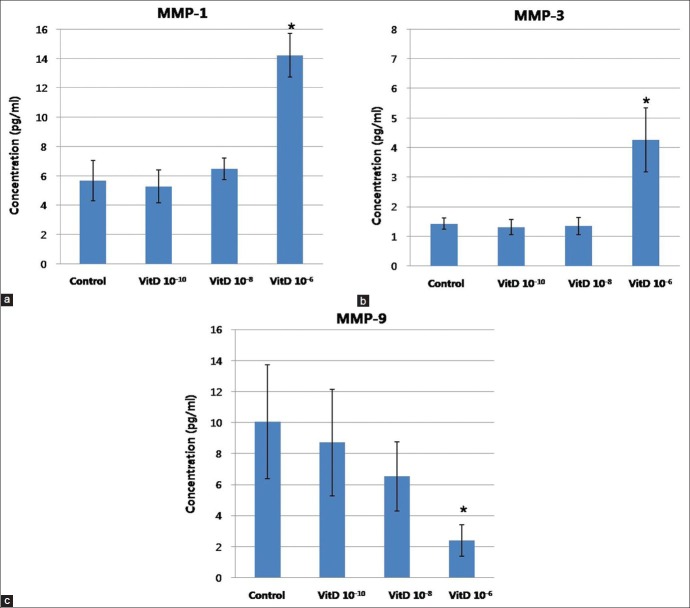
Reverse transcription-polymerase chain reaction (RT-PCR) was done to measure changes in the expression of inflammatory biomarkers, including interleukin-1β (IL-1β), IL-6, IL-8, and tumor necrosis factor-α (TNF-α), and several subtypes of matrix metalloproteinases (MMPs) after treatment of a group of cultured sebocytes with vitamin D. Vitamin D receptor (VDR) small interfering RNA (siRNA) was added in the other group of cultured sebocytes to assure the role of vitamin D on the expression of inflammatory biomarkers. Enzyme-linked immunosorbent assay (ELISA) was also performed in the vitamin D-treated sebocytes.
Cultured sebocytes showed non-significant changes in the gene expression of inflammatory biomarkers after treatment with vitamin D. In cultured sebocytes treated with a VDR siRNA, the expression of inflammatory biomarkers was not blocked after treatment with vitamin D. ELISA showed a significant decrease in the expression of IL-6, IL-8, and MMP-9, but a significant increase in the expression of MMP-1 and MMP-3, after treatment with vitamin D (10(-6) M).
Expression of inflammatory biomarkers is influenced by treatment with vitamin D in cultured sebocytes, but not through VDR.
炎性细胞因子是痤疮病理生理学中的关键因素。众所周知,角质形成细胞可合成多种炎性细胞因子。此外,有报道称,皮脂腺细胞也表达炎性细胞因子,皮脂腺细胞与角质形成细胞起源于相同的干细胞。
阐明维生素D处理后培养的皮脂腺细胞中炎性生物标志物表达的变化。
采用逆转录-聚合酶链反应(RT-PCR)检测一组培养的皮脂腺细胞经维生素D处理后炎性生物标志物的表达变化,这些炎性生物标志物包括白细胞介素-1β(IL-1β)、IL-6、IL-8和肿瘤坏死因子-α(TNF-α),以及几种基质金属蛋白酶(MMPs)亚型。在另一组培养的皮脂腺细胞中加入维生素D受体(VDR)小干扰RNA(siRNA),以确定维生素D对炎性生物标志物表达的作用。对经维生素D处理的皮脂腺细胞还进行了酶联免疫吸附测定(ELISA)。
培养的皮脂腺细胞经维生素D处理后,炎性生物标志物的基因表达无显著变化。在用VDR siRNA处理的培养皮脂腺细胞中,维生素D处理后炎性生物标志物的表达未被阻断。ELISA结果显示,经维生素D(10⁻⁶ M)处理后,IL-6、IL-8和MMP-9的表达显著降低,但MMP-1和MMP-3的表达显著增加。
培养的皮脂腺细胞中炎性生物标志物的表达受维生素D处理的影响,但不是通过VDR。