Centre for Infectious Disease Control, National Institute for Public Health and the Environment, Bilthoven, The Netherlands.
PLoS One. 2013 Jul 29;8(7):e67866. doi: 10.1371/journal.pone.0067866. Print 2013.
BACKGROUND & AIMS: In the Netherlands, a selective hepatitis B virus (HBV) vaccination programme started in 2002 for men having sex with men, drug users, commercial sex workers and heterosexuals with frequent partner changes. We assessed the programme's effectiveness to guide policy on HBV prevention.
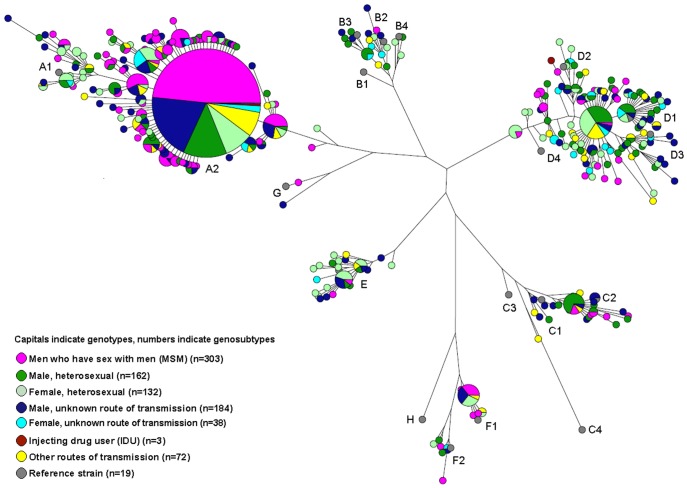
We analysed reports of acute HBV infection in the Netherlands between 2004 and 2010 requesting serum from patients for HBV-genome S- and C-region sequencing. We used coalescence analyses to assess genetic diversity of nonimported genotype-A cases over time.
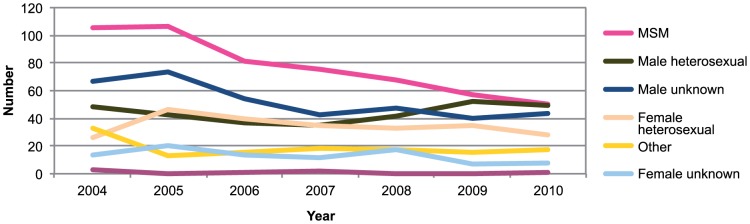
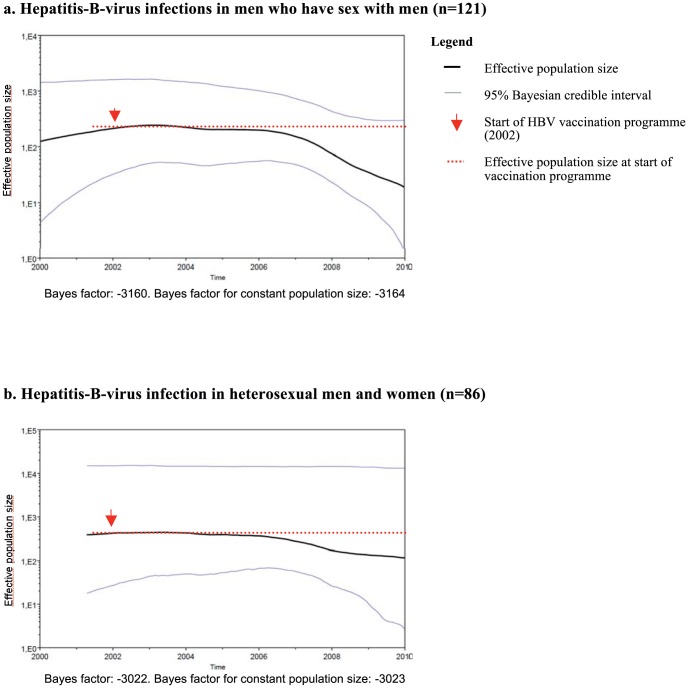
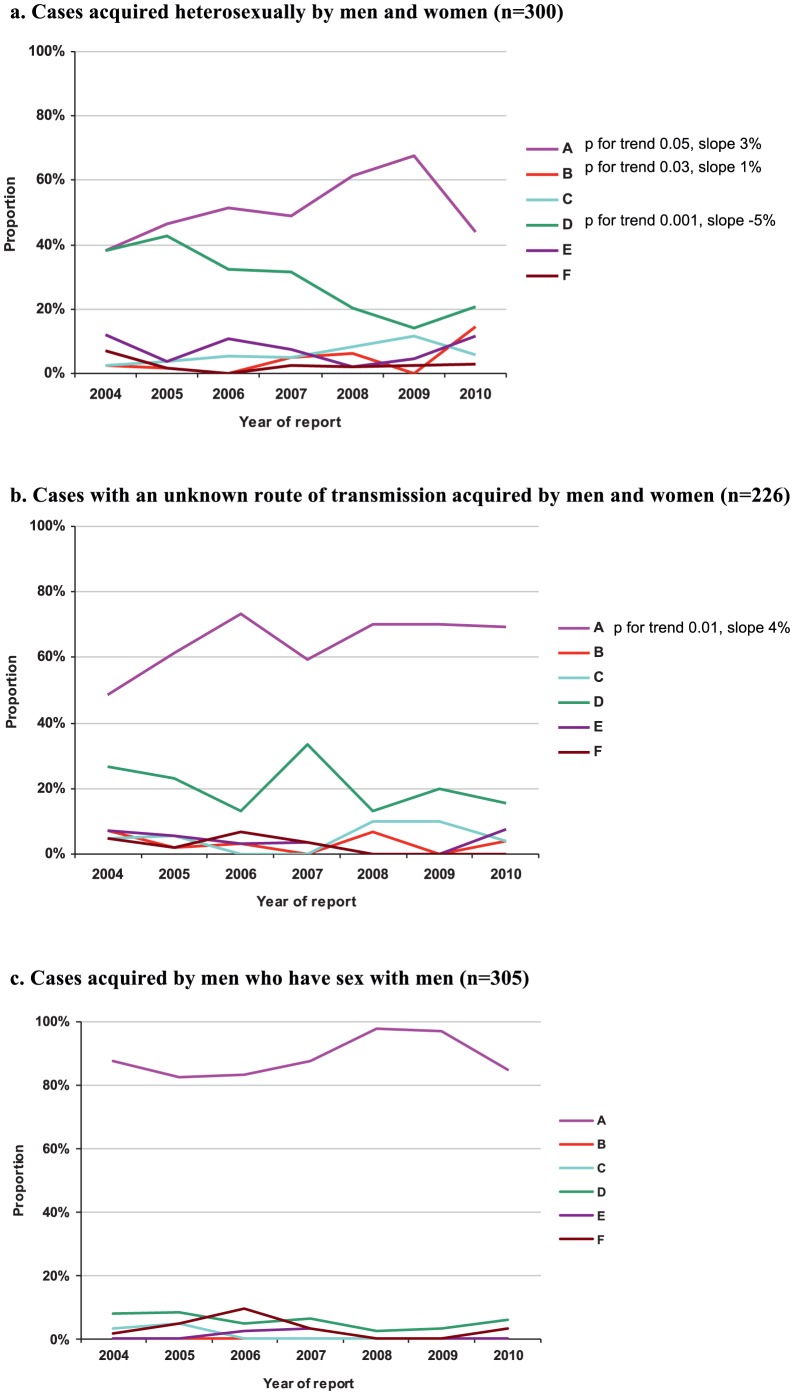
1687 patients with acute HBV infection were reported between 2004 and 2010. The incidence of reported acute HBV infection decreased from 1.8 to 1.2 per 100,000 inhabitants, mostly due to a reduction in the number of cases in men who have sex with men. Men were overrepresented among cases with an unknown route of transmission, especially among genotype A2 cases mainly associated with transmission through male homosexual contact. The genetic diversity of nonimported genotype-A strains obtained from men who have sex with men decreased from 2006 onwards, suggesting HBV incidence in this group decreased.
The selective HBV-vaccination programme for behavioural high-risk groups very likely reduced the incidence of HBV infection in the Netherlands mainly by preventing HBV infections in men who have sex with men. A considerable proportion of cases in men who did not report risk behaviour was probably acquired through homosexual contact. Our findings support continuation of the programme, and adopting similar approaches in other countries where HBV transmission is focused in high-risk adults.
在荷兰,自 2002 年起,为男男性行为者、吸毒者、性工作者以及性伴侣更换频繁的异性恋者,启动了乙型肝炎病毒(HBV)疫苗接种的选择方案。我们评估了该方案的有效性,以指导 HBV 预防政策。
我们分析了 2004 年至 2010 年荷兰报告的急性 HBV 感染病例,要求患者提供血清进行 HBV 基因组 S 和 C 区测序。我们使用聚结分析评估了非输入型 A 基因型病例的遗传多样性随时间的变化。
2004 年至 2010 年期间报告了 1687 例急性 HBV 感染患者。报告的急性 HBV 感染发病率从每 10 万人 1.8 例降至 1.2 例,主要是由于男男性行为者中病例数量减少所致。男性在未知传播途径的病例中占比过高,特别是在主要与男同性恋接触传播相关的 A2 基因型病例中。从男男性行为者中获得的非输入型 A 基因型菌株的遗传多样性自 2006 年以来呈下降趋势,表明该人群中的 HBV 发病率降低。
针对行为高风险群体的 HBV 疫苗接种选择方案很可能通过预防男男性行为者中的 HBV 感染,从而降低了荷兰的 HBV 感染发生率。相当一部分未报告风险行为的病例可能通过同性恋接触获得。我们的发现支持继续实施该方案,并在其他 HBV 传播集中在高风险成年人的国家采取类似的方法。