Department of Nutrition, Exercise and Sports, Faculty of Science, University of Copenhagen, Frederiksberg C, Denmark.
PLoS One. 2013 Jul 29;8(7):e69589. doi: 10.1371/journal.pone.0069589. Print 2013.
The consumption of high levels of industrial trans fatty acids (TFA) has been related to cardiovascular disease, diabetes and sudden cardiac death but the causal mechanisms are not well known. In this study, NMR and LC-MS untargeted metabolomics has been used as an approach to explore the impact of TFA intake on plasma metabolites.
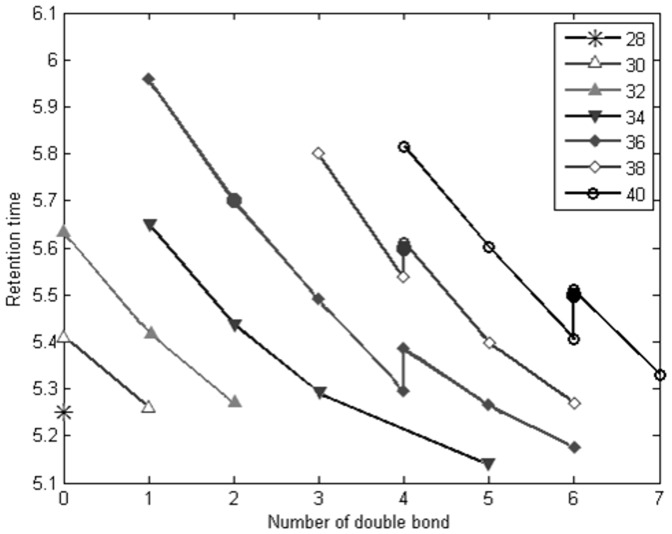
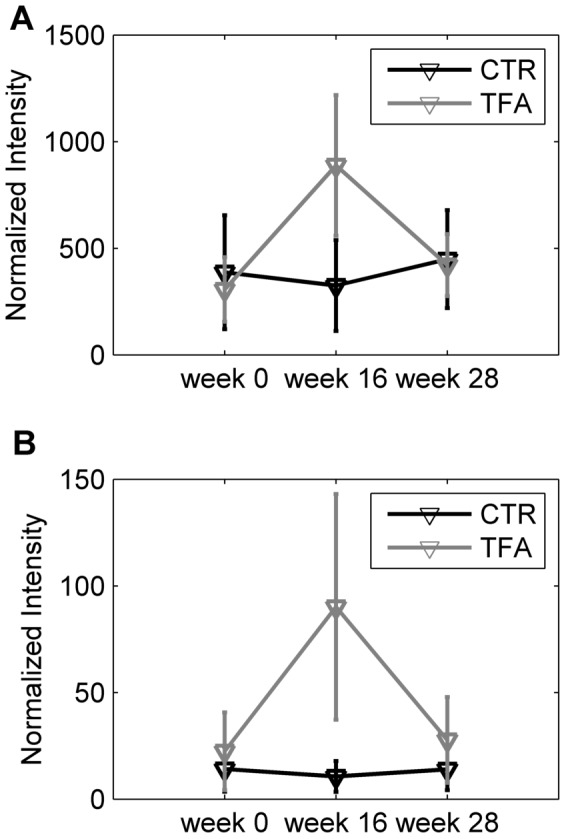
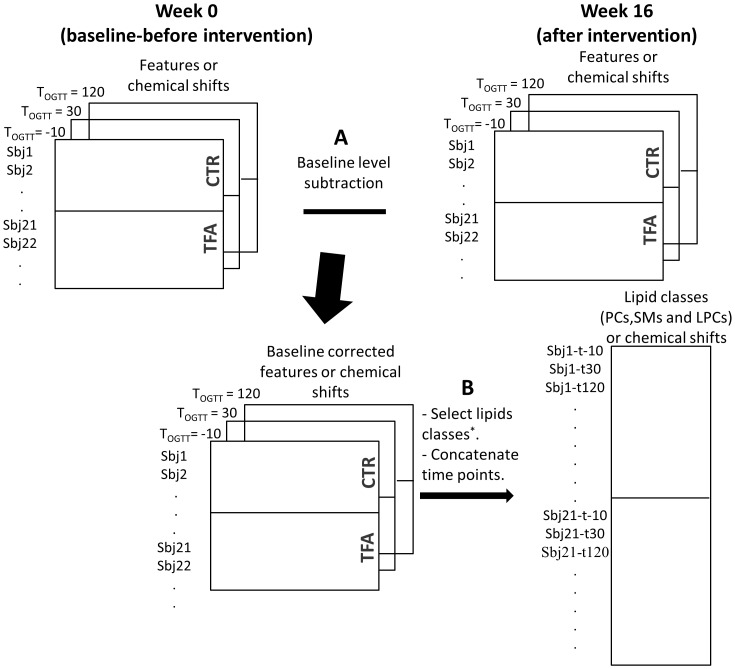
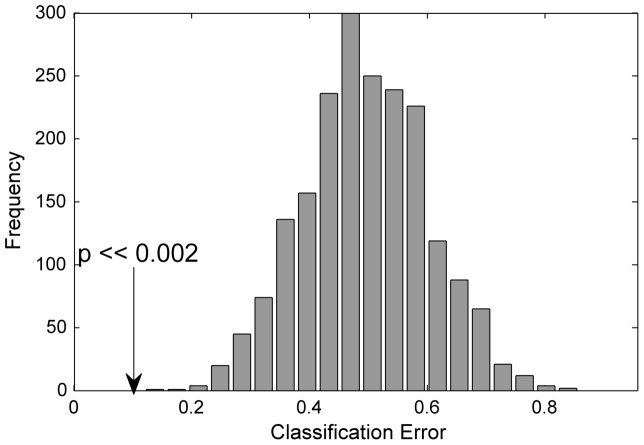
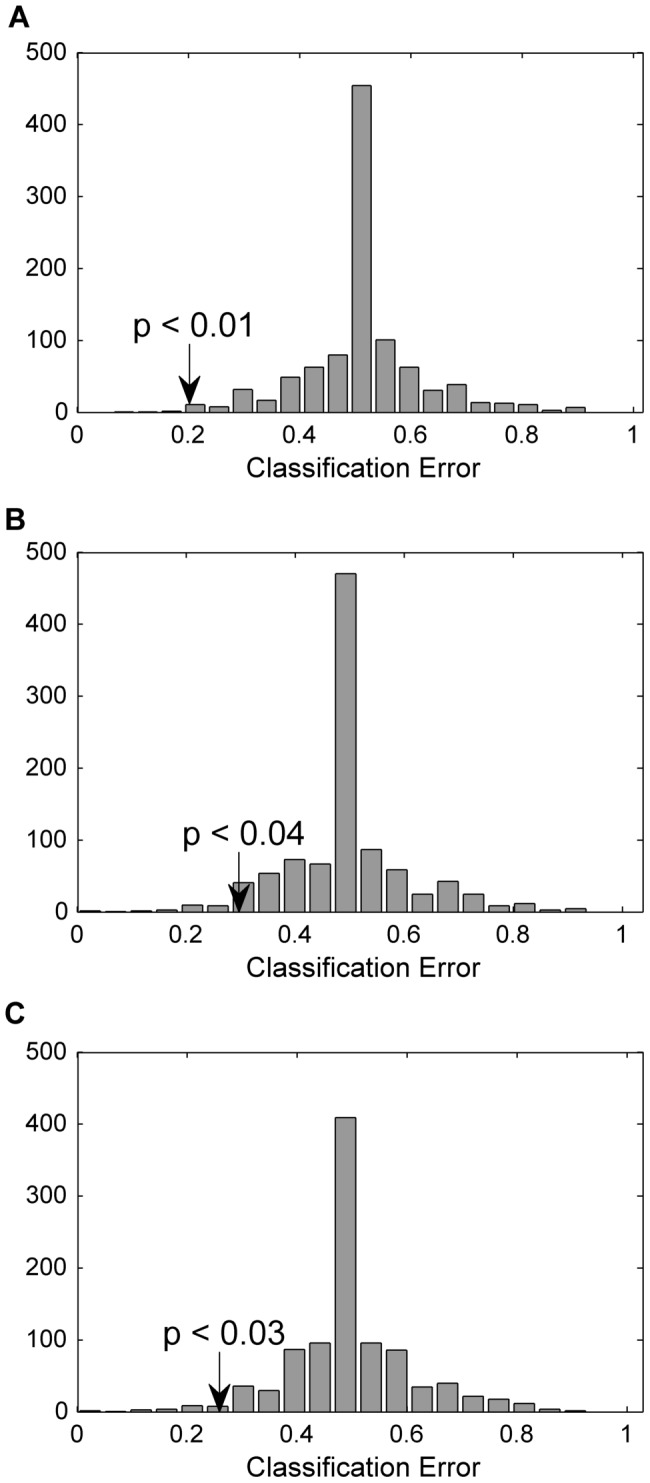
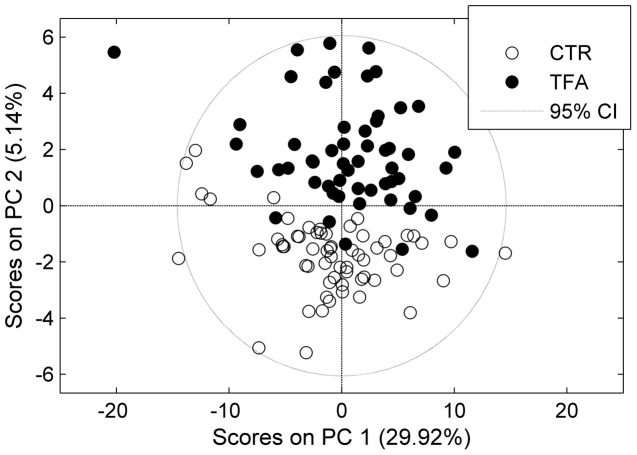
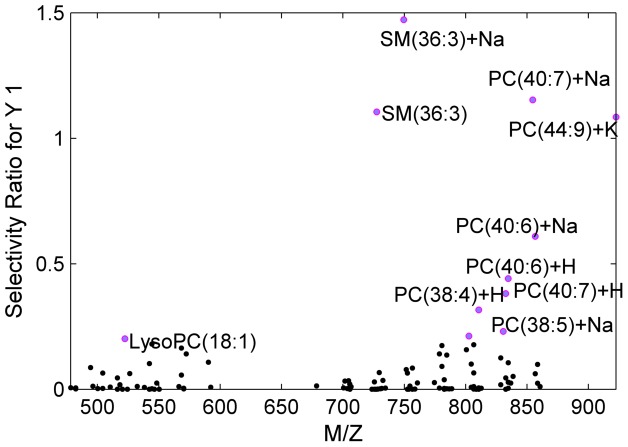
METHODOLOGY/PRINCIPAL FINDINGS: In a double-blinded randomized controlled parallel-group study, 52 overweight postmenopausal women received either partially hydrogenated soybean oil, providing 15.7 g/day of TFA (trans18:1) or control oil with mainly oleic acid for 16 weeks. Subsequent to the intervention period, the subjects participated in a 12-week dietary weight loss program. Before and after the TFA intervention and after the weight loss programme, volunteers participated in an oral glucose tolerance test. PLSDA revealed elevated lipid profiles with TFA intake. NMR indicated up-regulated LDL cholesterol levels and unsaturation. LC-MS profiles demonstrated elevated levels of specific polyunsaturated (PUFA) long-chain phosphatidylcholines (PCs) and a sphingomyelin (SM) which were confirmed with a lipidomics based method. Plasma levels of these markers of TFA intake declined to their low baseline levels after the weight loss program for the TFA group and did not fluctuate for the control group. The marker levels were unaffected by OGTT.
CONCLUSIONS/SIGNIFICANCE: This study demonstrates that intake of TFA affects phospholipid metabolism. The preferential integration of trans18:1 into the sn-1 position of PCs, all containing PUFA in the sn-2 position, could be explained by a general up-regulation in the formation of long-chain PUFAs after TFA intake and/or by specific mobilisation of these fats into PCs. NMR supported these findings by revealing increased unsaturation of plasma lipids in the TFA group. These specific changes in membrane lipid species may be related to the mechanisms of TFA-induced disease but need further validation as risk markers.
Registered at clinicaltrials.gov as NCT00655902.
大量摄入工业反式脂肪酸(TFA)与心血管疾病、糖尿病和心源性猝死有关,但因果机制尚不清楚。在这项研究中,我们使用 NMR 和 LC-MS 非靶向代谢组学作为一种方法来探索 TFA 摄入对血浆代谢物的影响。
方法/主要发现:在一项双盲随机对照平行组研究中,52 名超重绝经后妇女分别摄入部分氢化大豆油(每天提供 15.7 克 TFA [反式 18:1])或主要含有油酸的对照油 16 周。干预期结束后,受试者参加了为期 12 周的饮食减肥计划。在 TFA 干预前、干预后和减肥计划后,志愿者参加了口服葡萄糖耐量试验。PLSDA 显示 TFA 摄入后脂质谱升高。NMR 表明 LDL 胆固醇水平和不饱和程度升高。LC-MS 图谱显示特定长链多不饱和(PUFA)磷脂酰胆碱(PC)和神经鞘磷脂(SM)水平升高,这通过基于脂质组学的方法得到了证实。TFA 组在减肥计划后,这些 TFA 摄入标志物的血浆水平降至低基线水平,而对照组则没有波动。OGTT 对标志物水平没有影响。
结论/意义:本研究表明,TFA 的摄入会影响磷脂代谢。TFA 摄入后,长链多不饱和脂肪酸的形成普遍上调,或者这些脂肪特异性地动员到 PC 中,可以解释反式 18:1 优先整合到 PC 的 sn-1 位,所有这些 PC 都含有 sn-2 位的 PUFA。NMR 通过显示 TFA 组血浆脂质不饱和程度增加支持了这些发现。这些膜脂种类的特定变化可能与 TFA 诱导疾病的机制有关,但需要进一步验证作为风险标志物。
在 clinicaltrials.gov 上注册为 NCT00655902。