National Core for Neuroethics, University of British Columbia, Vancouver, British Columbia, Canada.
PLoS One. 2013 Jul 26;8(7):e69861. doi: 10.1371/journal.pone.0069861. Print 2013.
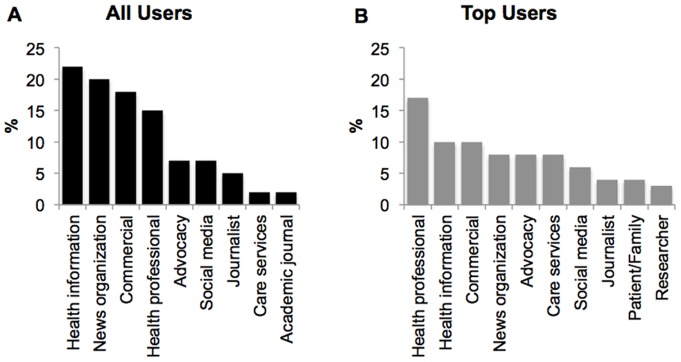
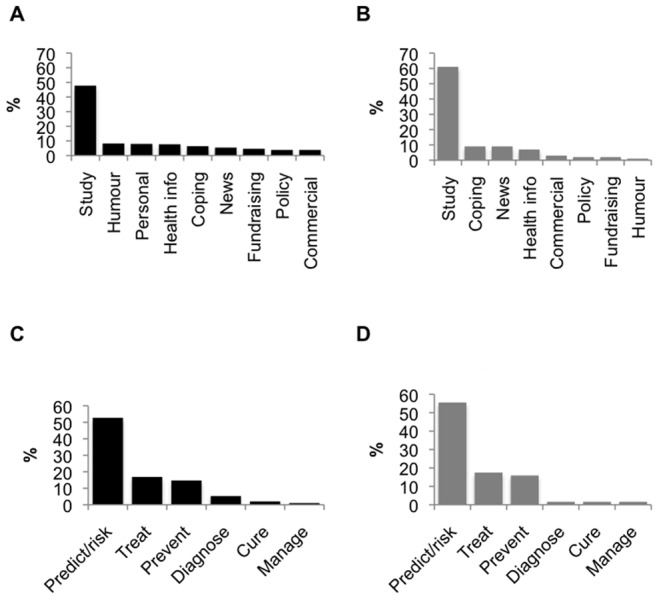
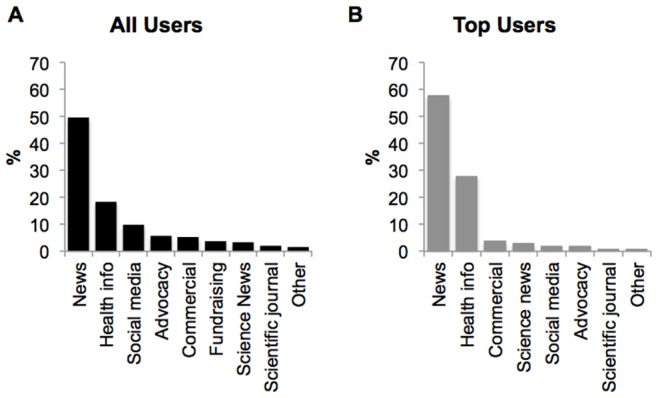
Online social media is widespread, easily accessible and attracts a global audience with a widening demographic. As a large proportion of adults now seek health information online and through social media applications, communication about health has become increasingly interactive and dynamic. Online health information has the potential to significantly impact public health, especially as the population gets older and the prevalence of dementia increases. However, little is known about how information pertaining to age-associated diseases is disseminated on popular social media platforms. To fill this knowledge gap, we examined empirically: (i) who is using social media to share information about dementia, (ii) what sources of information about dementia are promoted, and (iii) which dementia themes dominate the discussion. We data-mined the microblogging platform Twitter for content containing dementia-related keywords for a period of 24 hours and retrieved over 9,200 tweets. A coding guide was developed and content analysis conducted on a random sample (10%), and on a subsample from top users' tweets to assess impact. We found that a majority of tweets contained a link to a third party site rather than personal information, and these links redirected mainly to news sites and health information sites. As well, a large number of tweets discussed recent research findings related to the prediction and risk management of Alzheimer's disease. The results highlight the need for the dementia research community to harness the reach of this medium and its potential as a tool for multidirectional engagement.
在线社交媒体广泛存在,易于访问,吸引了越来越多的全球受众。由于现在很大一部分成年人通过互联网和社交媒体应用程序寻求健康信息,因此健康信息的传播变得越来越具有互动性和动态性。在线健康信息有可能对公众健康产生重大影响,尤其是随着人口老龄化和痴呆症发病率的增加。然而,人们对与年龄相关的疾病信息在流行的社交媒体平台上是如何传播的知之甚少。为了填补这一知识空白,我们通过实证研究来检验:(i)谁在利用社交媒体分享痴呆症相关信息,(ii)哪些关于痴呆症的信息来源被推广,以及(iii)哪些痴呆症主题占据了讨论的主导地位。我们对微博平台 Twitter 进行了数据挖掘,以获取 24 小时内与痴呆症相关的关键词内容,共检索到 9200 多条推文。我们制定了一个编码指南,并对随机样本(10%)和来自顶级用户推文的子样本进行了内容分析,以评估其影响力。我们发现,大多数推文包含指向第三方网站的链接,而不是个人信息,这些链接主要指向新闻网站和健康信息网站。此外,大量推文讨论了与阿尔茨海默病的预测和风险管理相关的最新研究发现。研究结果强调了痴呆症研究界需要利用这一媒介的影响力及其作为多方参与的工具的潜力。