Faculty of Computer Science, Dalhousie University, Halifax, Nova Scotia, Canada.
PLoS One. 2013 Jul 29;8(7):e69885. doi: 10.1371/journal.pone.0069885. Print 2013.
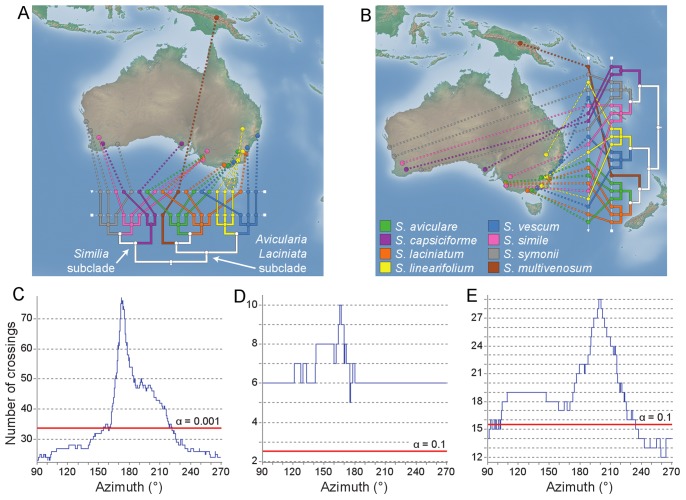
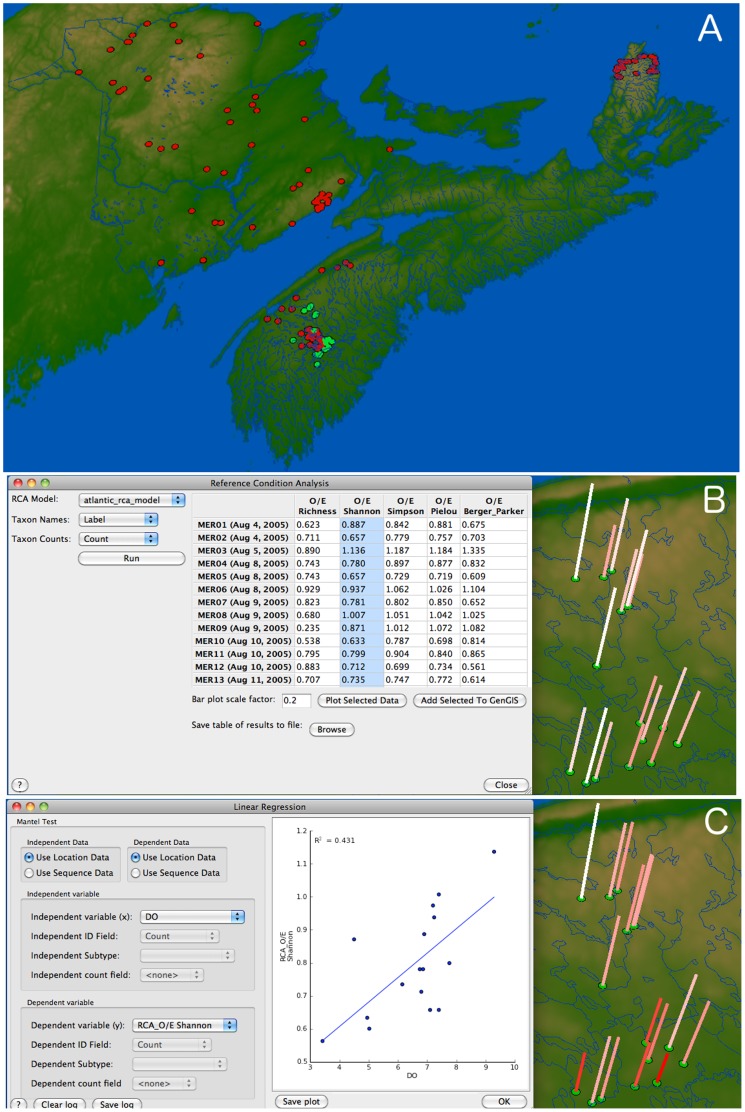
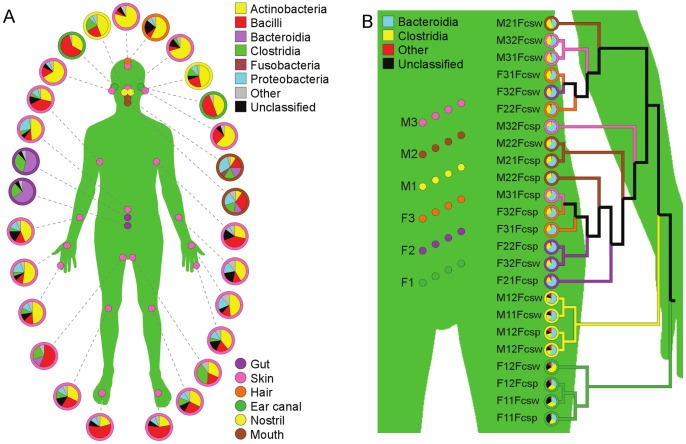
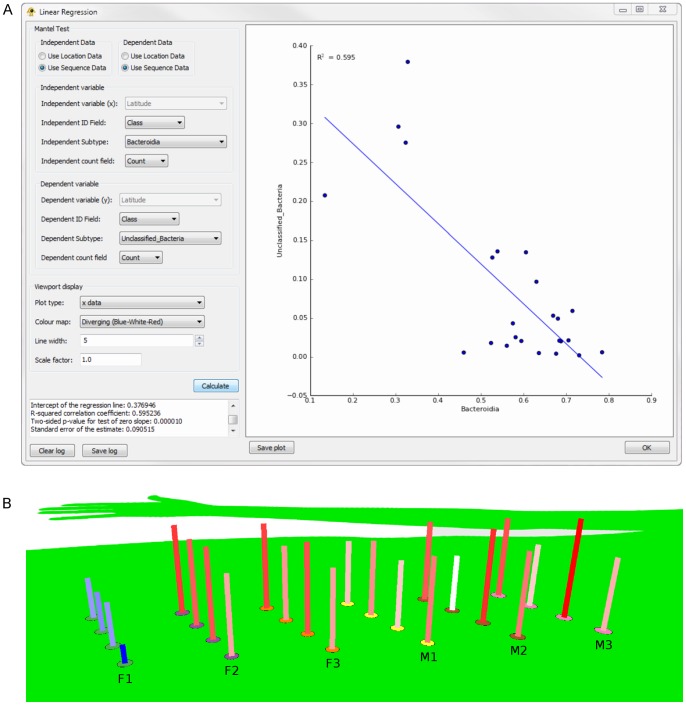
GenGIS is free and open source software designed to integrate biodiversity data with a digital map and information about geography and habitat. While originally developed with microbial community analyses and phylogeography in mind, GenGIS has been applied to a wide range of datasets. A key feature of GenGIS is the ability to test geographic axes that can correspond to routes of migration or gradients that influence community similarity. Here we introduce GenGIS version 2, which extends the linear gradient tests introduced in the first version to allow comprehensive testing of all possible linear geographic axes. GenGIS v2 also includes a new plugin framework that supports the development and use of graphically driven analysis packages: initial plugins include implementations of linear regression and the Mantel test, calculations of alpha-diversity (e.g., Shannon Index) for all samples, and geographic visualizations of dissimilarity matrices. We have also implemented a recently published method for biomonitoring reference condition analysis (RCA), which compares observed species richness and diversity to predicted values to determine whether a given site has been impacted. The newest version of GenGIS supports vector data in addition to raster files. We demonstrate the new features of GenGIS by performing a full gradient analysis of an Australian kangaroo apple data set, by using plugins and embedded statistical commands to analyze human microbiome sample data, and by applying RCA to a set of samples from Atlantic Canada. GenGIS release versions, tutorials and documentation are freely available at http://kiwi.cs.dal.ca/GenGIS, and source code is available at https://github.com/beiko-lab/gengis.
GenGIS 是一款免费的开源软件,旨在将生物多样性数据与数字地图以及地理和生境信息集成在一起。虽然最初是为微生物群落分析和系统地理学开发的,但 GenGIS 已经应用于广泛的数据集。GenGIS 的一个关键特点是能够测试与迁移路线或影响群落相似性的梯度相对应的地理轴。在这里,我们介绍 GenGIS 版本 2,它扩展了在第一个版本中引入的线性梯度测试,以允许对所有可能的线性地理轴进行全面测试。GenGIS v2 还包括一个新的插件框架,支持图形驱动的分析包的开发和使用:初始插件包括线性回归和 Mantel 测试的实现、所有样本的 alpha 多样性(例如 Shannon 指数)的计算,以及不相似性矩阵的地理可视化。我们还实现了一种用于生物监测参考条件分析 (RCA) 的新方法,该方法将观察到的物种丰富度和多样性与预测值进行比较,以确定给定地点是否受到影响。最新版本的 GenGIS 除了栅格文件外还支持矢量数据。我们通过对澳大利亚袋鼠苹果数据集进行完整的梯度分析、使用插件和嵌入式统计命令来分析人类微生物组样本数据以及对来自加拿大大西洋的一组样本应用 RCA 来演示 GenGIS 的新功能。GenGIS 的发行版本、教程和文档可在 http://kiwi.cs.dal.ca/GenGIS 上免费获得,源代码可在 https://github.com/beiko-lab/gengis 上获得。