Division of Dermatology, David Geffen School of Medicine at UCLA, Los Angeles, California, USA.
Division of Dermatology, David Geffen School of Medicine at UCLA, Los Angeles, California, USA; Department of Dermatology, College of Medicine, Dankook University, Seoul, South Korea.
J Invest Dermatol. 2014 Feb;134(2):366-373. doi: 10.1038/jid.2013.334. Epub 2013 Aug 7.
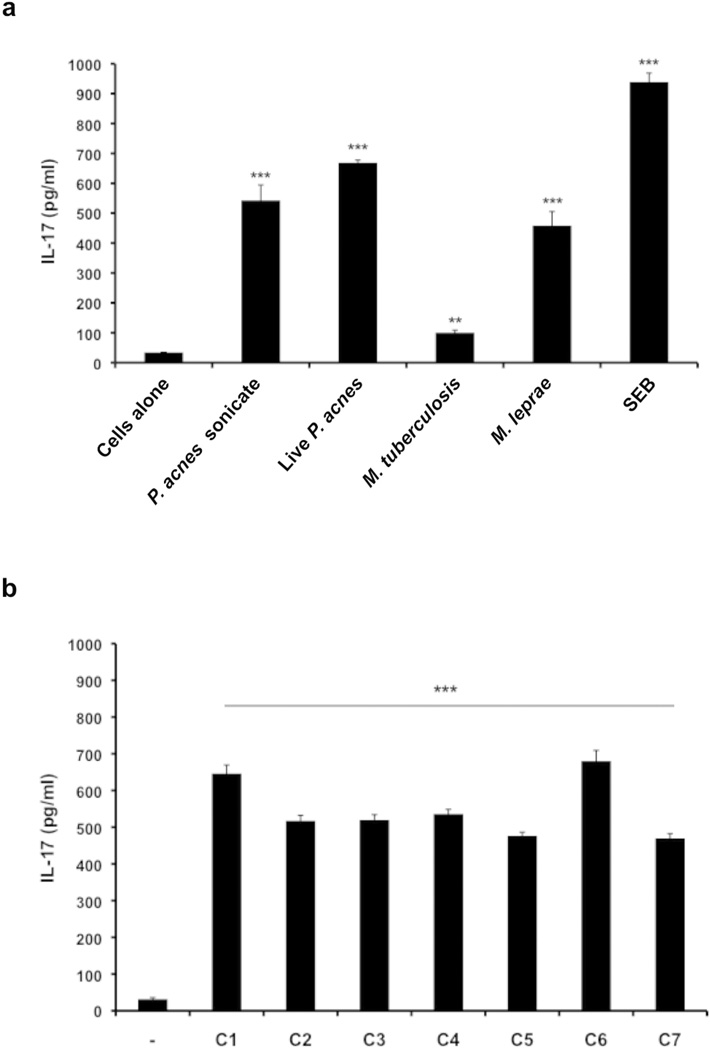
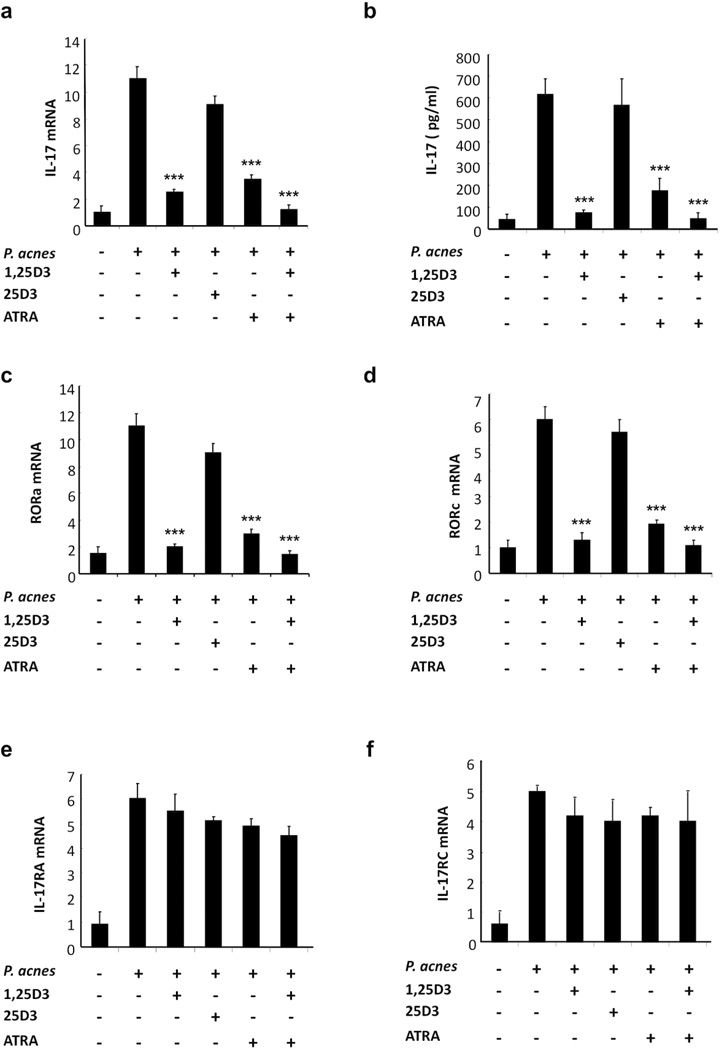
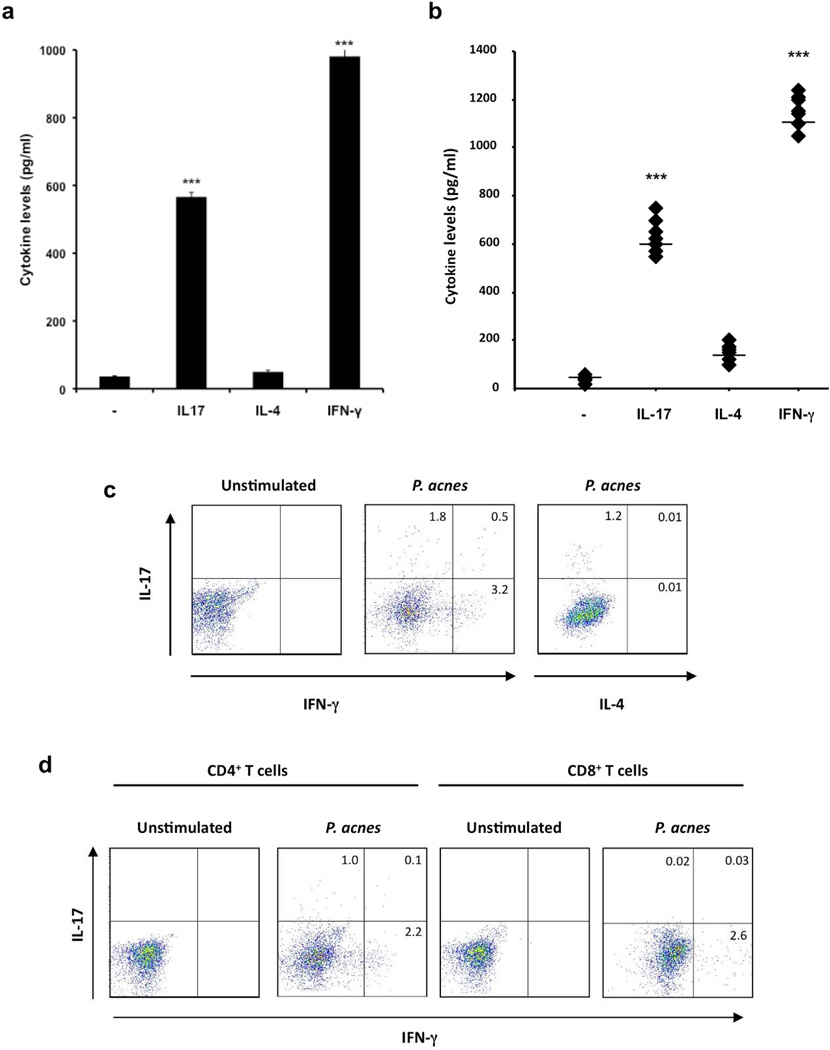
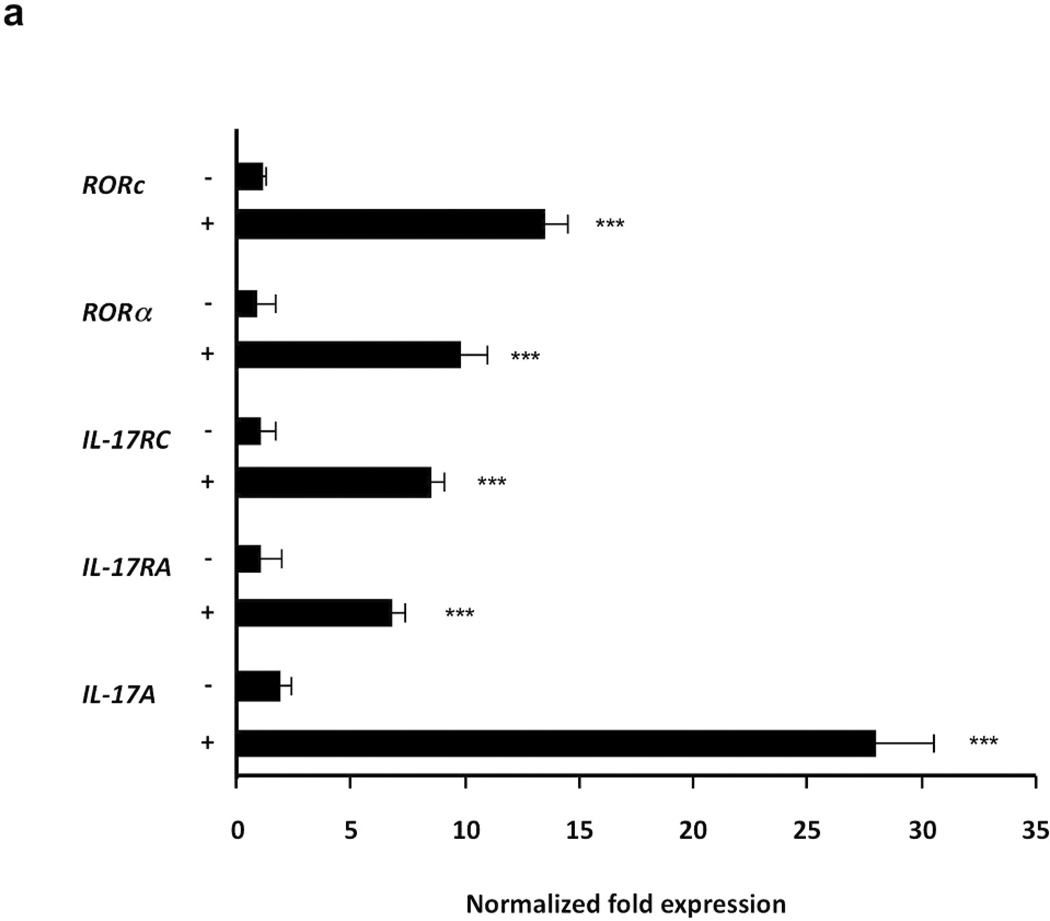
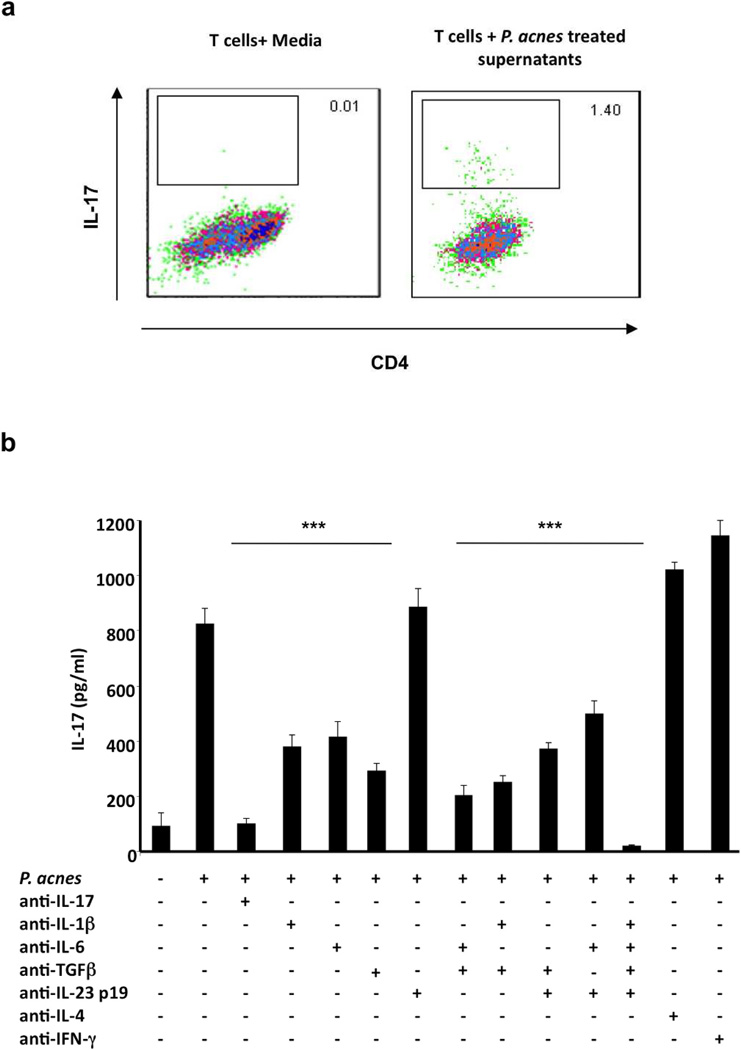
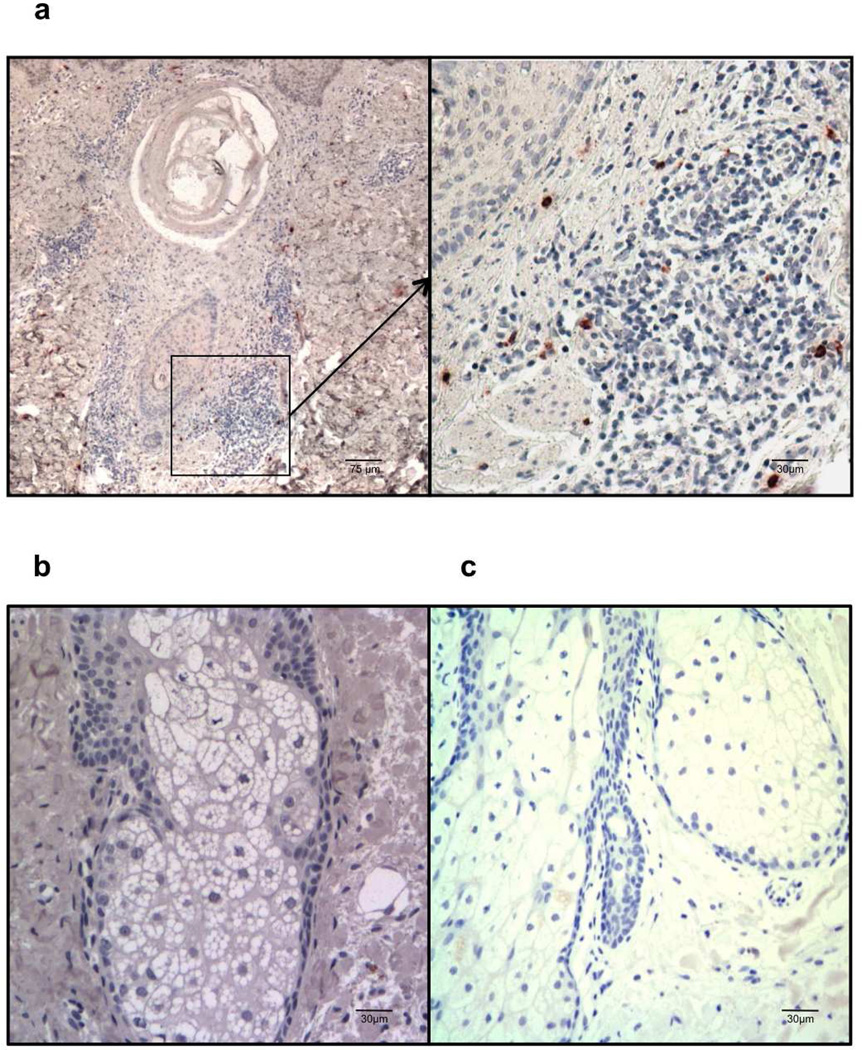
Acne vulgaris is the most common skin disorder affecting millions of people worldwide and inflammation resulting from the immune response targeting Propionibacterium acnes has a significant role in its pathogenesis. In this study, we have demonstrated that P. acnes is a potent inducer of T helper 17 (Th17) and Th1, but not Th2 responses in human peripheral blood mononuclear cells (PBMCs). P. acnes stimulated expression of key Th17-related genes, including IL-17A, RORα, RORc, IL-17RA, and IL-17RC, and triggered IL-17 secretion from CD4(+), but not from CD8(+) T cells. Supernatants from P. acnes-stimulated PBMCs were sufficient to promote the differentiation of naive CD4(+)CD45RA T cells into Th17 cells. Furthermore, we found that the combination of IL-1β, IL-6, and transforming growth factor-β-neutralizing antibodies completely inhibited P. acnes-induced IL-17 production. Importantly, we showed that IL-17-expressing cells were present in skin biopsies from acne patients but not from normal donors. Finally, vitamin A (all-trans retinoic acid) and vitamin D (1,25-dihydroxyvitamin D3) inhibited P. acnes-induced Th17 differentiation. Together, our data demonstrate that IL-17 is induced by P. acnes and expressed in acne lesions and that both vitamin A and D could be effective tools to modulate Th17-mediated diseases such as acne.
寻常痤疮是全球数百万人中最常见的皮肤疾病,针对痤疮丙酸杆菌的免疫反应引起的炎症在其发病机制中起重要作用。在这项研究中,我们已经证明痤疮丙酸杆菌是人类外周血单核细胞(PBMC)中辅助性 T 细胞 17(Th17)和 Th1 的有效诱导剂,但不是 Th2 反应的诱导剂。痤疮丙酸杆菌刺激包括 IL-17A、RORα、RORc、IL-17RA 和 IL-17RC 在内的关键 Th17 相关基因的表达,并触发 CD4+,而不是 CD8+T 细胞分泌 IL-17。痤疮丙酸杆菌刺激的 PBMC 上清液足以促进幼稚 CD4+CD45RA T 细胞向 Th17 细胞的分化。此外,我们发现 IL-1β、IL-6 和转化生长因子-β中和抗体的组合完全抑制了痤疮丙酸杆菌诱导的 IL-17 产生。重要的是,我们表明在痤疮患者的皮肤活检中存在表达 IL-17 的细胞,但在正常供体中不存在。最后,维生素 A(全反式视黄酸)和维生素 D(1,25-二羟维生素 D3)抑制了痤疮丙酸杆菌诱导的 Th17 分化。总之,我们的数据表明 IL-17 是由痤疮丙酸杆菌诱导的,并在痤疮病变中表达,并且维生素 A 和 D 都可能是调节 Th17 介导的疾病(如痤疮)的有效工具。