Department of Multilingualism, University of Fribourg, Fribourg, Switzerland.
PLoS One. 2013 Jul 25;8(7):e69172. doi: 10.1371/journal.pone.0069172. Print 2013.
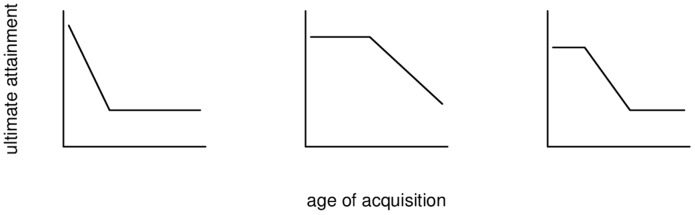
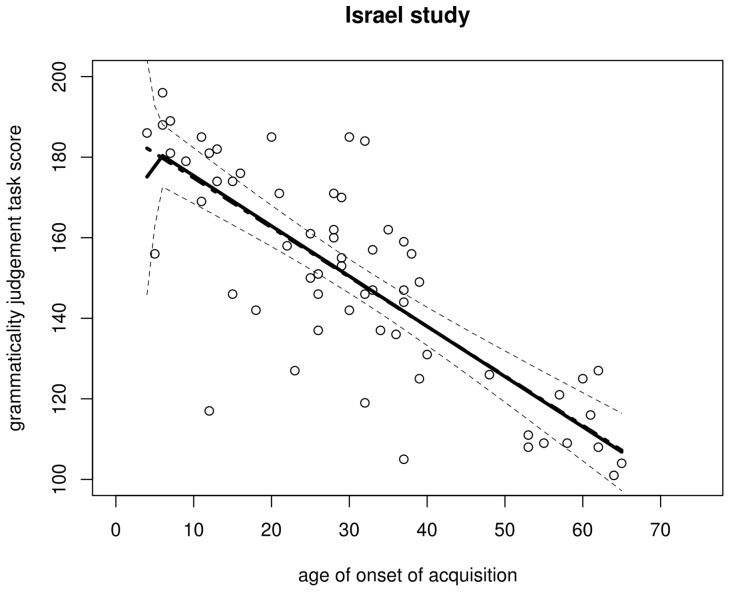
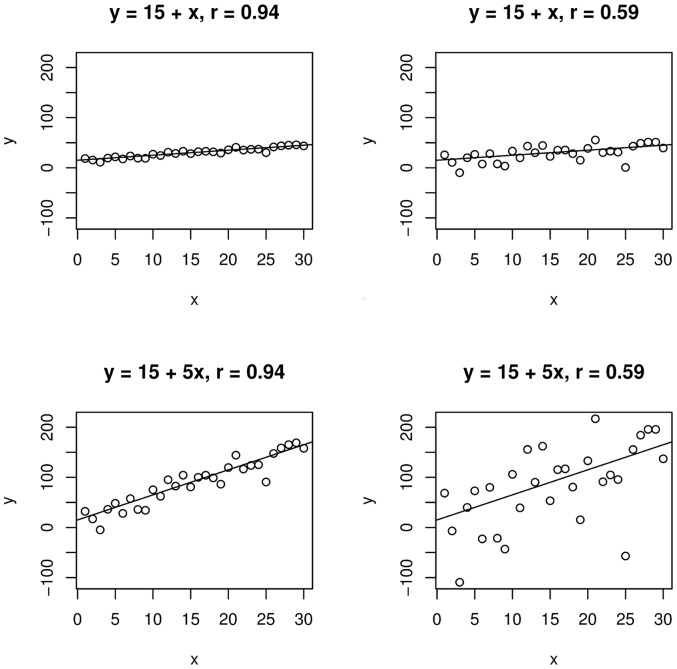
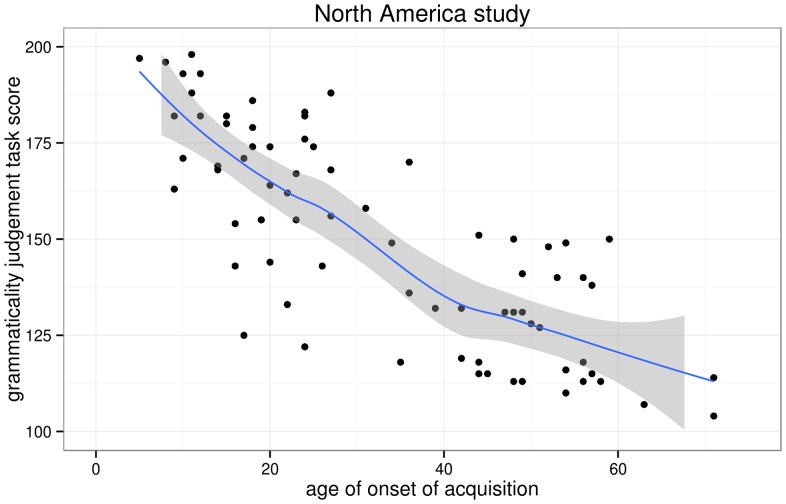
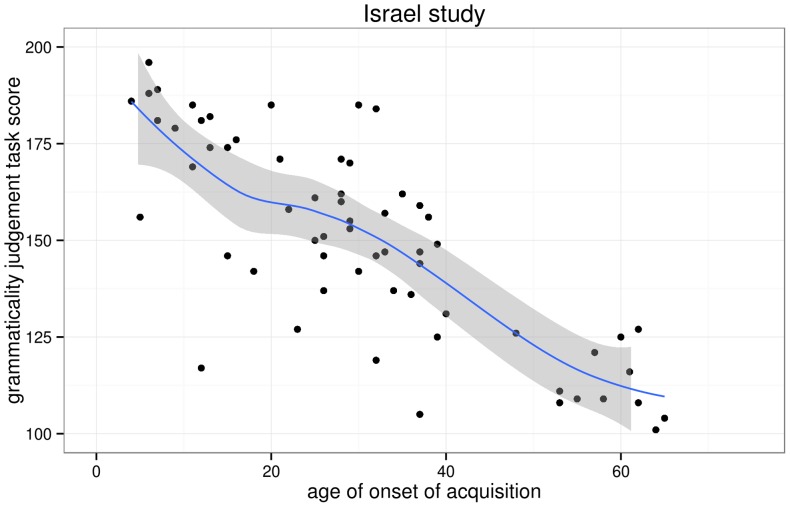
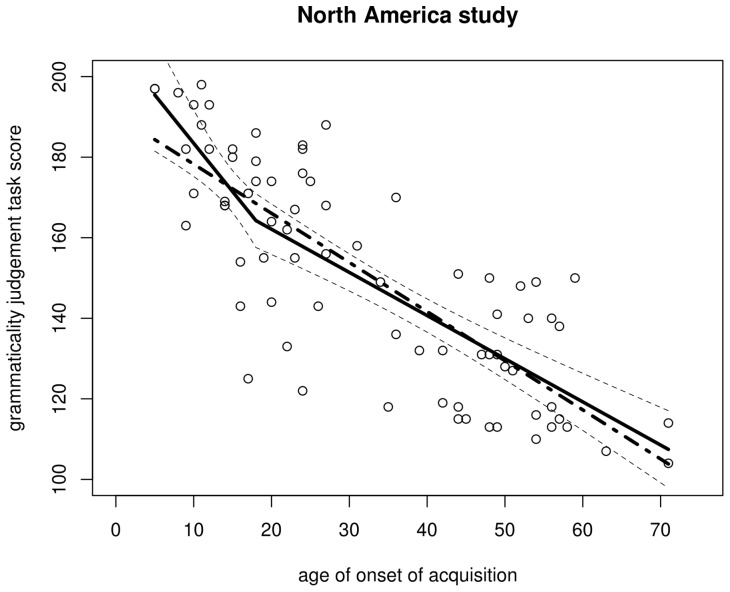
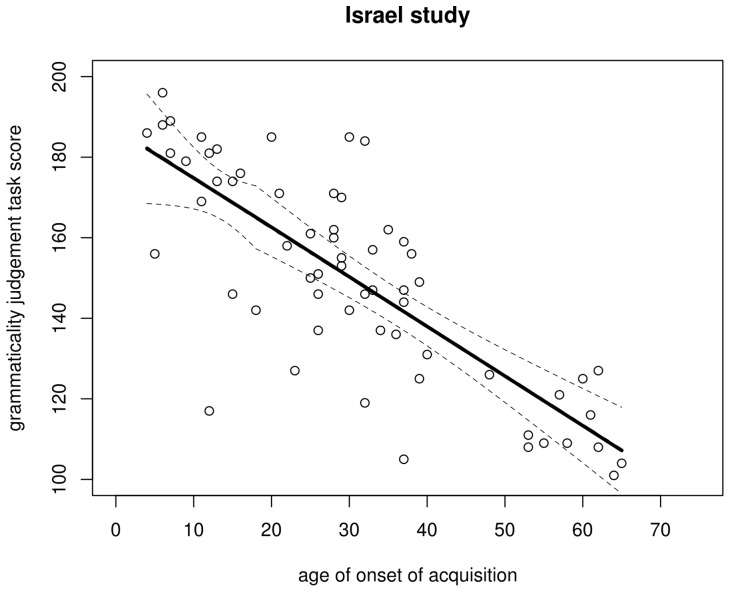
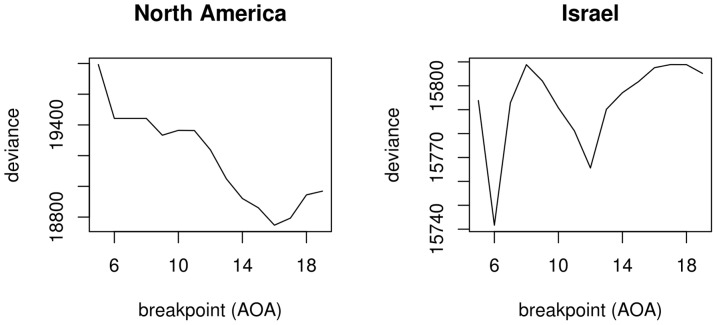
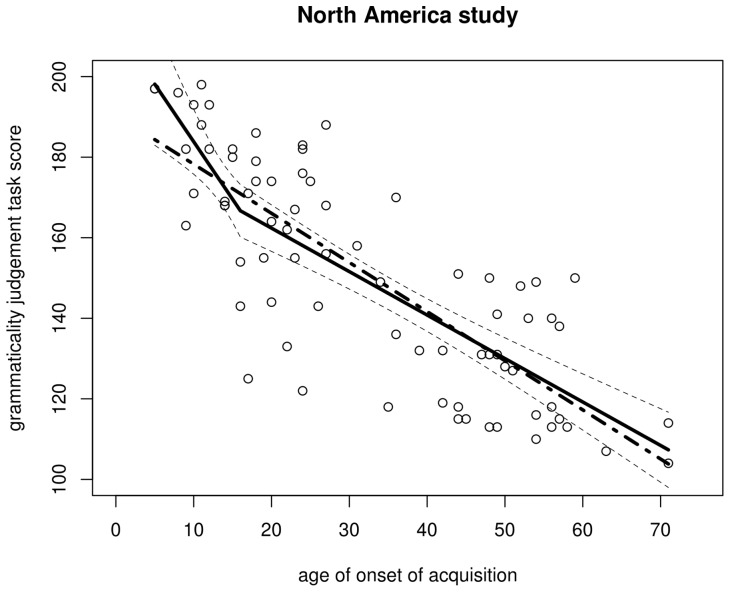
In second language acquisition research, the critical period hypothesis (cph) holds that the function between learners' age and their susceptibility to second language input is non-linear. This paper revisits the indistinctness found in the literature with regard to this hypothesis's scope and predictions. Even when its scope is clearly delineated and its predictions are spelt out, however, empirical studies-with few exceptions-use analytical (statistical) tools that are irrelevant with respect to the predictions made. This paper discusses statistical fallacies common in cph research and illustrates an alternative analytical method (piecewise regression) by means of a reanalysis of two datasets from a 2010 paper purporting to have found cross-linguistic evidence in favour of the cph. This reanalysis reveals that the specific age patterns predicted by the cph are not cross-linguistically robust. Applying the principle of parsimony, it is concluded that age patterns in second language acquisition are not governed by a critical period. To conclude, this paper highlights the role of confirmation bias in the scientific enterprise and appeals to second language acquisition researchers to reanalyse their old datasets using the methods discussed in this paper. The data and R commands that were used for the reanalysis are provided as supplementary materials.
在第二语言习得研究中,关键期假说(CPH)认为学习者年龄与第二语言输入敏感性之间的关系是非线性的。本文重新审视了该假说的范围和预测在文献中发现的不明确性。然而,即使明确了其范围并详细说明了其预测,除了极少数例外,实证研究仍使用与预测无关的分析(统计)工具。本文讨论了 CPH 研究中常见的统计谬误,并通过重新分析两篇声称发现支持 CPH 的跨语言证据的 2010 年论文中的两个数据集,说明了一种替代的分析方法(分段回归)。重新分析表明,CPH 预测的特定年龄模式在跨语言上并不稳健。根据简约原则,可以得出结论,第二语言习得中的年龄模式不受关键期的支配。总之,本文强调了确认偏差在科学研究中的作用,并呼吁第二语言习得研究人员使用本文讨论的方法重新分析他们的旧数据集。重新分析中使用的数据和 R 命令作为补充材料提供。