Department of Physiology and Neurobiology, Geisel School of Medicine at Dartmouth, Lebanon, New Hampshire, United States of America.
PLoS One. 2013 Jul 25;8(7):e69854. doi: 10.1371/journal.pone.0069854. Print 2013.
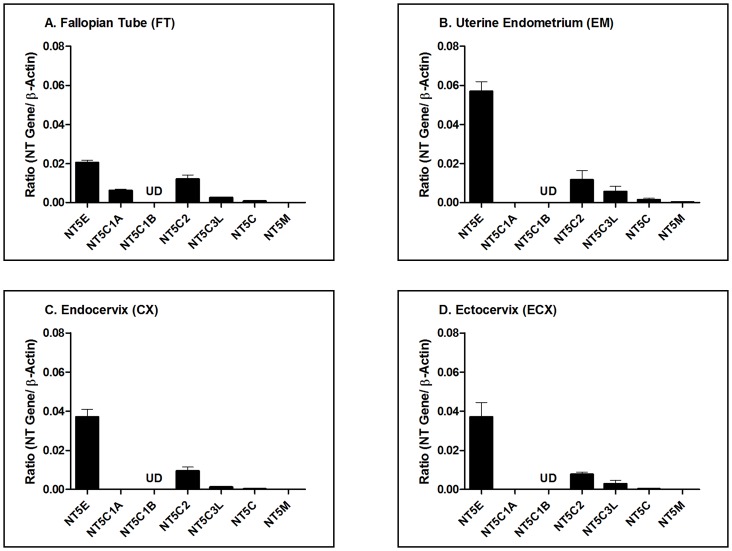
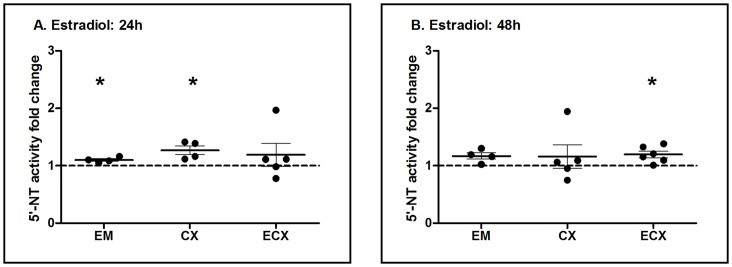
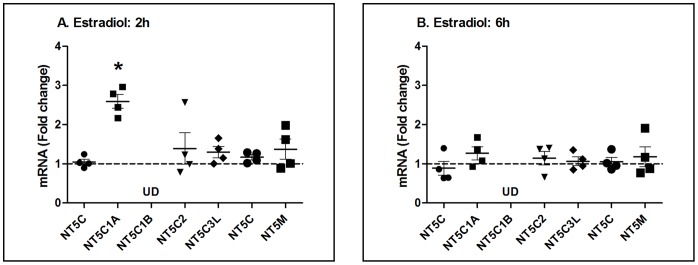
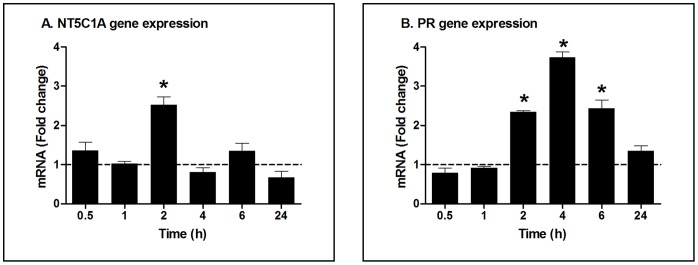
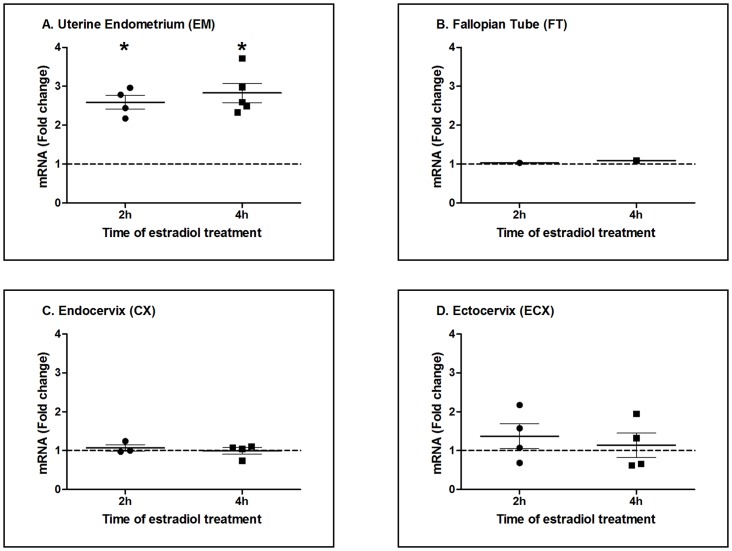
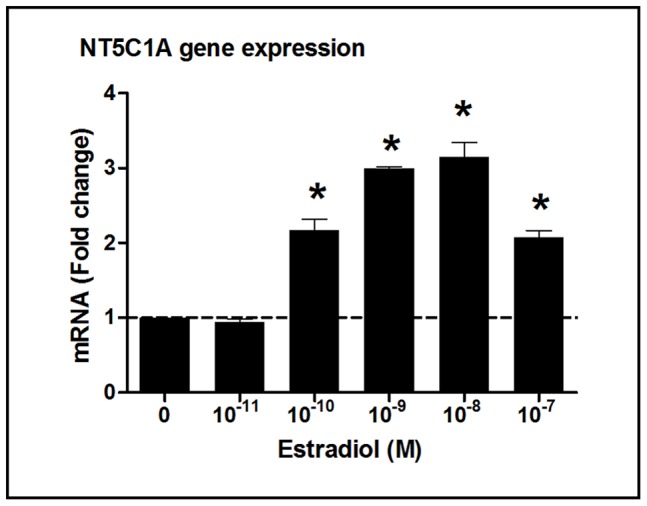
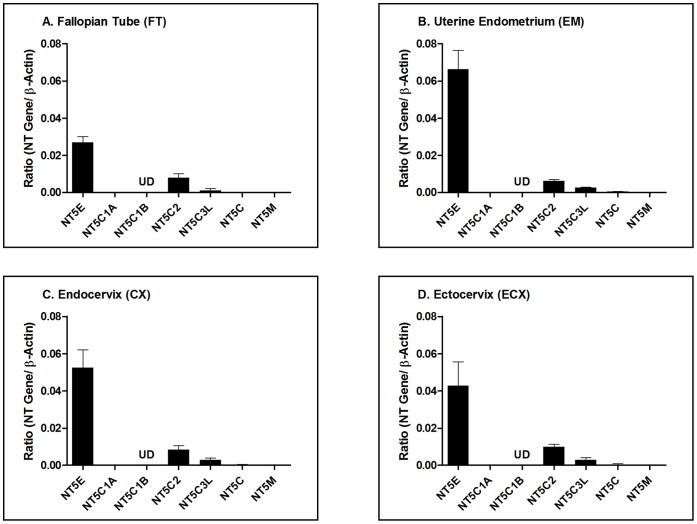
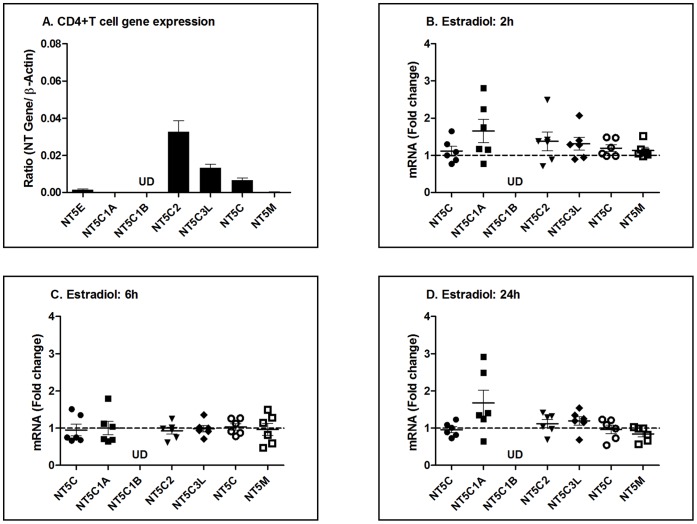
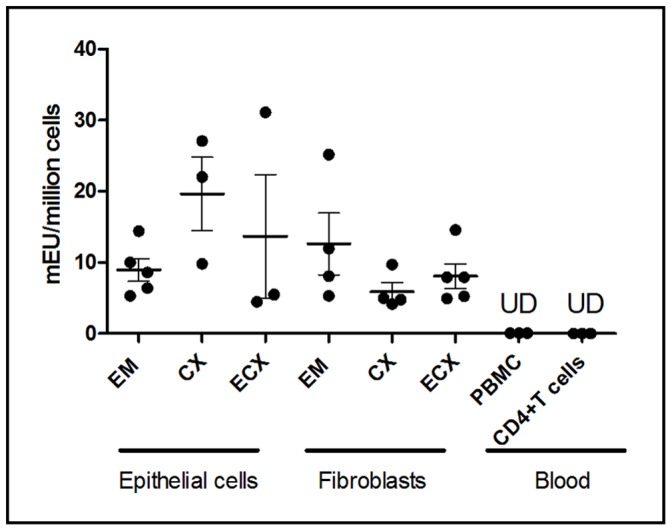
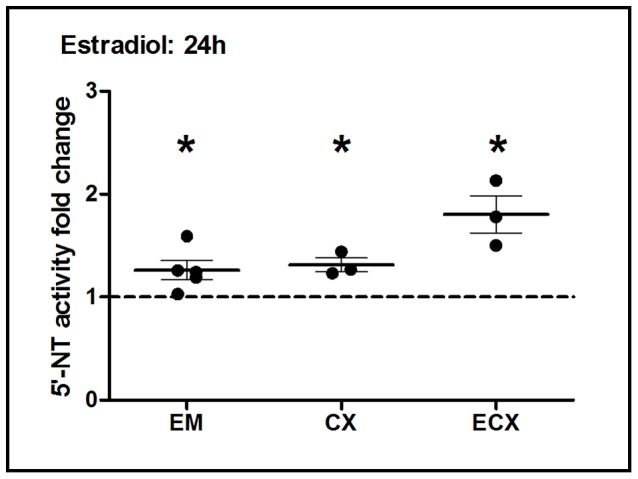
The use of topical and oral adenosine derivatives in HIV prevention that need to be maintained in tissues and cells at effective levels to prevent transmission prompted us to ask whether estradiol could influence the regulation of catabolic nucleotidase enzymes in epithelial cells and fibroblasts from the upper and lower female reproductive tract (FRT) as these might affect cellular TFV-DP levels. Epithelial cells and fibroblasts were isolated from endometrium (EM), endocervix (CX) and ectocervix (ECX) tissues from hysterectomy patients, grown to confluence and treated with or without estradiol prior to RNA isolation. The expression of nucleotidase (NT) genes was measurable by RT-PCR in epithelial cells and fibroblasts from all FRT tissues. To determine if sex hormones have the potential to regulate NT, we evaluated NT gene expression and NT biological activity in FRT cells following hormone treatment. Estradiol increased expression of Cytosolic 5'-nucleotidase after 2 or 4 h in endometrial epithelial cells but not epithelial cells or fibroblasts from other sites. In studies using a modified 5'-Nucleotidase biological assay for nucleotidases, estradiol increased NT activity in epithelial cells and fibroblasts from the EM, CX and ECX at 24 and 48 h. In related studies, HUVEC primary cells and a HUVEC cell line were unresponsive to estradiol in terms of nucleotidase expression or biological activity. Our findings of an increase in nucleotidase expression and biological activity induced by estradiol do not directly assess changes in microbicide metabolism. However, they do suggest that when estradiol levels are elevated during the menstrual cycle, FRT epithelial cells and fibroblasts from the EM, CX and ECX have the potential to influence microbicide levels that could enhance protection of HIV-target cells (CD4+T cells, macrophages and dendritic cells) throughout the FRT.
腺嘌呤核苷衍生物在 HIV 预防中的应用需要在组织和细胞中维持有效水平以防止传播,这促使我们询问雌二醇是否会影响上生殖道 (FRT) 上皮细胞和成纤维细胞中分解代谢核苷酸酶的调节,因为这可能会影响细胞中的 TFV-DP 水平。我们从子宫切除术患者的子宫内膜 (EM)、宫颈内口 (CX) 和宫颈外口 (ECX) 组织中分离出上皮细胞和成纤维细胞,使其达到汇合状态,然后在 RNA 分离之前用或不用雌二醇处理。上皮细胞和成纤维细胞来自所有 FRT 组织的 RT-PCR 可测量核苷酸酶 (NT) 基因的表达。为了确定性激素是否具有调节 NT 的潜力,我们评估了激素处理后 FRT 细胞中 NT 基因表达和 NT 生物学活性。雌二醇在子宫内膜上皮细胞中分别在 2 或 4 小时后增加细胞质 5'-核苷酸酶的表达,但在其他部位的上皮细胞或成纤维细胞中则不然。在使用改良的 5'-核苷酸酶生物学测定法进行核苷酸酶的研究中,雌二醇在 EM、CX 和 ECX 的上皮细胞和成纤维细胞中在 24 和 48 小时时增加了 NT 活性。在相关研究中,HUVEC 原代细胞和 HUVEC 细胞系在核苷酸酶表达或生物学活性方面对雌二醇没有反应。我们发现雌二醇诱导的核苷酸酶表达和生物学活性增加并不能直接评估杀微生物剂代谢的变化。但是,它们确实表明,在月经周期中雌二醇水平升高时,EM、CX 和 ECX 的 FRT 上皮细胞和成纤维细胞有可能影响杀微生物剂水平,从而增强整个 FRT 中 HIV 靶细胞 (CD4+T 细胞、巨噬细胞和树突状细胞) 的保护作用。