Spiers Hugo J, Hayman Robin M A, Jovalekic Aleksandar, Marozzi Elizabeth, Jeffery Kathryn J
Department of Cognitive, Perceptual and Brain Sciences, Division of Psychology and Language Sciences, Institute of Behavioural Neuroscience, University College London, UK.
Department of Cognitive, Perceptual and Brain Sciences, Division of Psychology and Language Sciences, Institute of Behavioural Neuroscience, University College London, UK Axona Ltd, Unit 4U St Albans Enterprise Centre, St Albans, UK.
Cereb Cortex. 2015 Jan;25(1):10-25. doi: 10.1093/cercor/bht198. Epub 2013 Aug 13.
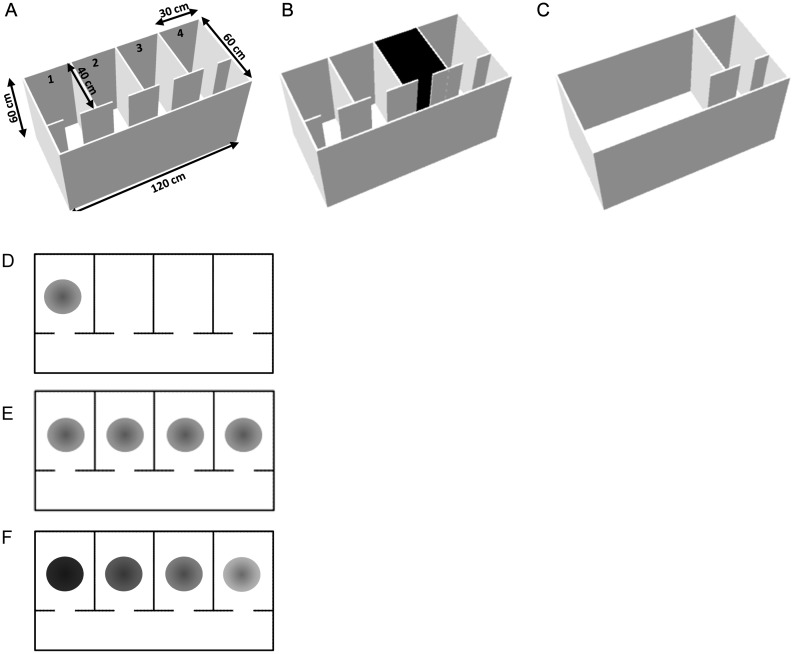
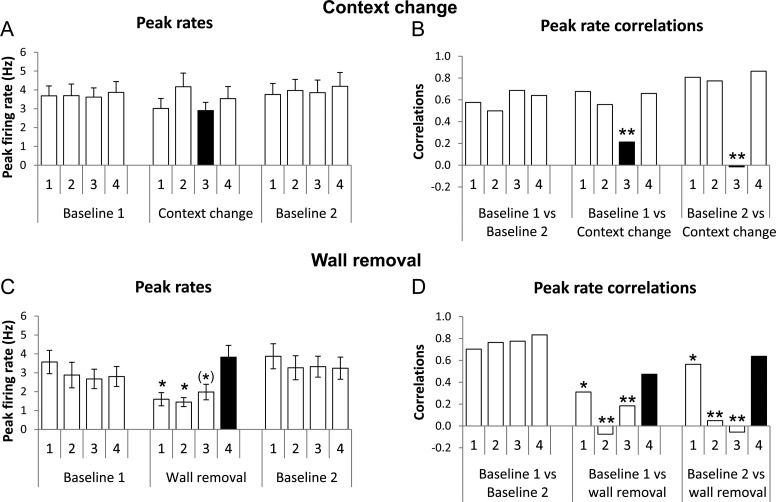
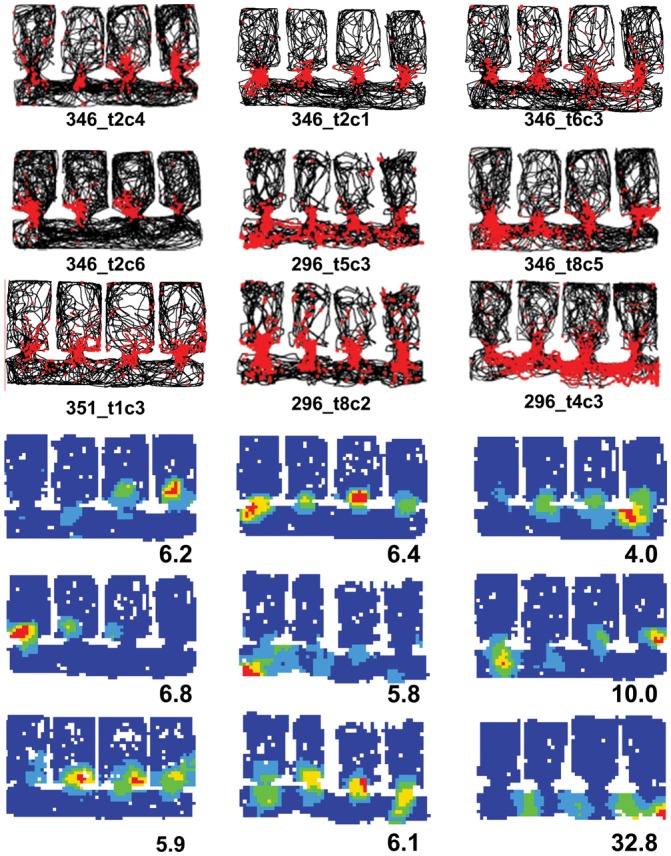
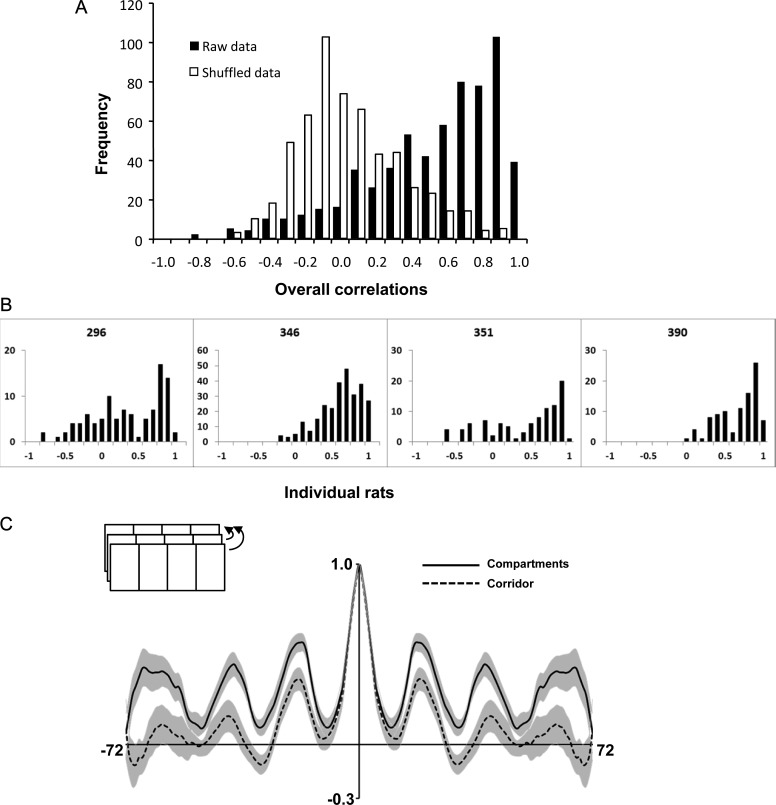
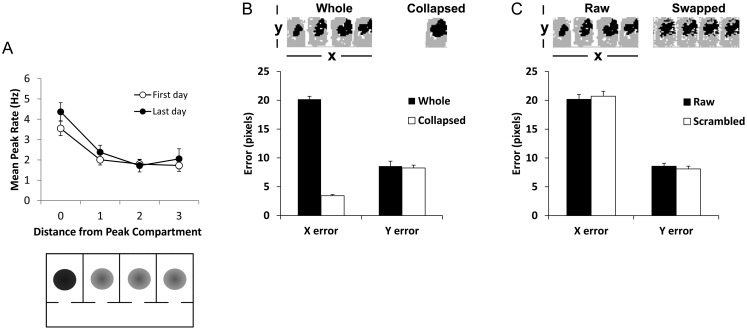
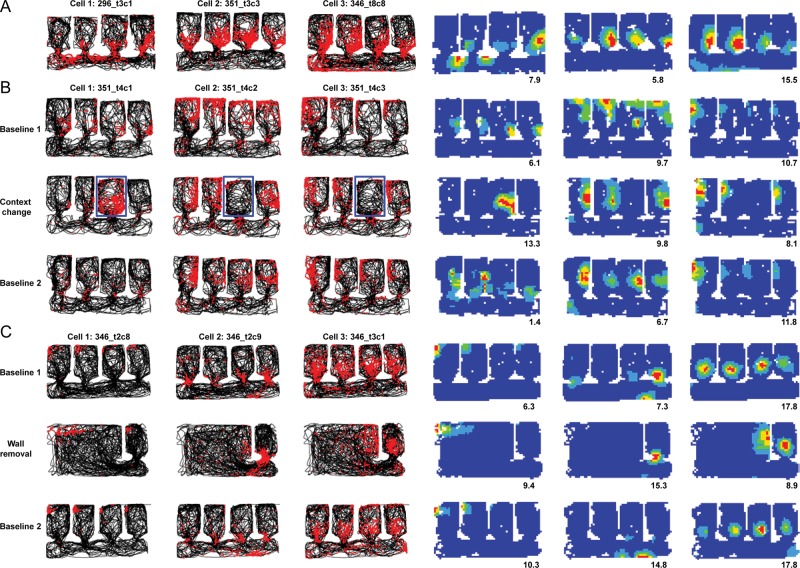
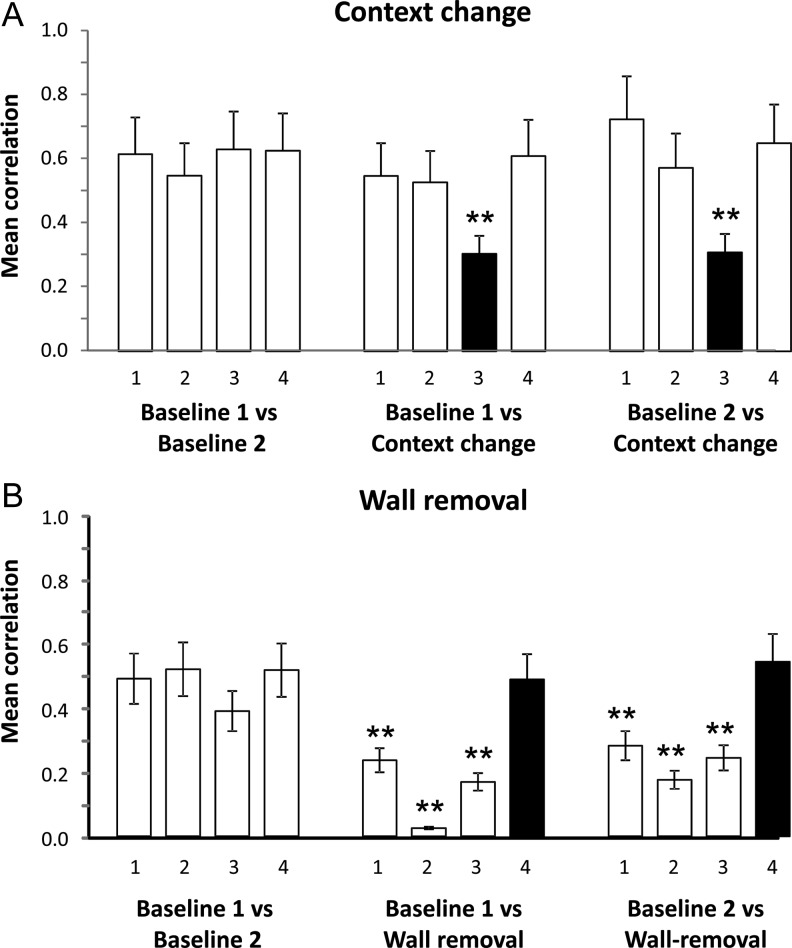
Hippocampal place cells support spatial memory using sensory information from the environment and self-motion information to localize their firing fields. Currently, there is disagreement about whether CA1 place cells can use pure self-motion information to disambiguate different compartments in environments containing multiple visually identical compartments. Some studies report that place cells can disambiguate different compartments, while others report that they do not. Furthermore, while numerous studies have examined remapping, there has been little examination of remapping in different subregions of a single environment. Is remapping purely local or do place fields in neighboring, unaffected, regions detect the change? We recorded place cells as rats foraged across a 4-compartment environment and report 3 new findings. First, we find that, unlike studies in which rats foraged in 2 compartments, place fields showed a high degree of spatial repetition with a slight degree of rate-based discrimination. Second, this repetition does not diminish with extended experience. Third, remapping was found to be purely local for both geometric change and contextual change. Our results reveal the limited capacity of the path integrator to drive pattern separation in hippocampal representations, and suggest that doorways may play a privileged role in segmenting the neural representation of space.
海马体位置细胞利用来自环境的感官信息和自身运动信息来定位其放电场,从而支持空间记忆。目前,对于CA1位置细胞是否能够利用纯粹的自身运动信息来区分包含多个视觉上相同隔室的环境中的不同隔室,存在分歧。一些研究报告称位置细胞能够区分不同的隔室,而另一些研究则报告它们不能。此外,虽然有大量研究考察了重映射,但对于单一环境中不同子区域的重映射研究甚少。重映射是纯粹局部性的,还是相邻未受影响区域的位置场能检测到变化呢?我们在大鼠在一个四隔室环境中觅食时记录了位置细胞,并报告了三项新发现。首先,我们发现,与大鼠在两个隔室中觅食的研究不同,位置场表现出高度的空间重复性,并伴有轻微程度的基于速率的区分。其次,这种重复性不会随着经验的增加而减弱。第三,发现无论是几何变化还是情境变化,重映射都是纯粹局部性的。我们的结果揭示了路径积分器在驱动海马体表征中的模式分离方面的有限能力,并表明门口可能在分割空间的神经表征中发挥特殊作用。