Institute of Translational Pharmacology, Consiglio Nazionale delle Ricerche (CNR), Roma 00133, Italy.
Nucleic Acids Res. 2013 Nov;41(20):9382-95. doi: 10.1093/nar/gkt740. Epub 2013 Aug 13.
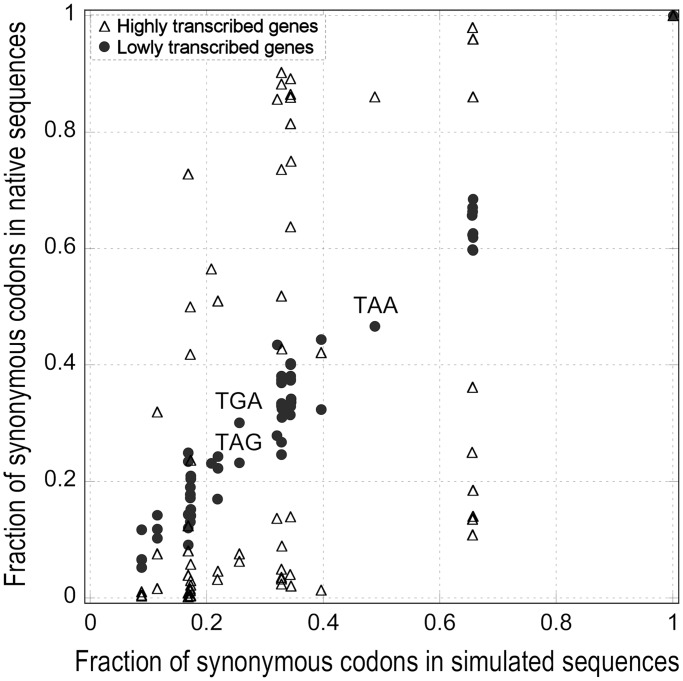
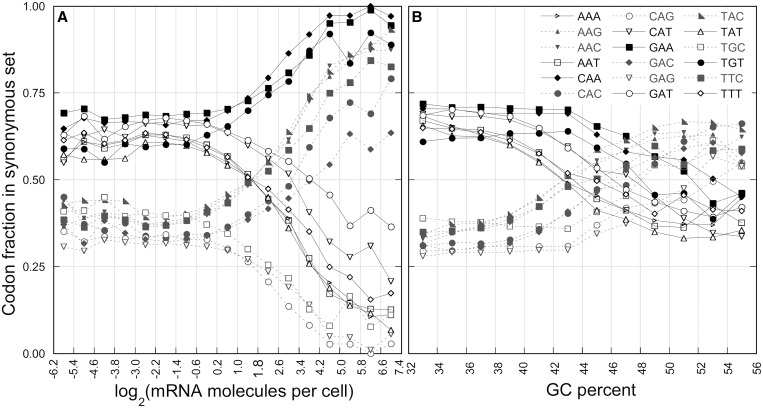
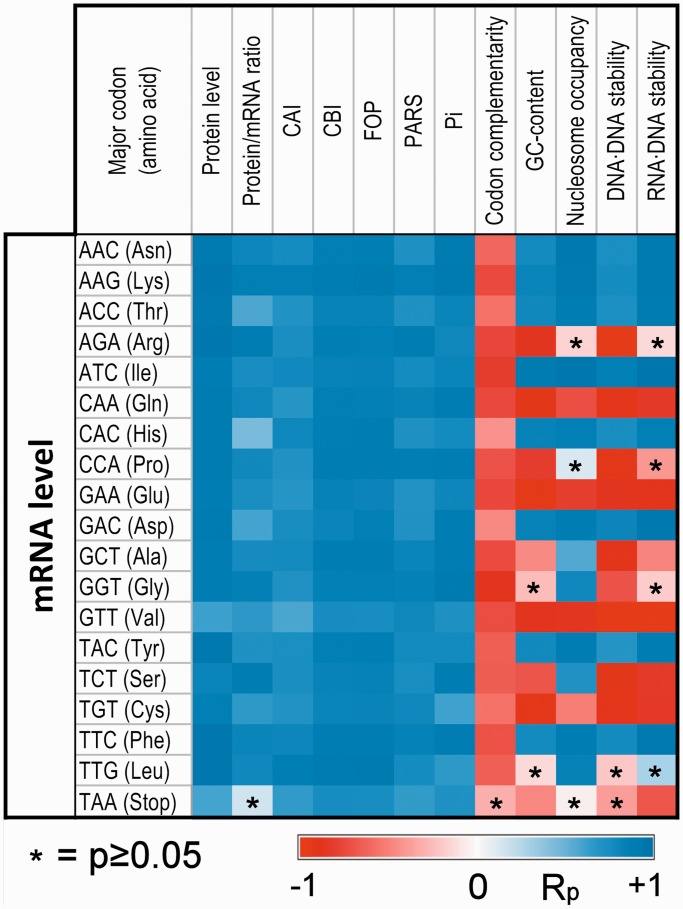
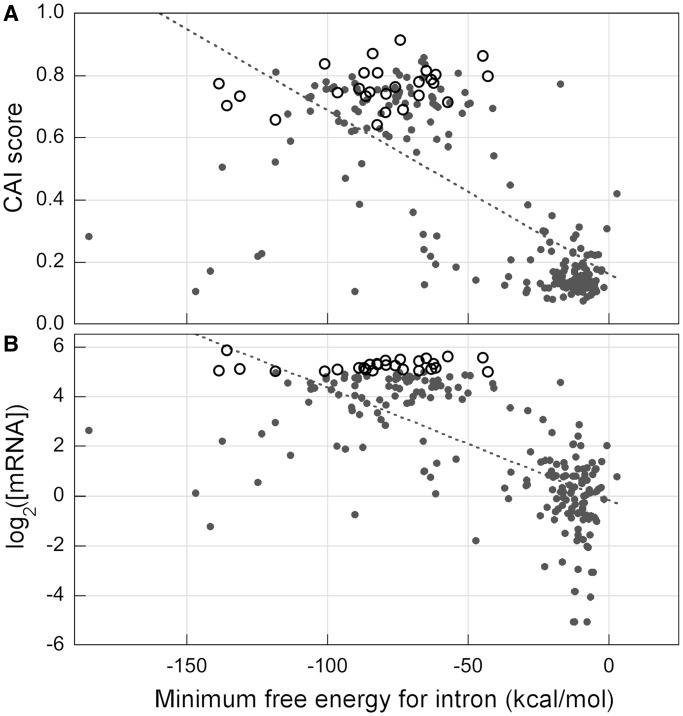
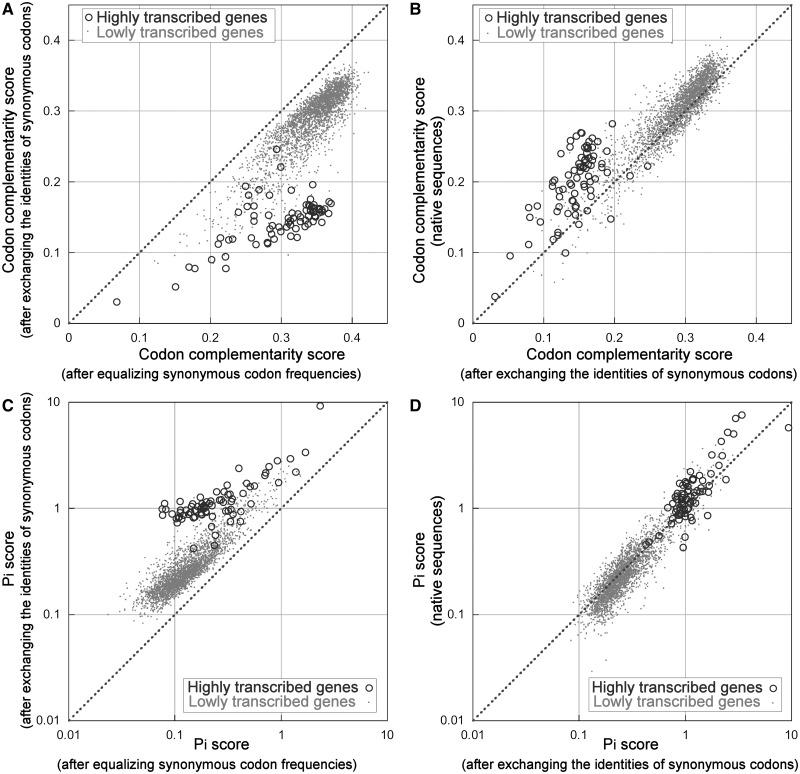
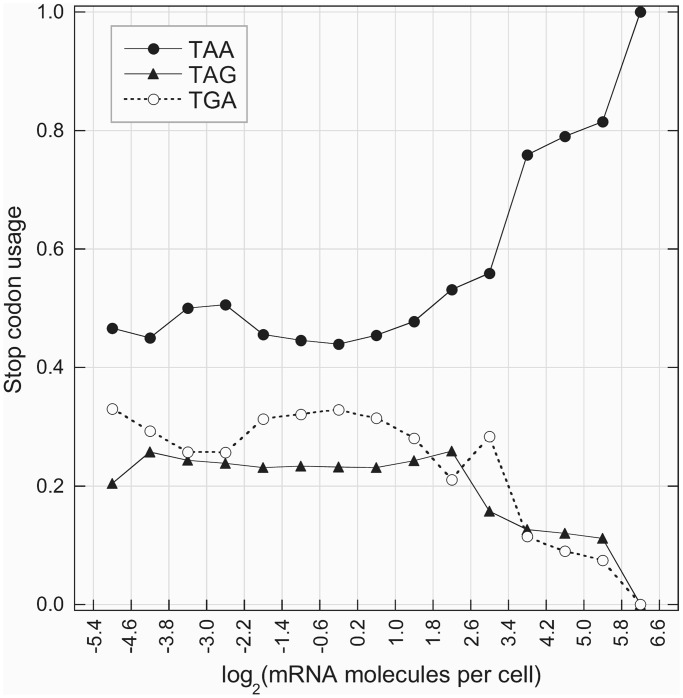
Codons that code for the same amino acid are often used with unequal frequencies. This phenomenon is termed codon bias. Here, we report a computational analysis of codon bias in yeast using experimental and theoretical genome-wide data. We show that the most used codons in highly expressed genes can be predicted by mRNA structural data and that the codon choice at each synonymous site within an mRNA is not random with respect to the local secondary structure. Because we also found that the folding stability of intron sequences is strongly correlated with codon bias and mRNA level, our results suggest that codon bias is linked to mRNA folding structure through a mechanism that, at least partially, operates before pre-mRNA splicing. Consistent with this, we report evidence supporting the adaptation of the tRNA pool to the codon profile of the most expressed genes rather than vice versa. We show that the correlation of codon usage with the gene expression level also includes the stop codons that are normally not decoded by aminoacyl-tRNAs. The results reported here are consistent with a role for transcriptional forces in driving codon usage bias via a mechanism that improves gene expression by optimizing mRNA folding structures.
编码相同氨基酸的密码子使用频率往往不同。这种现象被称为密码子偏好性。在这里,我们使用实验和理论的全基因组数据报告了酵母中密码子偏好性的计算分析。我们表明,高表达基因中最常用的密码子可以通过 mRNA 结构数据来预测,并且在 mRNA 内的每个同义位点处的密码子选择相对于局部二级结构不是随机的。因为我们还发现,内含子序列的折叠稳定性与密码子偏好性和 mRNA 水平强烈相关,所以我们的结果表明,密码子偏好性通过一种机制与 mRNA 折叠结构相关联,这种机制至少部分地在 pre-mRNA 剪接之前起作用。与此一致,我们报告了支持 tRNA 库适应最表达基因的密码子模式而不是相反的证据。我们表明,密码子使用与基因表达水平的相关性还包括通常不由氨酰-tRNA 解码的终止密码子。这里报道的结果与转录因子通过优化 mRNA 折叠结构来提高基因表达的机制来驱动密码子使用偏好性的作用一致。