Institute of Psychology, Kazimierz Wielki University, Bydgoszcz, Poland.
Med Sci Monit. 2013 Aug 16;19:674-80. doi: 10.12659/MSM.889501.
The article discusses the position of elderly patients in medical intervention context. The phenomenon of greying population has changed the attitude towards the old but common observations prove that quality of geriatric care is still unsatisfactory. In order to improve specialists' understanding of ageing, the comparative study on personality among people at different age was designed. The results are discussed in relation to the elderly patient-centred paradigm and in order to counterbalance still present ageist practices.
The research involved 164 persons in the early and late adulthood stage ages. Among the old there were the young old (aged 65-74) and the older old (aged 75+). All participants were asked to fill the NEO-FFI.
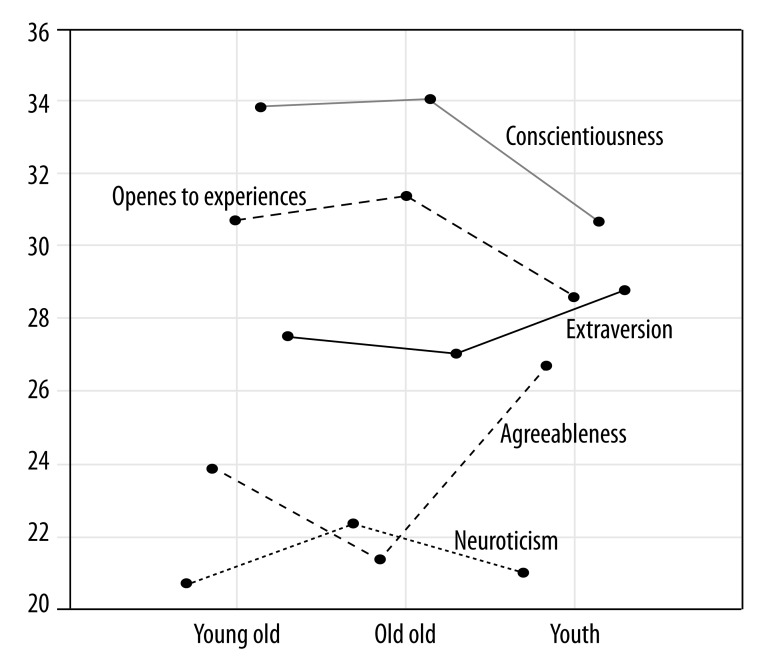
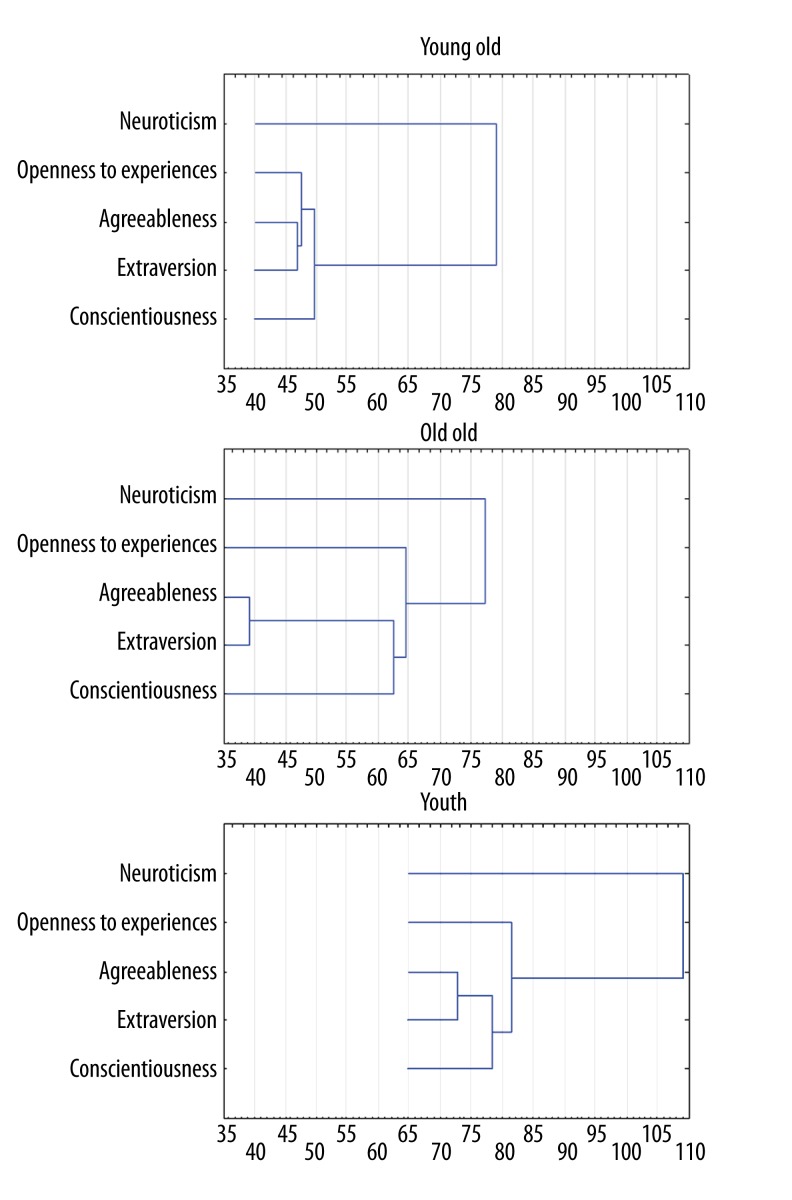
The results prove age-related differences in personality. In late adulthood in comparison to early adulthood there is the decline in openness to experiences. Two traits: agreeableness and conscientiousness increase significantly. Age did not differentiate significantly the level of neuroticism and of extraversion. The results of cluster analyses show the further differences in taxonomies of personality traits at different period of life.
The results challenge the stereotypes that present older people as neurotic, and aggressive. The age did not differentiate significantly the level of neuroticism and of extraversion. In general, the obtained results prove that the ageist assumption that the geriatric patients are troublesome is not arguable. This article builds support for effective change in geriatric professional practices and improvement in the elderly patients' quality of life.
本文讨论了老年患者在医疗干预背景下的地位。人口老龄化现象改变了人们对老年人的态度,但常见的观察结果表明,老年护理的质量仍然不尽如人意。为了提高专家对衰老的理解,设计了一项关于不同年龄段人群人格的比较研究。结果与以老年患者为中心的范式进行了讨论,并为了平衡仍然存在的年龄歧视做法。
该研究涉及 164 名处于成年早期和晚期的人。老年人中包括年轻老年人(65-74 岁)和年长老年人(75 岁以上)。所有参与者都被要求填写 NEO-FFI。
研究结果证明了人格的年龄相关性差异。与成年早期相比,成年晚期的开放性体验有所下降。两个特质:宜人性和尽责性显著增加。年龄对神经质和外向性的水平没有显著差异。聚类分析的结果显示,在不同生命阶段的人格特质分类中存在进一步的差异。
研究结果挑战了将老年人视为神经质和攻击性的刻板印象。年龄对神经质和外向性的水平没有显著差异。总的来说,研究结果证明了认为老年患者麻烦的年龄歧视假设是站不住脚的。本文为老年病专业实践的有效变革和提高老年患者的生活质量提供了支持。