1Genetically Modified Organism Research Center, National Institute of Agrobiological Sciences, 2-1-2 Kan-nondai, Tsukuba, Ibaraki 305-8602, Japan.
DNA Res. 2013 Dec;20(6):623-31. doi: 10.1093/dnares/dst036. Epub 2013 Aug 15.
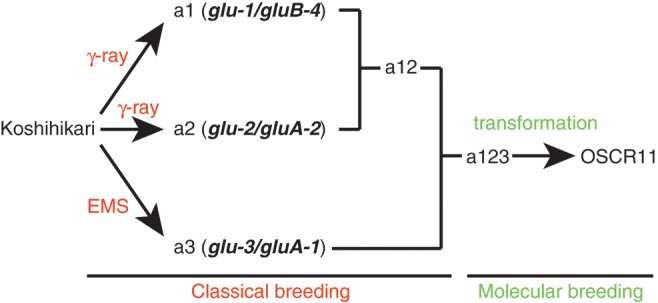
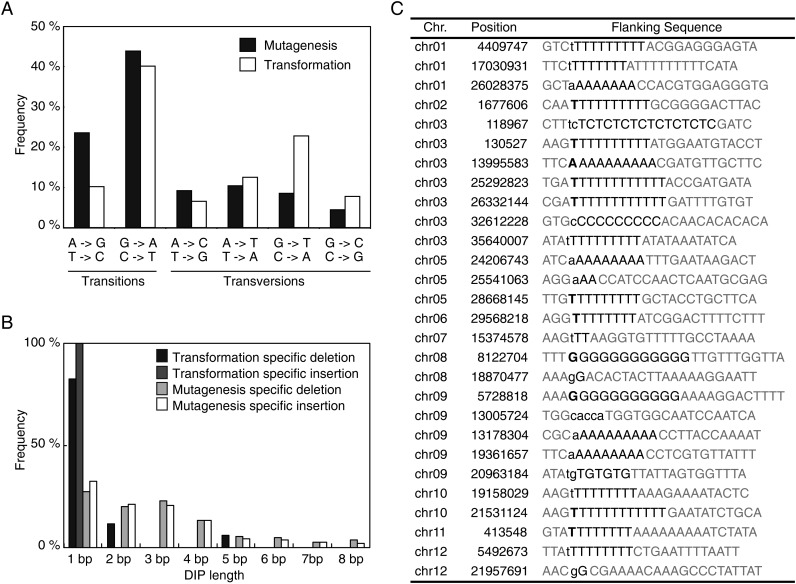
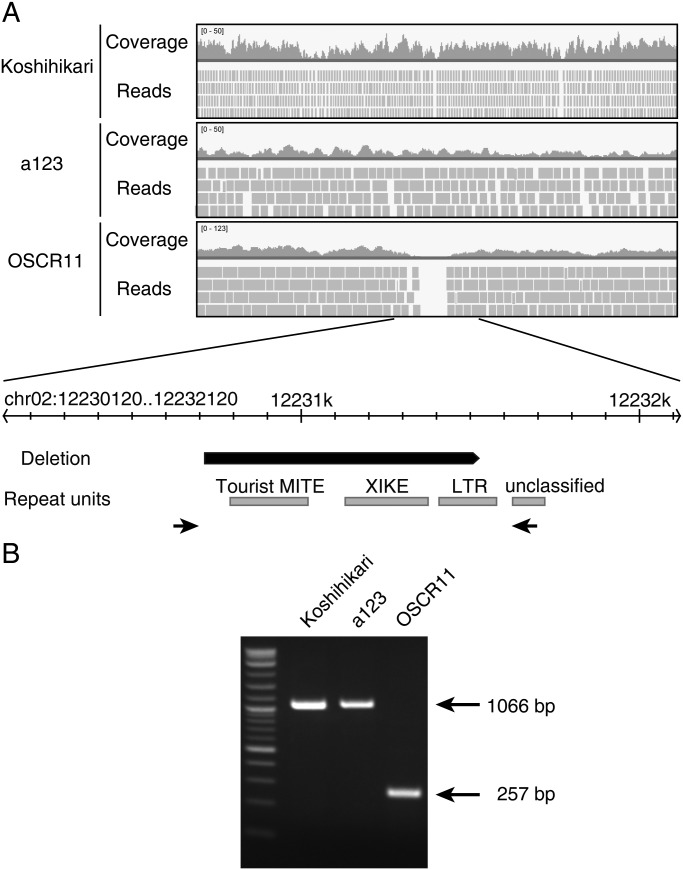
Genetic modification (GM) by Agrobacterium-mediated transformation is a robust and widely employed method to confer new traits to crops. In this process, a transfer DNA is delivered into the host genome, but it is still unclear how the host genome is altered by this event at single-base resolution. To decipher genomic discrepancy between GM crops and their host, we conducted whole-genome sequencing of a transgenic rice line OSCR11. This rice line expresses a seed-based edible vaccine containing two major pollen allergens, Cry j 1 and Cry j 2, against Japanese cedar pollinosis. We revealed that genetic differences between OSCR11 and its host a123 were significantly less than those between a123 and its precedent cultivar Koshihikari. The pattern of nucleotide base substitution in OSCR11, relative to a123, was consistent with somaclonal variation. Mutations in OSCR11 probably occurred during the cell culture steps. In addition, strand-specific mRNA-Seq revealed similar transcriptomes of a123 and OSCR11, supporting genomic integrity between them.
通过农杆菌介导的转化进行基因修饰(GM)是一种将新特性赋予作物的强大且广泛应用的方法。在此过程中,转移 DNA 被递送到宿主基因组中,但仍不清楚宿主基因组如何在单碱基分辨率下被该事件改变。为了解析 GM 作物与其宿主之间的基因组差异,我们对转基 OSCR11 水稻品系进行了全基因组测序。该水稻品系表达了一种基于种子的可食用疫苗,其中含有两种针对日本扁柏花粉过敏的主要花粉过敏原 Cry j 1 和 Cry j 2。我们发现,OSCR11 与其宿主 a123 之间的遗传差异明显小于 a123 与其前一栽培品种 Koshihikari 之间的遗传差异。与 a123 相比,OSCR11 中的核苷酸碱基取代模式与体细胞变异一致。OSCR11 中的突变可能发生在细胞培养步骤中。此外,链特异性 mRNA-Seq 揭示了 a123 和 OSCR11 之间相似的转录组,支持它们之间的基因组完整性。