Division of Clinical Sciences, Telethon Institute for Child Health Research, Subiaco, Western Australia, Australia.
Environ Health Perspect. 2013 Oct;121(10):1187-93. doi: 10.1289/ehp.1306748. Epub 2013 Aug 22.
Arsenic is a significant global environmental health problem. Exposure to arsenic in early life has been shown to increase the rate of respiratory infections during infancy, reduce childhood lung function, and increase the rates of bronchiectasis in early adulthood.
We aimed to determine if early life exposure to arsenic exacerbates the response to early life influenza infection in mice.
C57BL/6 mice were exposed to arsenic in utero and throughout postnatal life. At 1 week of age, a subgroup of mice were infected with influenza A. We then assessed the acute and long-term effects of arsenic exposure on viral clearance, inflammation, lung structure, and lung function.
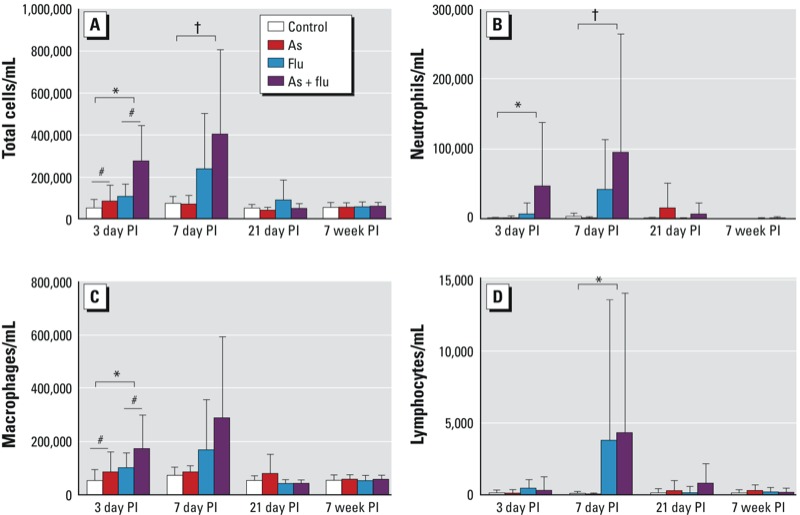
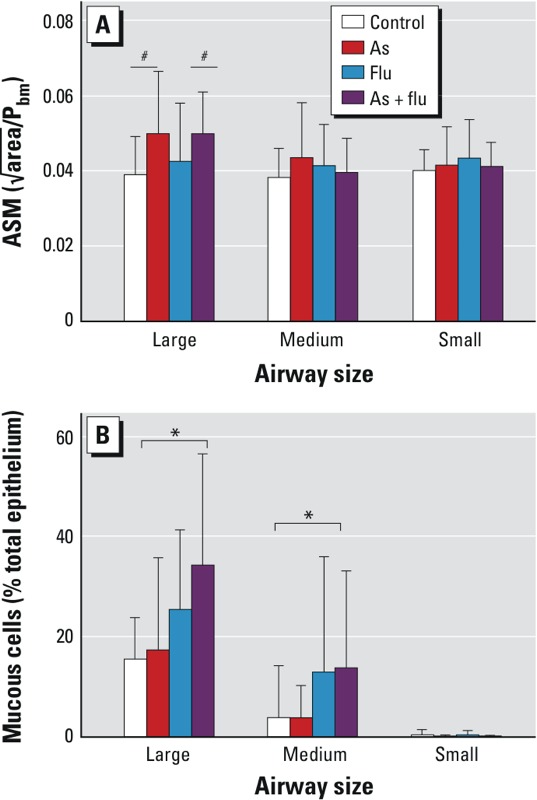
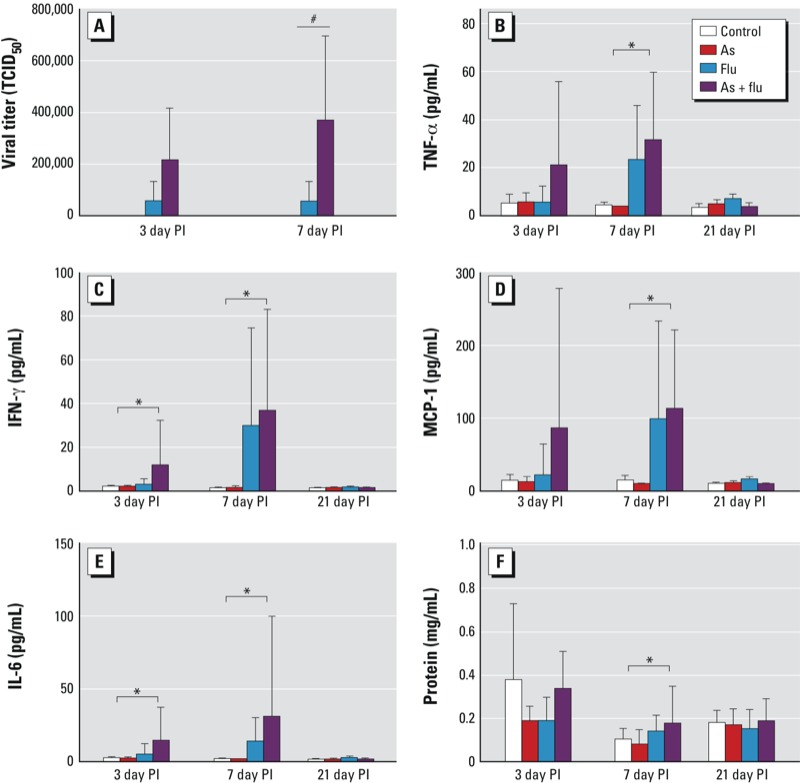
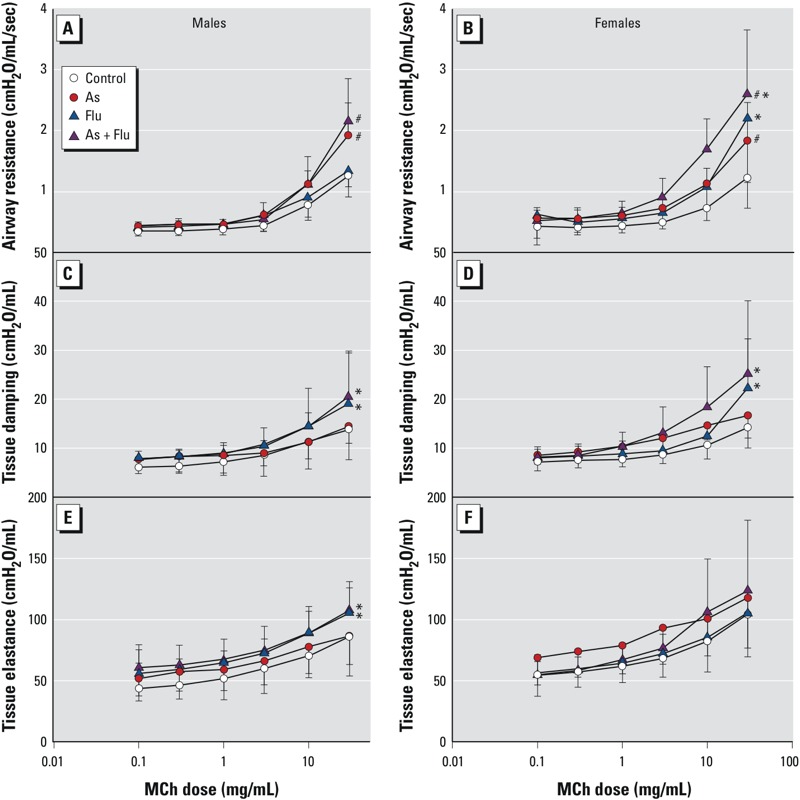
Early life arsenic exposure reduced the clearance of and exacerbated the inflammatory response to influenza A, and resulted in acute and long-term changes in lung mechanics and airway structure.
Increased susceptibility to respiratory infections combined with exaggerated inflammatory responses throughout early life may contribute to the development of bronchiectasis in arsenic-exposed populations.
砷是一个重大的全球环境健康问题。在生命早期接触砷已被证明会增加婴儿期呼吸道感染的速度,降低儿童肺功能,并增加成年早期支气管扩张的发生率。
我们旨在确定生命早期暴露于砷是否会加剧小鼠对生命早期流感感染的反应。
C57BL/6 小鼠在子宫内和整个产后生活中暴露于砷。在 1 周龄时,亚组小鼠感染了甲型流感病毒。然后,我们评估了砷暴露对病毒清除、炎症、肺结构和肺功能的急性和长期影响。
生命早期砷暴露会降低甲型流感的清除率,并加剧其炎症反应,导致急性和长期的肺力学和气道结构变化。
呼吸道感染的易感性增加,以及整个生命早期炎症反应的夸大,可能导致暴露于砷的人群中支气管扩张的发生。