Department of Psychology, University of Groningen Groningen, Netherlands.
Front Neurosci. 2013 Aug 21;7:149. doi: 10.3389/fnins.2013.00149. eCollection 2013.
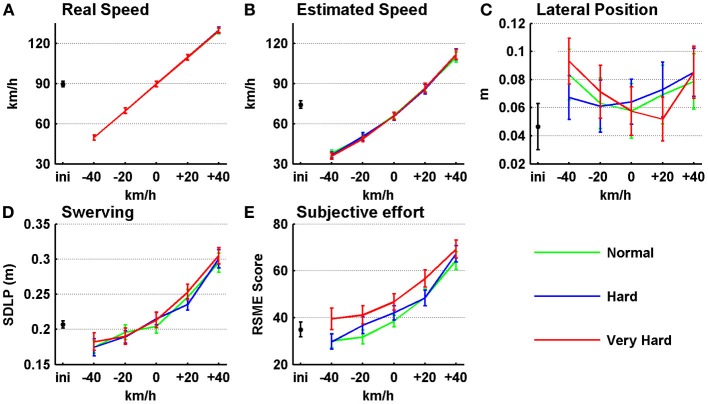
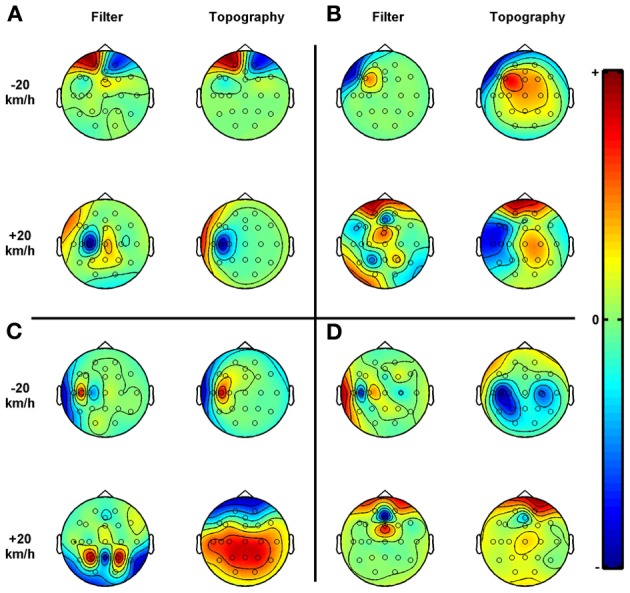
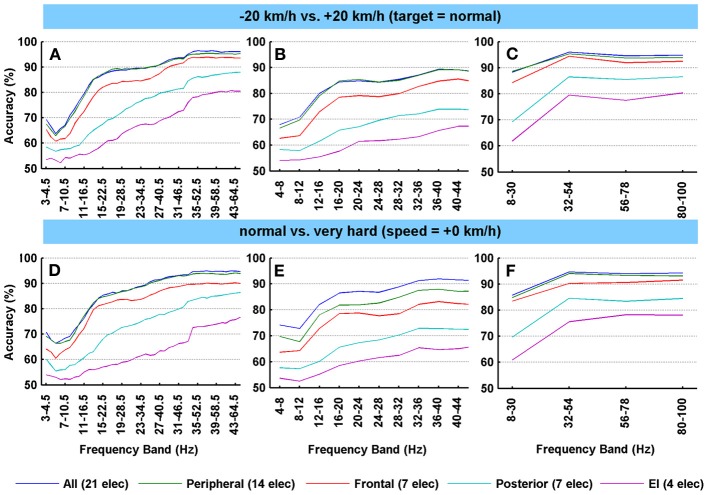
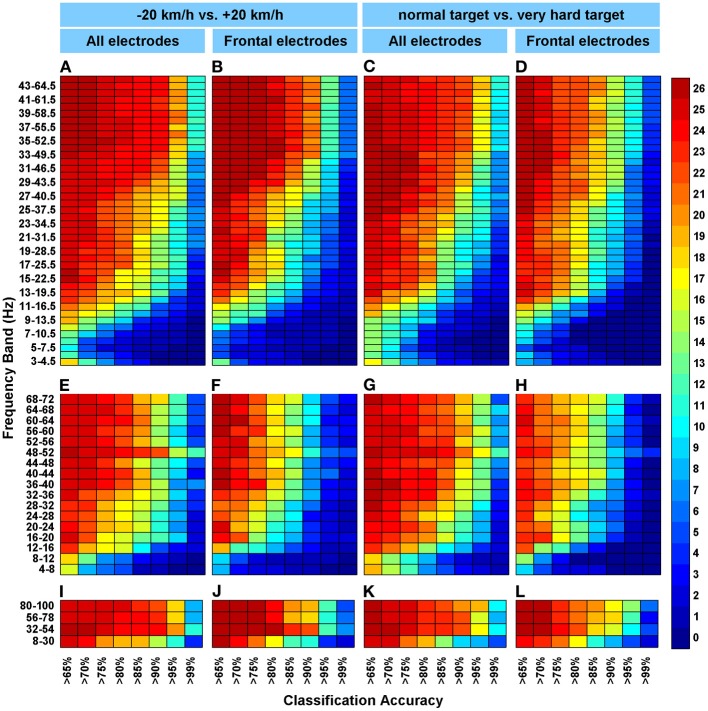
A passive Brain Computer Interface (BCI) is a system that responds to the spontaneously produced brain activity of its user and could be used to develop interactive task support. A human-machine system that could benefit from brain-based task support is the driver-car interaction system. To investigate the feasibility of such a system to detect changes in visuomotor workload, 34 drivers were exposed to several levels of driving demand in a driving simulator. Driving demand was manipulated by varying driving speed and by asking the drivers to comply to individually set lane keeping performance targets. Differences in the individual driver's workload levels were classified by applying the Common Spatial Pattern (CSP) and Fisher's linear discriminant analysis to frequency filtered electroencephalogram (EEG) data during an off line classification study. Several frequency ranges, EEG cap configurations, and condition pairs were explored. It was found that classifications were most accurate when based on high frequencies, larger electrode sets, and the frontal electrodes. Depending on these factors, classification accuracies across participants reached about 95% on average. The association between high accuracies and high frequencies suggests that part of the underlying information did not originate directly from neuronal activity. Nonetheless, average classification accuracies up to 75-80% were obtained from the lower EEG ranges that are likely to reflect neuronal activity. For a system designer, this implies that a passive BCI system may use several frequency ranges for workload classifications.
被动式脑机接口(BCI)是一种响应用户自发产生的脑活动的系统,可用于开发交互式任务支持。受益于基于大脑的任务支持的人机系统是驾驶员-汽车交互系统。为了研究这种系统检测视动工作量变化的可行性,34 名驾驶员在驾驶模拟器中暴露于几个不同的驾驶需求水平。通过改变驾驶速度和要求驾驶员遵守单独设定的车道保持性能目标来操纵驾驶需求。通过离线分类研究,应用共空间模式(CSP)和 Fisher 线性判别分析对频率滤波脑电图(EEG)数据进行分类,从而区分驾驶员个体的工作量水平差异。研究探索了几种频率范围、EEG 帽配置和条件对。结果发现,当基于高频、较大的电极集和额叶电极进行分类时,分类最准确。根据这些因素,参与者的分类准确率平均达到约 95%。高准确率与高频之间的关联表明,部分基础信息并非直接源自神经元活动。尽管如此,从可能反映神经元活动的较低 EEG 范围中,仍可获得高达 75-80%的平均分类准确率。对于系统设计人员而言,这意味着被动式 BCI 系统可以使用多个频率范围进行工作量分类。