1] Lundbeck Research USA Inc., Paramus, New Jersey, USA. [2].
Nat Chem Biol. 2013 Oct;9(10):630-5. doi: 10.1038/nchembio.1333. Epub 2013 Aug 25.
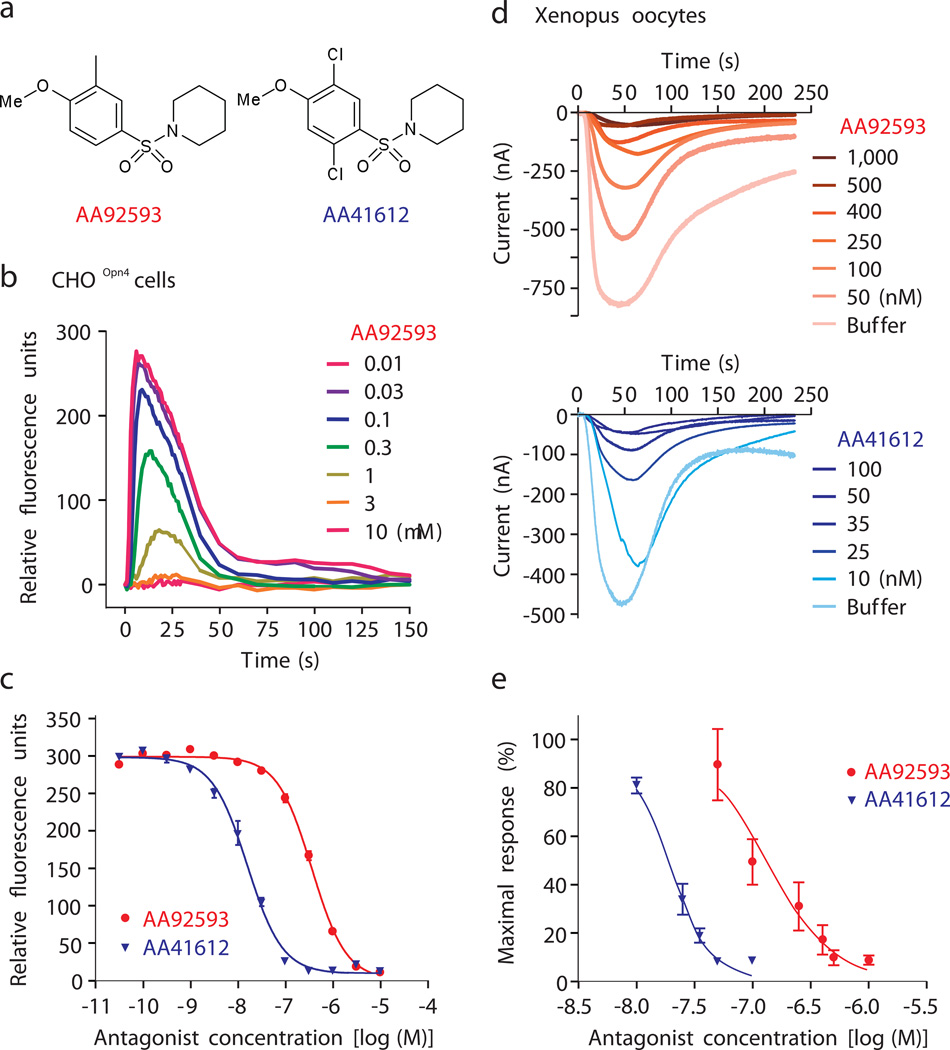
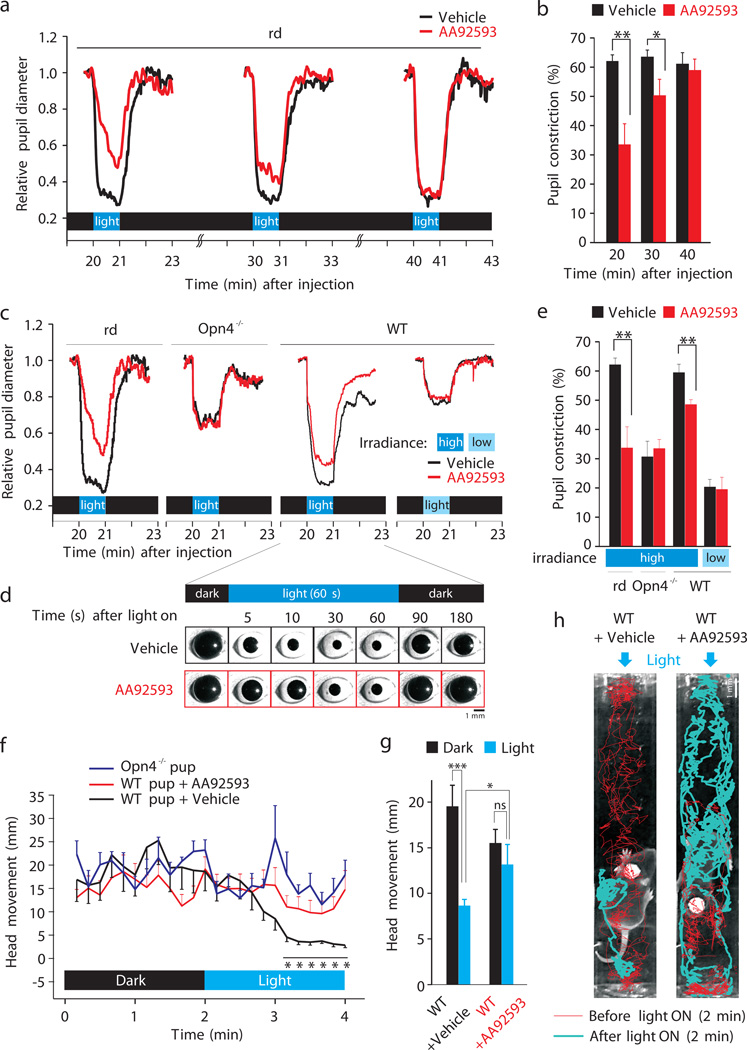
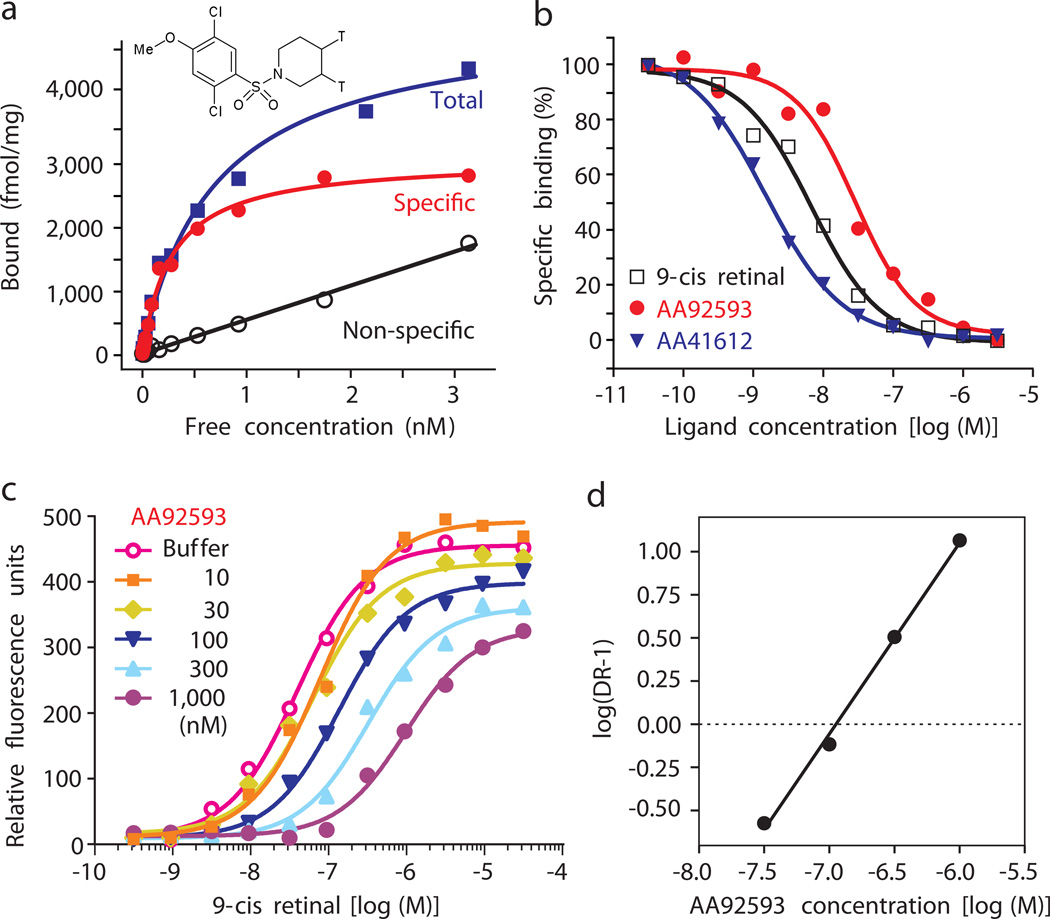
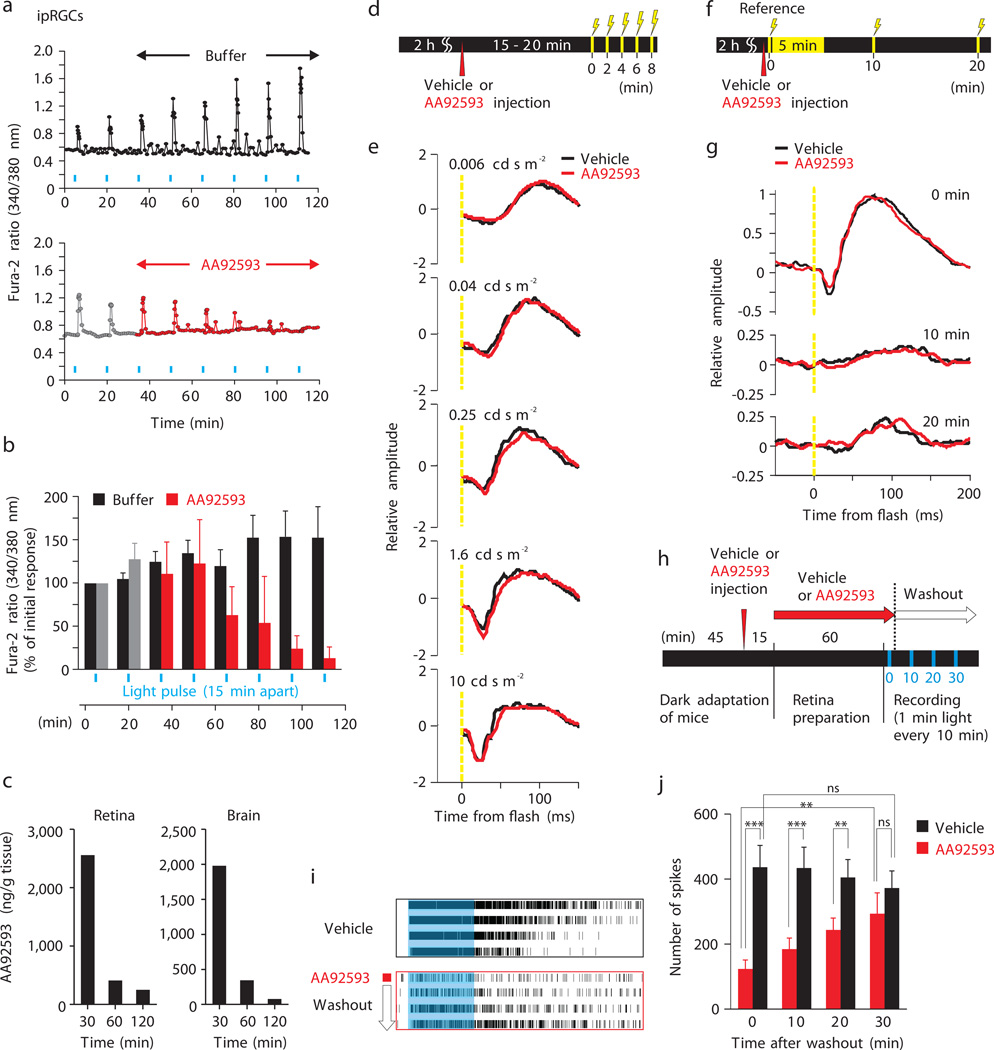
Melanopsin, expressed in a subset of retinal ganglion cells, mediates behavioral adaptation to ambient light and other non-image-forming photic responses. This has raised the possibility that pharmacological manipulation of melanopsin can modulate several central nervous system responses, including photophobia, sleep, circadian rhythms and neuroendocrine function. Here we describe the identification of a potent synthetic melanopsin antagonist with in vivo activity. New sulfonamide compounds inhibiting melanopsin (opsinamides) compete with retinal binding to melanopsin and inhibit its function without affecting rod- and cone-mediated responses. In vivo administration of opsinamides to mice specifically and reversibly modified melanopsin-dependent light responses, including the pupillary light reflex and light aversion. The discovery of opsinamides raises the prospect of therapeutic control of the melanopsin phototransduction system to regulate light-dependent behavior and remediate pathological conditions.
黑视蛋白表达于视网膜神经节细胞的一个亚群中,介导对环境光的行为适应和其他非成像光反应。这就提出了一种可能性,即通过药理学手段来操纵黑视蛋白可以调节多种中枢神经系统的反应,包括畏光、睡眠、昼夜节律和神经内分泌功能。在这里,我们描述了一种具有体内活性的有效合成黑视蛋白拮抗剂的鉴定。抑制黑视蛋白的新型磺酰胺化合物(opsinamides)与视网膜对黑视蛋白的结合竞争,并抑制其功能,而不影响视杆细胞和视锥细胞介导的反应。opsinamides 被体内给药到小鼠后,可以特异性和可逆地改变依赖黑视蛋白的光反应,包括瞳孔对光反射和光回避。opsinamides 的发现为治疗性控制黑视蛋白光转导系统以调节依赖于光的行为和矫正病理状况提供了可能。