CEINGE Biotecnologie Avanzate , Napoli , Italy.
Front Endocrinol (Lausanne). 2013 Aug 22;4:104. doi: 10.3389/fendo.2013.00104. eCollection 2013.
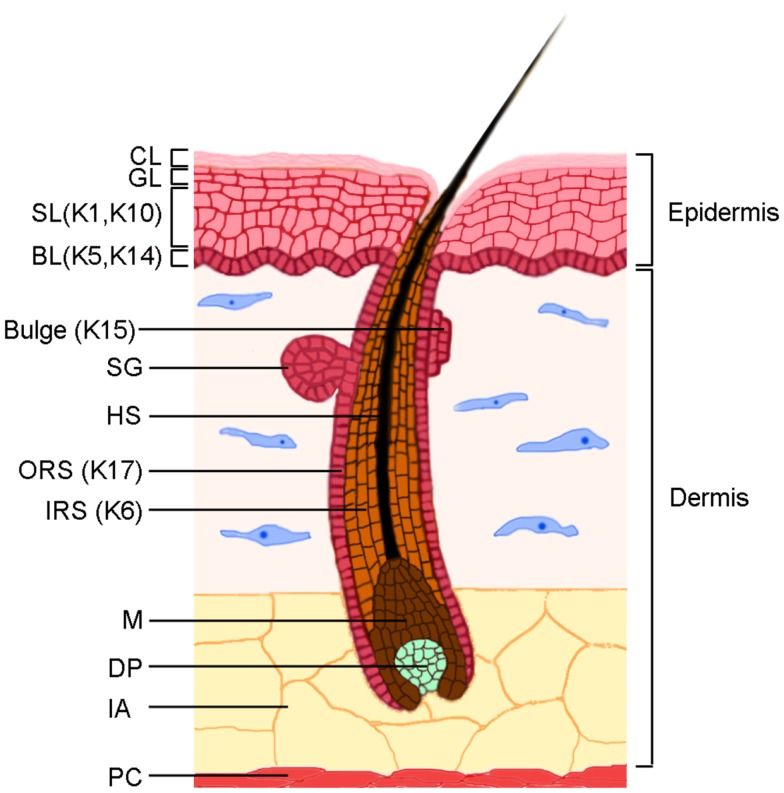
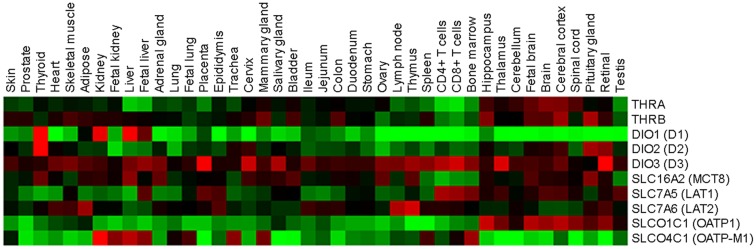
Skin is the largest organ of the human body and plays a key role in protecting the individual from external insults. The barrier function of the skin is performed primarily by the epidermis, a self-renewing stratified squamous epithelium composed of cells that undergo a well-characterized and finely tuned process of terminal differentiation. By binding to their receptors thyroid hormones (TH) regulate epidermal cell proliferation, differentiation, and homeostasis. Thyroid dysfunction has multiple classical manifestations at skin level. Several TH-responsive genes, as well as genes critical for TH metabolism and action, are expressed at epidermal level. The role of TH in skin is still controversial, although it is generally recognized that TH signaling is central for skin physiology and homeostasis. Here we review the data on the epidermis and its function in relation to TH metabolism and regulation of gene expression. An understanding of the cellular and molecular basis of TH action in epidermal cells may lead to the identification of putative therapeutical targets for treatment of skin disorders.
皮肤是人体最大的器官,在保护个体免受外界伤害方面起着关键作用。皮肤的屏障功能主要由表皮完成,表皮是一种自我更新的复层鳞状上皮,由经历特征明确和精细调节的终末分化过程的细胞组成。甲状腺激素 (TH) 通过与其受体结合来调节表皮细胞的增殖、分化和稳态。甲状腺功能障碍在皮肤水平有多种典型表现。一些 TH 反应基因以及 TH 代谢和作用关键的基因在表皮水平表达。TH 在皮肤中的作用仍存在争议,尽管人们普遍认为 TH 信号对皮肤生理和稳态至关重要。在这里,我们回顾了有关表皮及其与 TH 代谢和基因表达调控相关功能的相关数据。了解 TH 在表皮细胞中的作用的细胞和分子基础可能会为治疗皮肤疾病的潜在治疗靶点的确定提供线索。