Department of Chemistry and §CREOL, The College of Optics and Photonics, University of Central Florida , Orlando, Florida 32816-2366, United States.
ACS Appl Mater Interfaces. 2013 Sep 11;5(17):8710-7. doi: 10.1021/am402361w. Epub 2013 Aug 30.
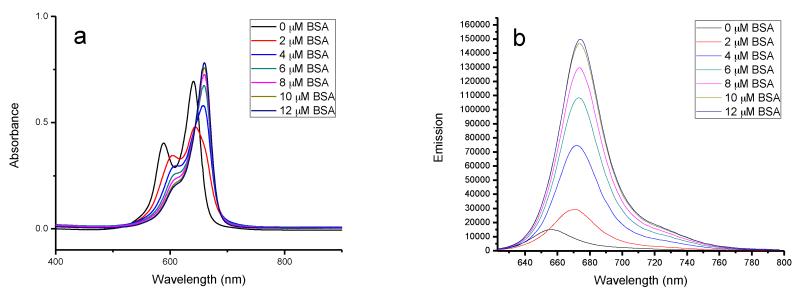
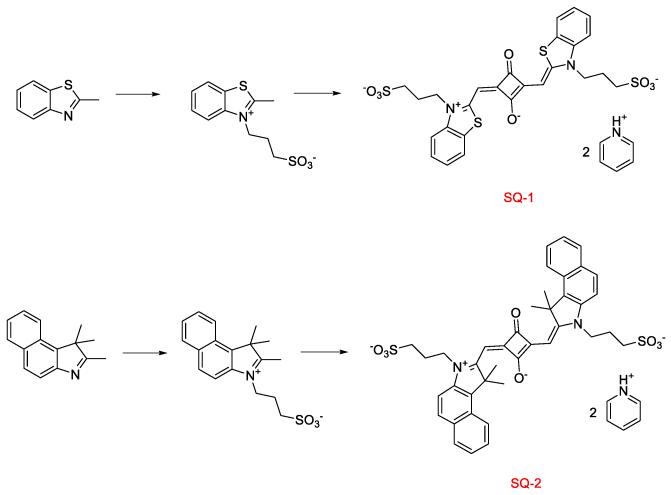
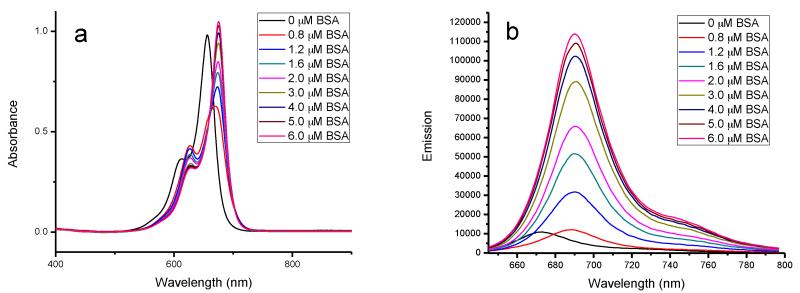
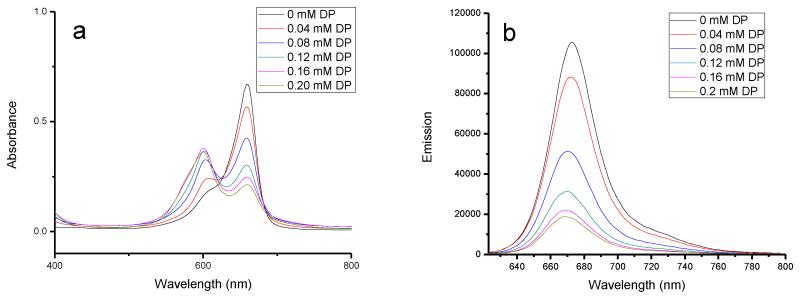
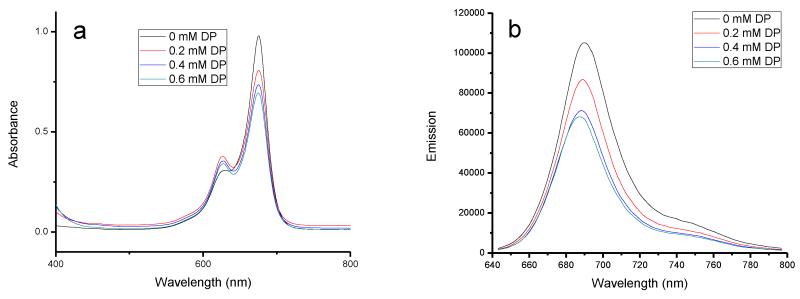
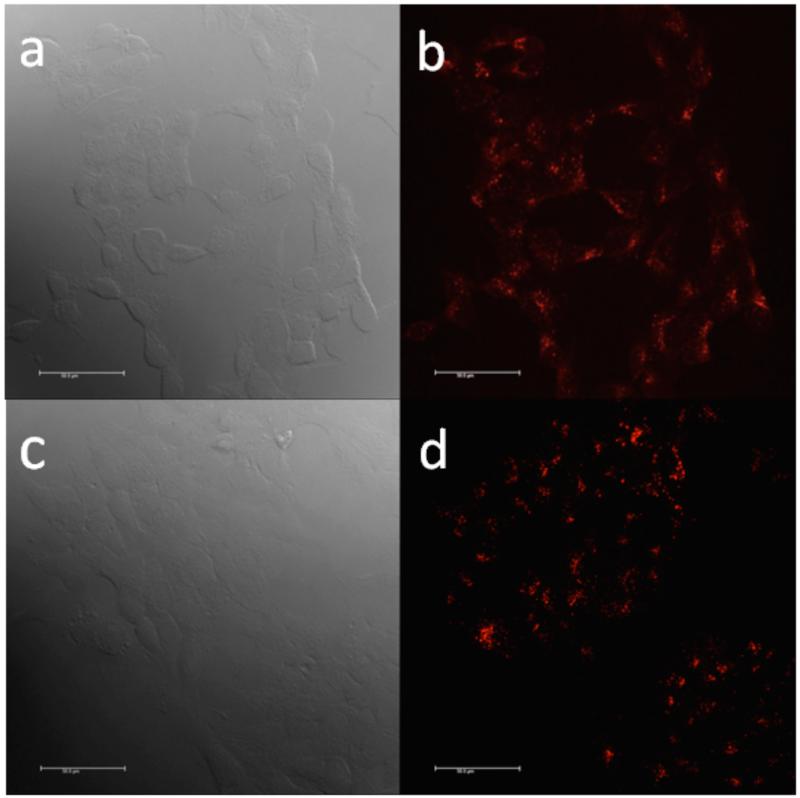
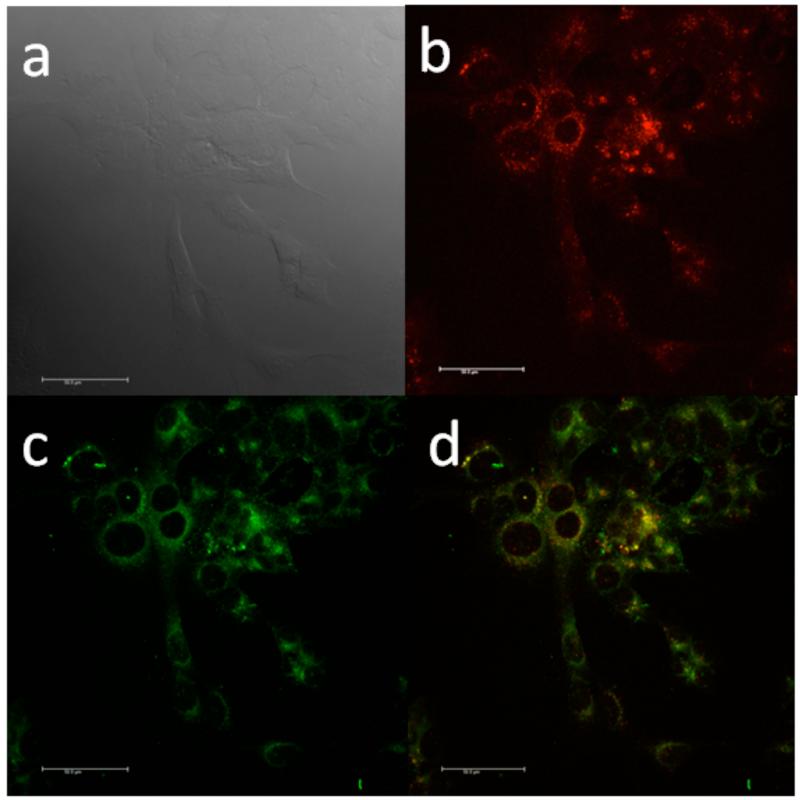
Two squaraine (SQ) dyes, N-propanesulfonate-benzothiazolium squaraine (SQ-1) and N-propanesulfonate-benzoindolium squaraine (SQ-2), were synthesized with sulfonate groups to increase water solubility. Both dyes are almost nonfluorescent in aqueous solution with fluorescent quantum yields of 0.03, but exhibited fluorescence enhancement after noncovalently binding with bovine serum albumin (BSA). Upon addition of BSA, the fluorescence intensity increased by ca. a factor of 10, along with a 10-fold extension in the fluorescence lifetime. SQ-1 and SQ-2 interacted with BSA efficiently and appeared to show a preference for binding at site II, which involves combinational effects of electrostatic and hydrophobic interactions. The fluorogenic squaraine dyes were then used to label BSA, forming BSA-based nanoparticles (NPs) through noncovalent binding. The resulting BSA-SQ NPs exhibited enhanced near-IR fluorescence and reduced aggregation of the squaraine moiety. The BSA-SQ NPs were used for cell incubation and bioimaging studies. Confocal fluorescent images were obtained for HCT 116 cells incubated with the BSA-SQ NPs and LysoSensor Green, demonstrating the utility of the NP probes for intracellular imaging. This strategy ovecomes the generally low fluorescence emission of SQ dyes in water and aggregation-reduced fluorescence, providing a versatile strategy for sensing and imaging in biological environments.
两种方酸(SQ)染料,丙烷磺酸盐-苯并噻唑方酸(SQ-1)和丙烷磺酸盐-苯并吲哚方酸(SQ-2),被合成带有磺酸基团以增加水溶性。这两种染料在水溶液中几乎没有荧光,荧光量子产率为 0.03,但与牛血清白蛋白(BSA)非共价结合后显示出荧光增强。加入 BSA 后,荧光强度增加了约 10 倍,荧光寿命延长了 10 倍。SQ-1 和 SQ-2 与 BSA 有效相互作用,似乎显示出在 II 结合位点优先结合的趋势,这涉及静电和疏水相互作用的组合效应。然后,荧光生成的方酸染料被用来标记 BSA,通过非共价键形成基于 BSA 的纳米颗粒(NPs)。所得的 BSA-SQ NPs 表现出增强的近红外荧光和方酸部分的聚集减少。BSA-SQ NPs 用于细胞孵育和生物成像研究。用 BSA-SQ NPs 和 LysoSensor Green 孵育 HCT 116 细胞获得共聚焦荧光图像,证明了 NP 探针在细胞内成像中的实用性。该策略克服了 SQ 染料在水中的荧光发射通常较低和聚集减少荧光的问题,为在生物环境中的传感和成像提供了一种通用策略。