Warwick Business School, The University of Warwick, Coventry CV4 7AL, UK.
Implement Sci. 2013 Sep 5;8:104. doi: 10.1186/1748-5908-8-104.
Translating knowledge from research into clinical practice has emerged as a practice of increasing importance. This has led to the creation of new organizational entities designed to bridge knowledge between research and practice. Within the UK, the Collaborations for Leadership in Applied Health Research and Care (CLAHRC) have been introduced to ensure that emphasis is placed in ensuring research is more effectively translated and implemented in clinical practice. Knowledge translation (KT) can be accomplished in various ways and is affected by the structures, activities, and coordination practices of organizations. We draw on concepts in the innovation literature--namely exploration, exploitation, and ambidexterity--to examine these structures and activities as well as the ensuing tensions between research and implementation.
Using a qualitative research approach, the study was based on 106 semi-structured, in-depth interviews with the directors, theme leads and managers, key professionals involved in research and implementation in nine CLAHRCs. Data was also collected from intensive focus group workshops.
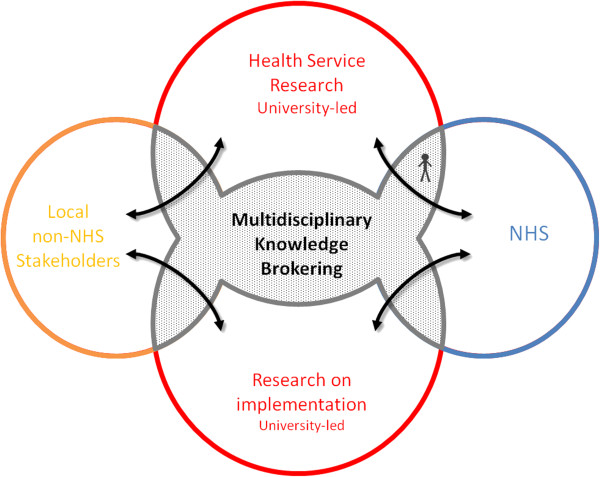
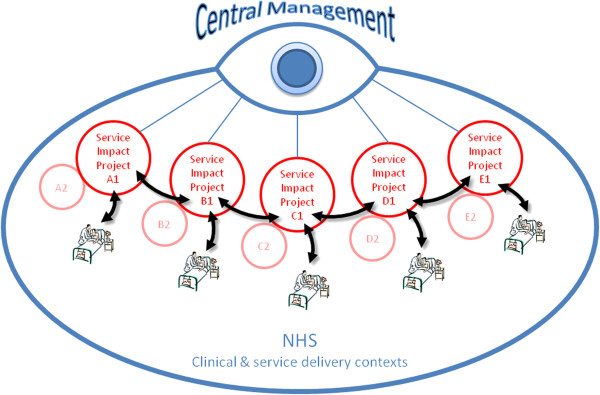
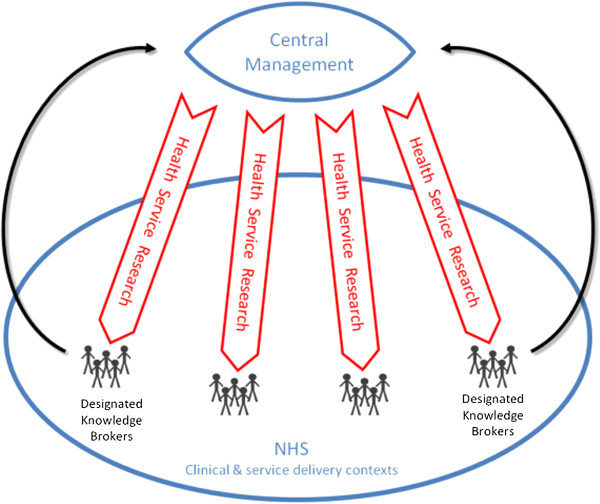
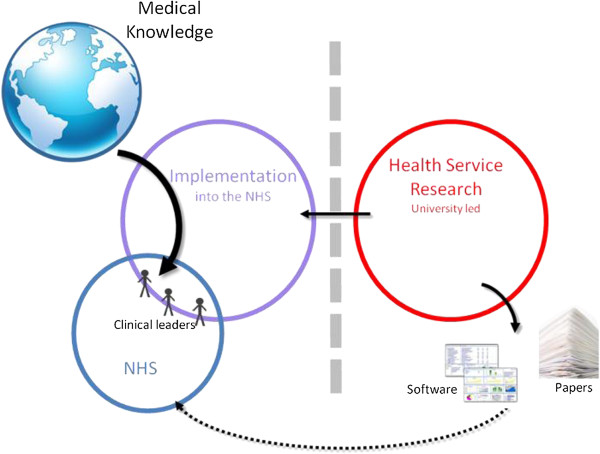
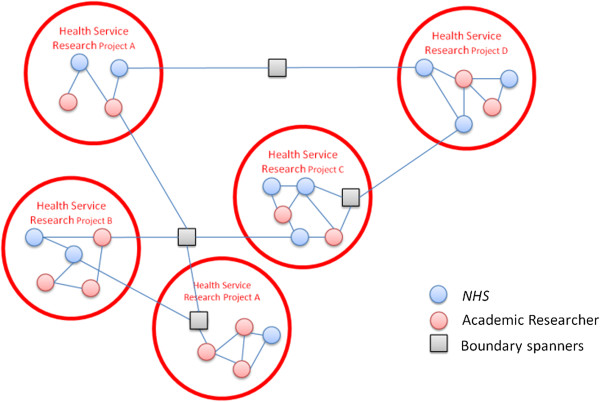
In this article we develop five archetypes for organizing KT. The results show how the various CLAHRC entities work through partnerships to create explorative research and deliver exploitative implementation. The different archetypes highlight a range of structures that can achieve ambidextrous balance as they organize activity and coordinate practice on a continuum of exploration and exploitation.
This work suggests that KT entities aim to reach their goals through a balance between exploration and exploitation in the support of generating new research and ensuring knowledge implementation. We highlight different organizational archetypes that support various ways to maintain ambidexterity, where both exploration and exploitation are supported in an attempt to narrow the knowledge gaps. The KT entity archetypes offer insights on strategies in structuring collaboration to facilitate an effective balance of exploration and exploitation learning in the KT process.
将研究知识转化为临床实践已成为一项日益重要的实践。这导致了新的组织实体的创建,旨在弥合研究和实践之间的知识差距。在英国,引入了合作促进应用健康研究和护理(CLAHRC),以确保研究更有效地转化和实施到临床实践中。知识转化(KT)可以通过各种方式实现,并受到组织的结构、活动和协调实践的影响。我们借鉴创新文献中的概念——探索、开发和兼顾性——来考察这些结构和活动,以及研究和实施之间由此产生的紧张关系。
采用定性研究方法,本研究基于对英国 9 个 CLAHRC 的主任、主题负责人和经理、参与研究和实施的关键专业人员的 106 次半结构化深入访谈和重点小组研讨会收集的数据。
在本文中,我们为组织 KT 开发了五个原型。结果表明,各种 CLAHRC 实体如何通过伙伴关系开展探索性研究并提供开发性实施。不同的原型突出了一系列结构,这些结构可以在探索和开发的连续体上实现兼顾性的平衡,组织活动并协调实践。
这项工作表明,KT 实体旨在通过在支持产生新研究和确保知识实施之间取得平衡来实现其目标。我们强调了支持维持兼顾性的不同组织原型,在探索和开发中都提供支持,试图缩小知识差距。KT 实体原型为在 KT 过程中构建协作以促进探索和开发学习的有效平衡提供了策略上的见解。