Department of Pharmacology, College of Medicine, Kangwon National University, Chuncheon 200-701, Korea.
Biomol Ther (Seoul). 2012 Nov;20(6):532-7. doi: 10.4062/biomolther.2012.20.6.532.
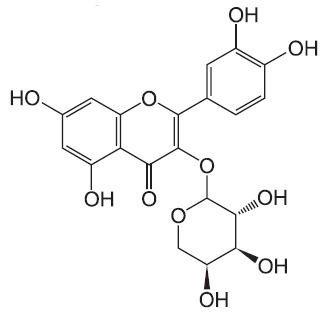
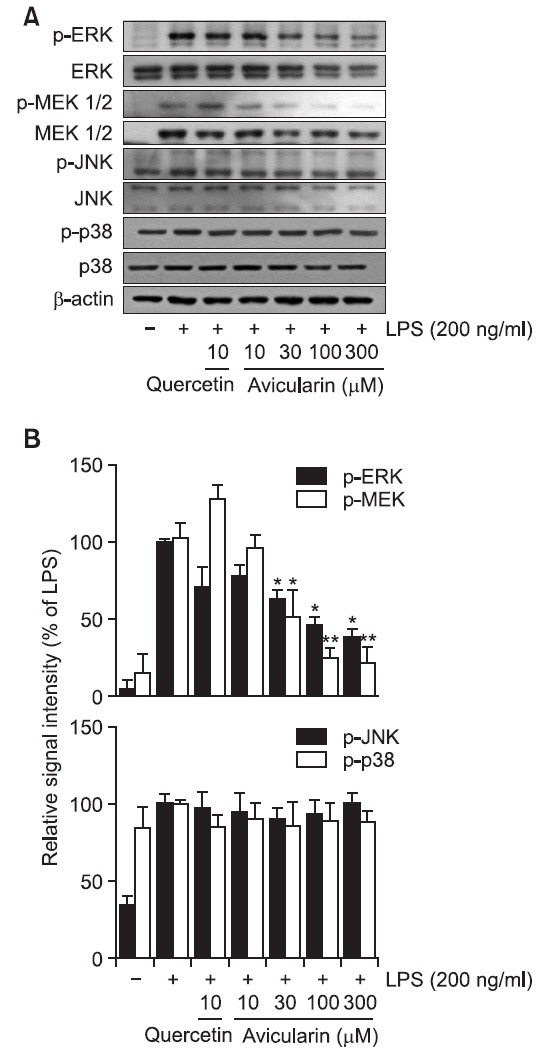
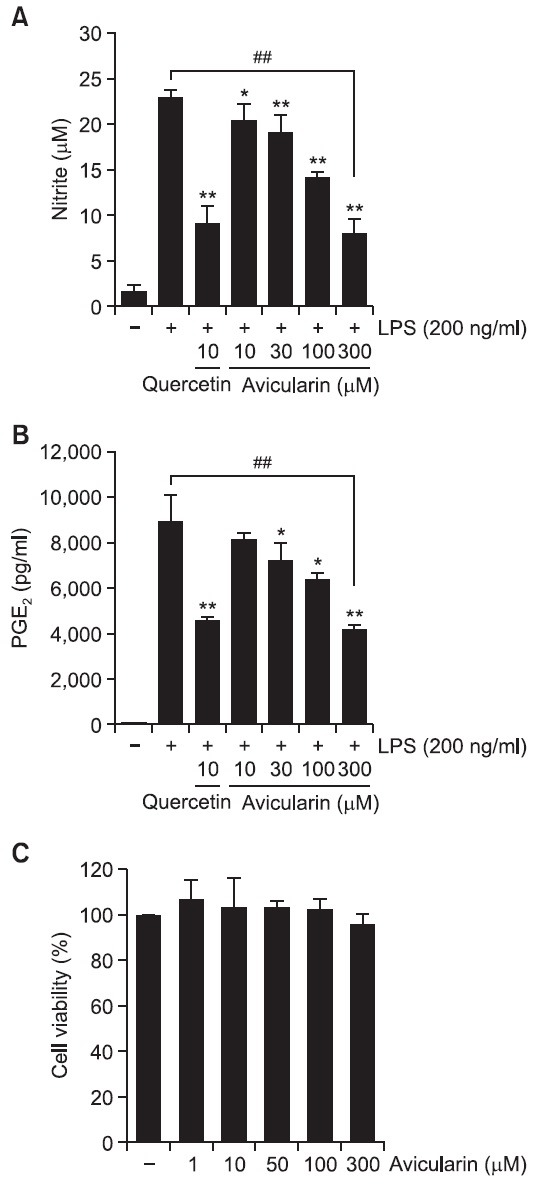
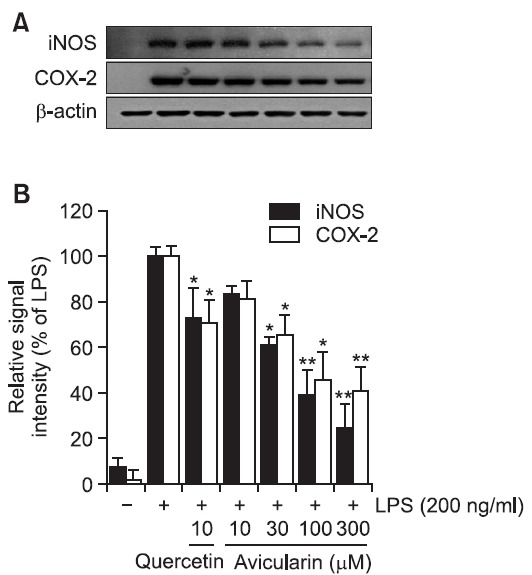
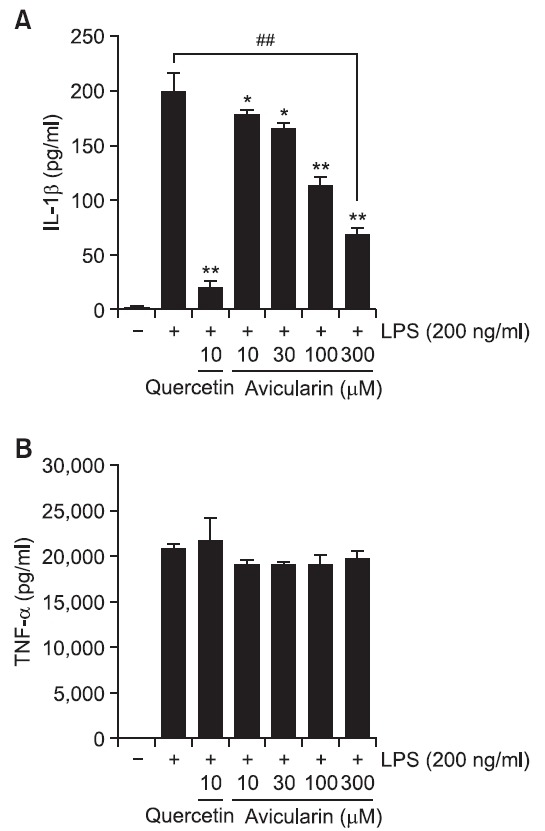
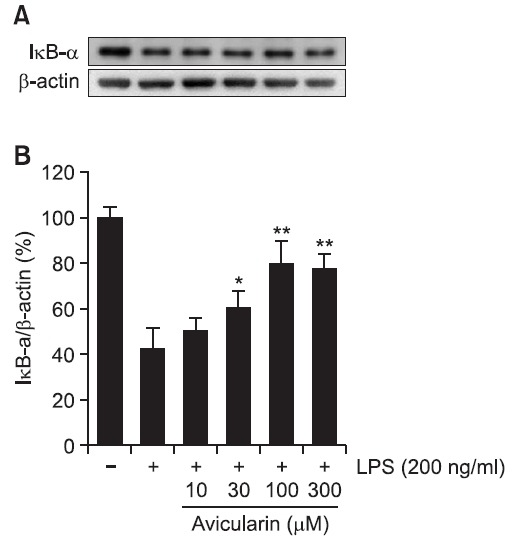
suppresAvicularin, quercetin-3-α-L-arabinofuranoside, has been reported to possess diverse pharmacological properties such as anti-inflammatory and anti-infectious effects. However, the underlying mechanism by which avicularin exerts its anti-inflammatory activity has not been clearly demonstrated. This study aimed to elucidate the anti-inflammatory mechanism of avicularin in lipopolysaccharide (LPS)-stimulated RAW 264.7 macrophage cells. Avicularin significantly inhibited LPS-induced excessive production of pro-inflammatory mediators such as nitric oxide (NO) and PGE2 and the protein levels of iNOS and COX-2, which are responsible for the production of NO and PGE2, respectively. Avicularin also suppressed LPS-induced overproduction of pro-inflammatory cytokine IL-1β. Furthermore, avicularin significantly suppressed LPS-induced degradation of IκB, which retains NF-κB in the cytoplasm, consequently inhibiting the transcription of pro-inflammatory genes by NF-κB in the nucleus. To understand the underlying signaling mechanism of anti-inflammatory activity of avicularin, involvement of multiple kinases was examined. Avicularin significantly attenuated LPS-induced activation of ERK signaling pathway in a concentration-dependent manner. Taken together, the present study clearly demonstrates that avicularin exhibits anti-inflammatory activity through the suppression of ERK signaling pathway in LPS-stimulated RAW 264.7 macrophage cells.
鸡矢藤苷具有抗炎和抗感染等多种药理作用。然而,鸡矢藤苷发挥抗炎活性的潜在机制尚未得到明确证实。本研究旨在阐明鸡矢藤苷在脂多糖(LPS)刺激的 RAW 264.7 巨噬细胞中的抗炎机制。鸡矢藤苷显著抑制 LPS 诱导的促炎介质如一氧化氮(NO)和 PGE2 的过度产生,以及分别负责 NO 和 PGE2 产生的 iNOS 和 COX-2 的蛋白水平。鸡矢藤苷还抑制 LPS 诱导的促炎细胞因子 IL-1β的过度产生。此外,鸡矢藤苷显著抑制 LPS 诱导的 IκB 降解,从而将 NF-κB 保留在细胞质中,进而抑制 NF-κB 在核内对促炎基因的转录。为了了解鸡矢藤苷抗炎活性的潜在信号机制,研究了多种激酶的参与。鸡矢藤苷呈浓度依赖性显著减弱 LPS 诱导的 ERK 信号通路的激活。综上所述,本研究清楚地表明,鸡矢藤苷通过抑制 LPS 刺激的 RAW 264.7 巨噬细胞中的 ERK 信号通路发挥抗炎作用。