Department of Archaeology, Classics and Egyptology, University of Liverpool, Liverpool, United Kingdom.
PLoS One. 2013 Aug 30;8(8):e72693. doi: 10.1371/journal.pone.0072693. eCollection 2013.
The popular theory that complex tool-making and language co-evolved in the human lineage rests on the hypothesis that both skills share underlying brain processes and systems. However, language and stone tool-making have so far only been studied separately using a range of neuroimaging techniques and diverse paradigms.
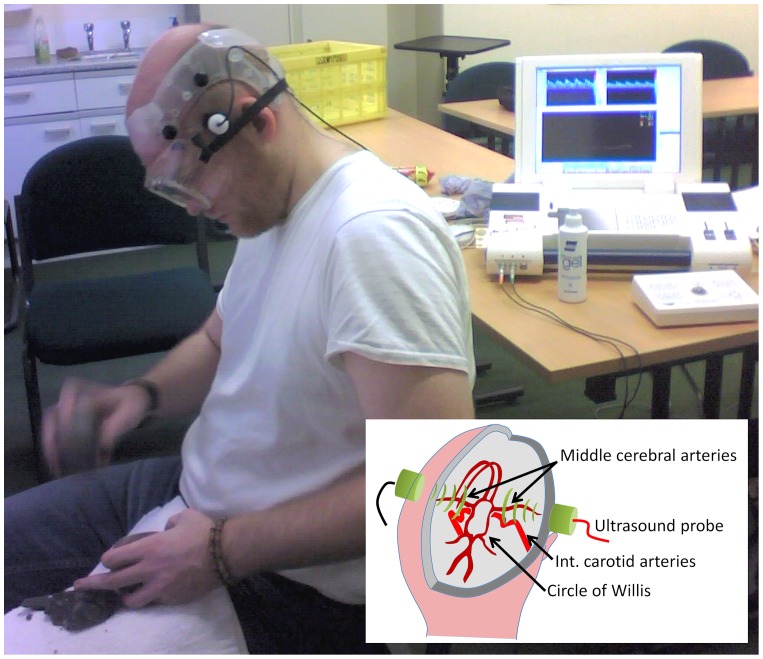
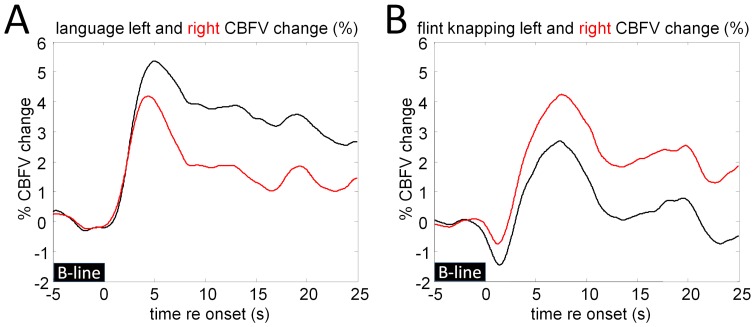
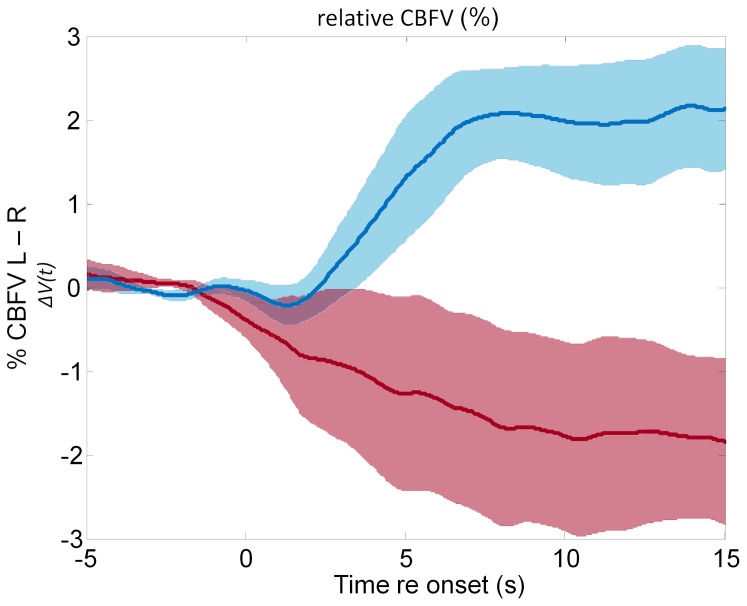
METHODOLOGY/PRINCIPAL FINDINGS: We present the first-ever study of brain activation that directly compares active Acheulean tool-making and language. Using functional transcranial Doppler ultrasonography (fTCD), we measured brain blood flow lateralization patterns (hemodynamics) in subjects who performed two tasks designed to isolate the planning component of Acheulean stone tool-making and cued word generation as a language task. We show highly correlated hemodynamics in the initial 10 seconds of task execution.
CONCLUSIONS/SIGNIFICANCE: Stone tool-making and cued word generation cause common cerebral blood flow lateralization signatures in our participants. This is consistent with a shared neural substrate for prehistoric stone tool-making and language, and is compatible with language evolution theories that posit a co-evolution of language and manual praxis. In turn, our results support the hypothesis that aspects of language might have emerged as early as 1.75 million years ago, with the start of Acheulean technology.
复杂的工具制造和语言在人类谱系中共同进化的流行理论,基于这样一种假设,即这两种技能都共享潜在的大脑过程和系统。然而,语言和石器制造迄今为止仅使用一系列神经影像学技术和不同的范式进行了单独研究。
方法/主要发现:我们首次进行了直接比较活跃的阿舍利石器制造和语言的大脑激活研究。使用功能 transcranial Doppler 超声(fTCD),我们测量了在执行两个任务的参与者中的大脑血液流动侧化模式(血液动力学),这两个任务旨在隔离阿舍利石器制造的规划成分和提示词生成作为语言任务。我们在任务执行的最初 10 秒内显示出高度相关的血液动力学。
结论/意义:石器制造和提示词生成在我们的参与者中引起了共同的大脑血液流动侧化特征。这与史前石器制造和语言的共同神经基础一致,并且与语言进化理论一致,这些理论认为语言和手动实践是共同进化的。反过来,我们的结果支持了这样一种假设,即语言的某些方面可能早在 175 万年前随着阿舍利技术的开始就已经出现。