Faculty of Life Science and Technology, Kunming University of Science and Technology, Kunming, China ; Plant Germplasm and Genomics Center, Germplasm Bank of Wild Species in Southwest China, Kunming Institute of Botany, the Chinese Academy of Sciences, Kunming, China.
PLoS One. 2013 Sep 2;8(9):e73946. doi: 10.1371/journal.pone.0073946. eCollection 2013.
Prinsepiautilis Royle is a wild woody oil species of Rosaceae that yields edible oil which has been proved to possess particular benefits for human health and medical therapy. However, the lack of bred varieties has largely impeded exploiting immense potentials for high quality of its seed oil. It is urgently needed to enlarge the knowledge of genetic basis of the species and develop genetic markers to enhance modern breeding programs.
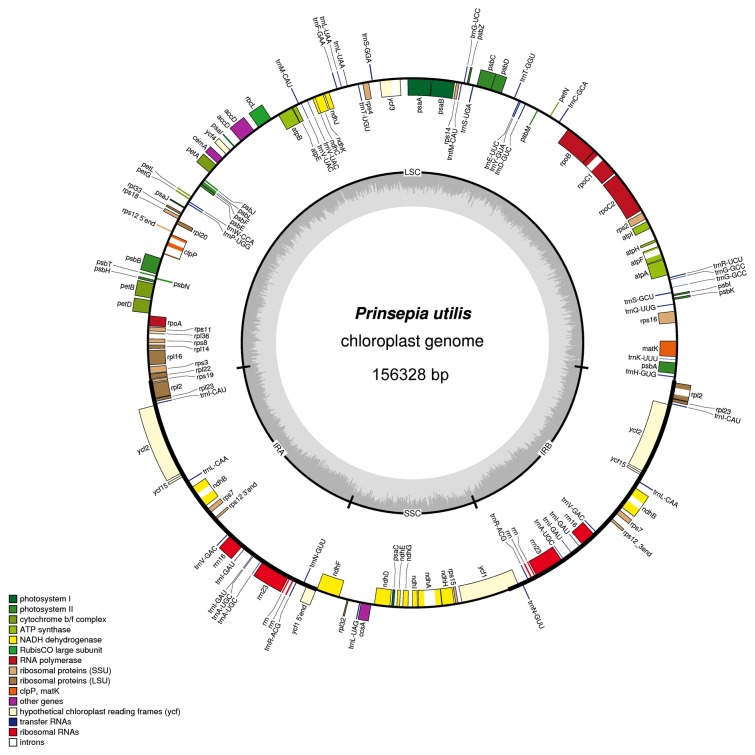
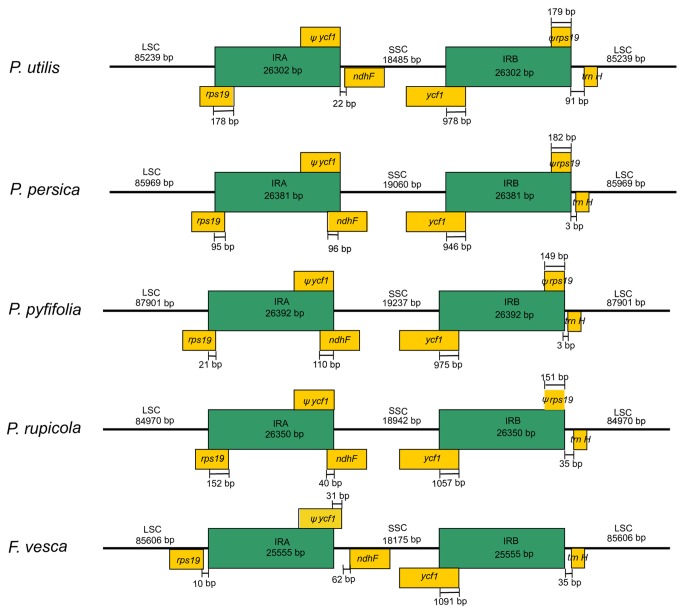
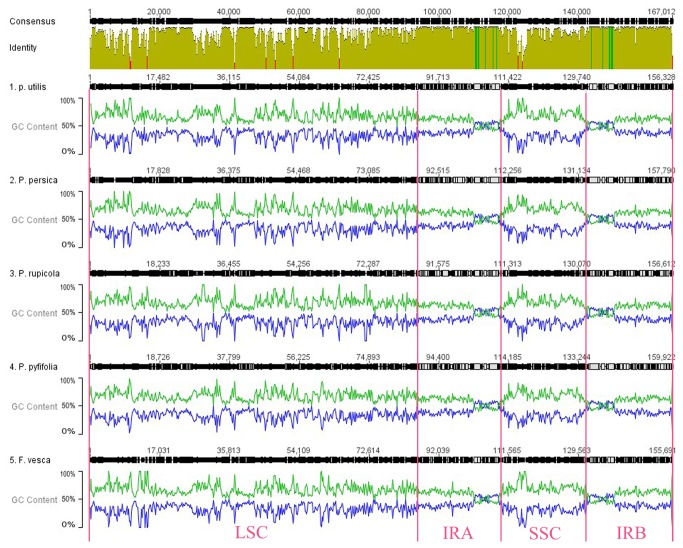
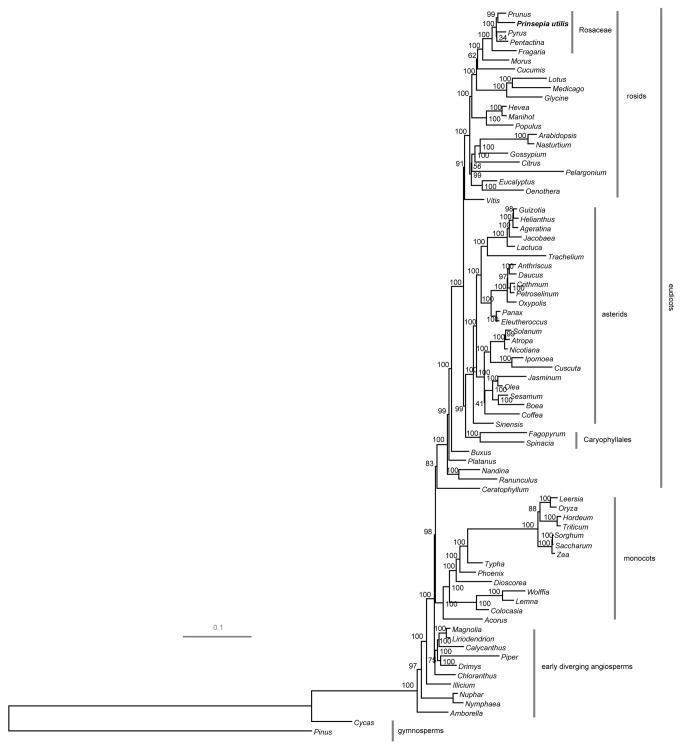
Here we reported the complete chloroplast (cp) genome of 156,328 bp. Comparative cp sequence analyses of P. utilis along with other four Rosaceae species resulted in similar genome structures, gene orders, and gene contents. Contraction/expansion of inverted repeat regions (IRs) explained part of the length variation in the Rosaceae cp genomes. Genome sequence alignments revealed that nucleotide diversity was associated with AT content, and large single copy regions (LSC) and small single copy regions (SSC) harbored higher sequence variations in both coding and non-coding regions than IRs. Simple sequence repeats (SSRs) were detected in the P. utilis and compared with those of the other four Rosaceae cp genomes. Almost all the SSR loci were composed of A or T, therefore it might contribute to the A-T richness of cp genomes and be associated with AT biased sequence variation. Among all the protein-coding genes, ycf1 showed the highest sequence divergence, indicating that it could accomplish the discrimination of species within Rosaceae as well as within angiosperms better than other genes.
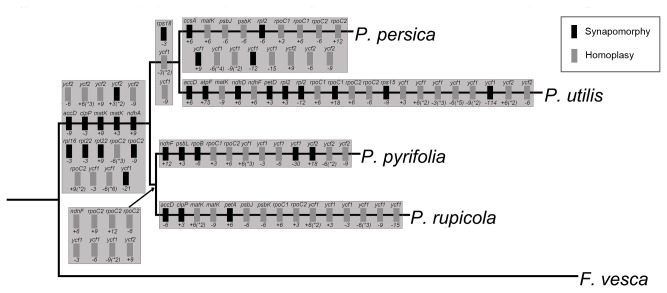
With the addition of this new sequenced cp genome, high nucleotide substitution rate and abundant deletions/insertions were observed, suggesting a greater genomic dynamics than previously explored in Rosaceae. The availability of the complete cp genome of P. utilis will provide chloroplast markers and genetic information to better enhance the conservation and utilization of this woody oil plant.
圆叶玉兰(Prinsepiautilis Royle)是蔷薇科野生木本含油植物,其可食用的种子油已被证明对人类健康和医学治疗具有特殊益处。然而,缺乏培育品种在很大程度上阻碍了对其优质种子油潜力的开发。扩大对该物种遗传基础的认识并开发遗传标记以增强现代育种计划,这是当务之急。
本研究报道了 156328bp 的完整叶绿体(cp)基因组。对 Prinsepiautilis 及其它四种蔷薇科物种的 cp 序列比较分析,结果表明它们具有相似的基因组结构、基因顺序和基因含量。反向重复区(IR)的收缩/扩张解释了蔷薇科 cp 基因组长度变异的部分原因。基因组序列比对表明,核苷酸多样性与 AT 含量相关,且在编码和非编码区中,大单拷贝区(LSC)和小单拷贝区(SSC)的序列变异高于 IRs。在 Prinsepiautilis 中检测到简单序列重复(SSR),并与其它四种蔷薇科 cp 基因组中的 SSR 进行了比较。几乎所有的 SSR 位点都由 A 或 T 组成,因此可能导致 cp 基因组的 A-T 丰富度增加,并与 AT 偏向的序列变异相关。在所研究的蛋白编码基因中,ycf1 显示出最高的序列差异,表明其在蔷薇科内以及在被子植物内的物种鉴别能力优于其他基因。
随着新测序 cp 基因组的加入,观察到高核苷酸取代率和大量的缺失/插入,表明该基因组的动态性比以前在蔷薇科中研究的更大。Prinsepiautilis 完整 cp 基因组的获得将为叶绿体标记和遗传信息提供支持,以更好地增强对这种木本油料植物的保护和利用。