Spickett Corinne M
School of Life and Health Sciences, Aston University, Aston Triangle, Birmingham B4 7ET, UK.
Redox Biol. 2013 Jan 21;1(1):145-52. doi: 10.1016/j.redox.2013.01.007.
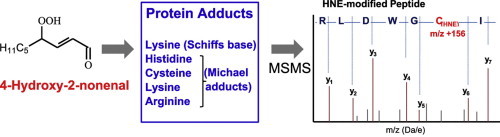
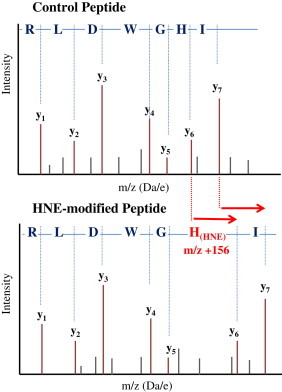
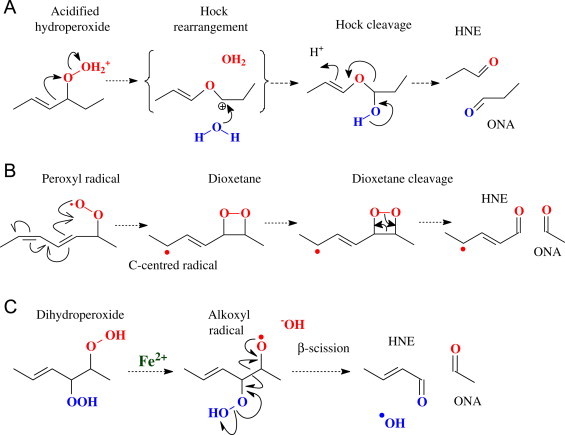
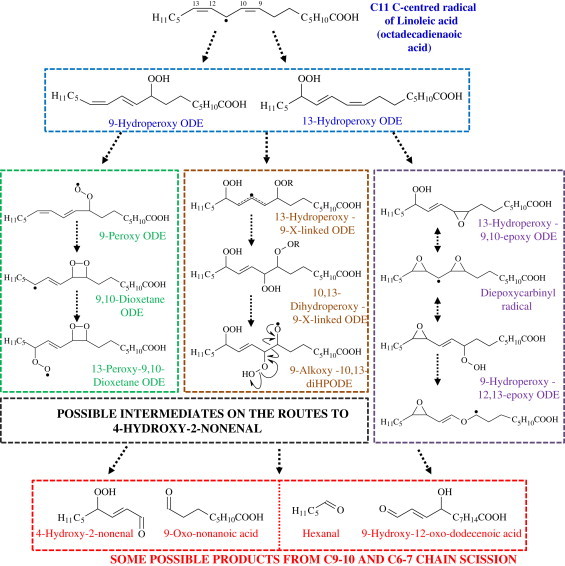
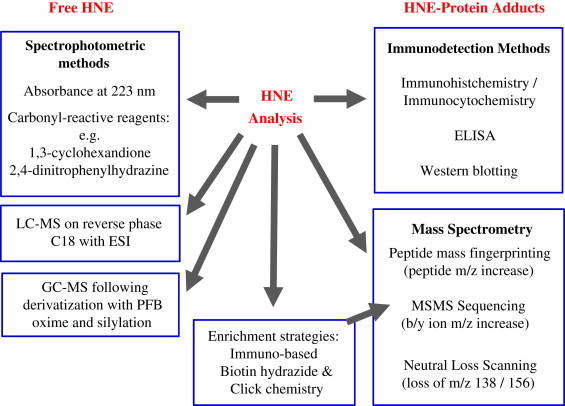
4-Hydroxy-2-nonenal (HNE) is one of the most studied products of phospholipid peroxidation, owing to its reactivity and cytotoxicity. It can be formed by several radical-dependent oxidative routes involving the formation of hydroperoxides, alkoxyl radicals, epoxides, and fatty acyl cross-linking reactions. Cleavage of the oxidized fatty acyl chain results in formation of HNE from the methyl end, and 9-oxo-nonanoic acid from the carboxylate or esterified end of the chain, although many other products are also possible. HNE can be metabolized in tissues by a variety of pathways, leading to detoxification and excretion. HNE-adducts to proteins have been detected in inflammatory situations such as atherosclerotic lesions using polyclonal and monoclonal antibodies, which have also been applied in ELISAs and western blotting. However, in order to identify the proteins modified and the exact sites and nature of the modifications, mass spectrometry approaches are required. Combinations of enrichment strategies with targetted mass spectrometry routines such as neutral loss scanning are now facilitating detection of HNE-modified proteins in complex biological samples. This is important for characterizing the interactions of HNE with redox sensitive cell signalling proteins and understanding how it may modulate their activities either physiologically or in disease.
4-羟基-2-壬烯醛(HNE)是磷脂过氧化作用中研究最多的产物之一,这归因于其反应活性和细胞毒性。它可通过几种依赖自由基的氧化途径形成,包括氢过氧化物、烷氧基自由基、环氧化物的形成以及脂肪酰基交联反应。氧化的脂肪酰链断裂会导致从甲基端形成HNE,从链的羧基或酯化端形成9-氧代壬酸,不过也可能产生许多其他产物。HNE可通过多种途径在组织中代谢,从而实现解毒和排泄。在诸如动脉粥样硬化病变等炎症情况下,使用多克隆和单克隆抗体已检测到HNE与蛋白质的加合物,这些抗体也已应用于酶联免疫吸附测定(ELISA)和蛋白质印迹法(western blotting)。然而,为了鉴定被修饰的蛋白质以及修饰的确切位点和性质,需要采用质谱分析方法。如今,富集策略与诸如中性丢失扫描等靶向质谱分析程序的结合,正有助于在复杂生物样品中检测HNE修饰的蛋白质。这对于表征HNE与氧化还原敏感细胞信号蛋白的相互作用以及理解其在生理状态或疾病状态下如何调节这些蛋白的活性至关重要。