Department of Medicine, Division of General Practice, University Medical Centre Freiburg, Elsässerstr 2m, Freiburg 79110, Germany.
BMC Fam Pract. 2013 Sep 11;14:135. doi: 10.1186/1471-2296-14-135.
Hypertension is one of the key factors causing cardiovascular diseases. A substantial proportion of treated hypertensive patients do not reach recommended target blood pressure values. Shared decision making (SDM) is to enhance the active role of patients. As until now there exists little information on the effects of SDM training in antihypertensive therapy, we tested the effect of an SDM training programme for general practitioners (GPs). Our hypotheses are that this SDM training (1) enhances the participation of patients and (2) leads to an enhanced decrease in blood pressure (BP) values, compared to patients receiving usual care without prior SDM training for GPs.
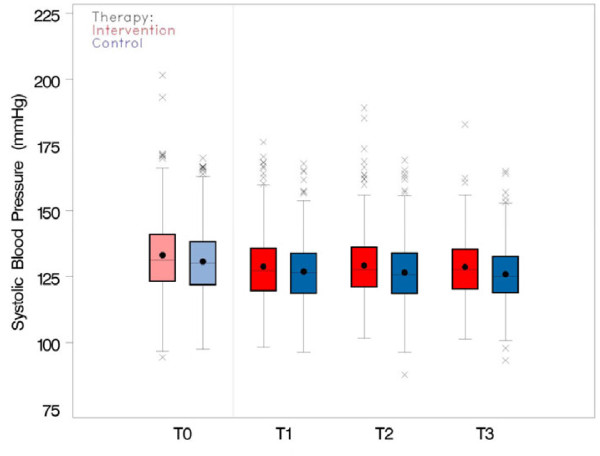
The study was conducted as a cluster randomised controlled trial (cRCT) with GP practices in Southwest Germany. Each GP practice included patients with treated but uncontrolled hypertension and/or with relevant comorbidity. After baseline assessment (T0) GP practices were randomly allocated into an intervention and a control arm. GPs of the intervention group took part in the SDM training. GPs of the control group treated their patients as usual. The intervention was blinded to the patients. Primary endpoints on patient level were (1) change of patients' perceived participation (SDM-Q-9) and (2) change of systolic BP (24h-mean). Secondary endpoints were changes of (1) diastolic BP (24h-mean), (2) patients' knowledge about hypertension, (3) adherence (MARS-D), and (4) cardiovascular risk score (CVR).
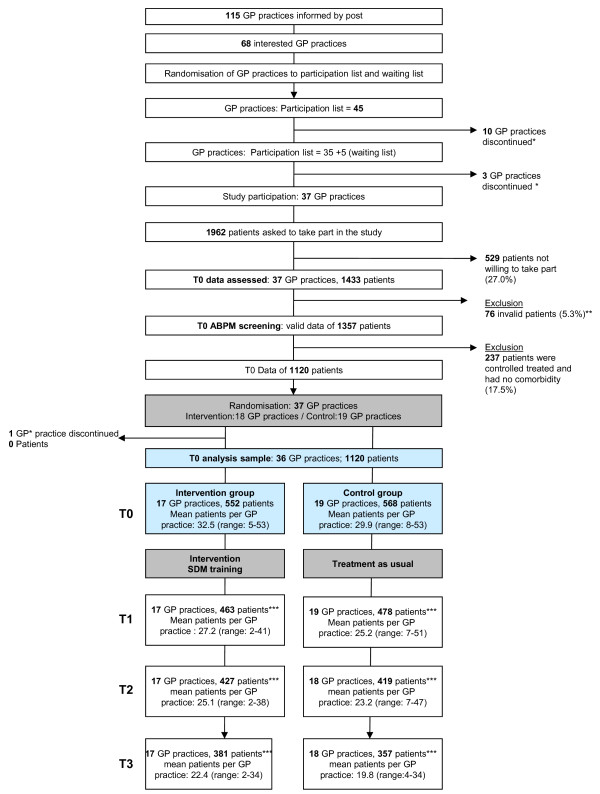
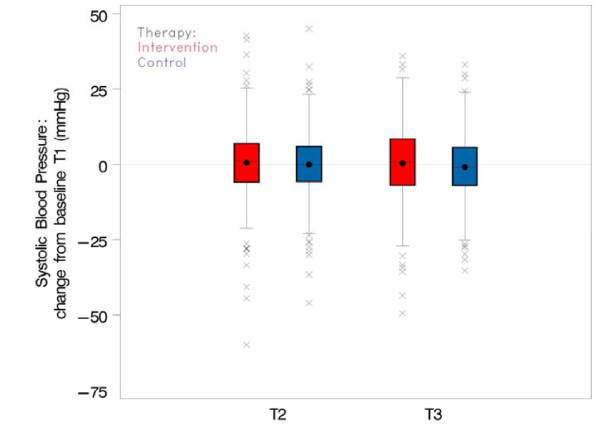
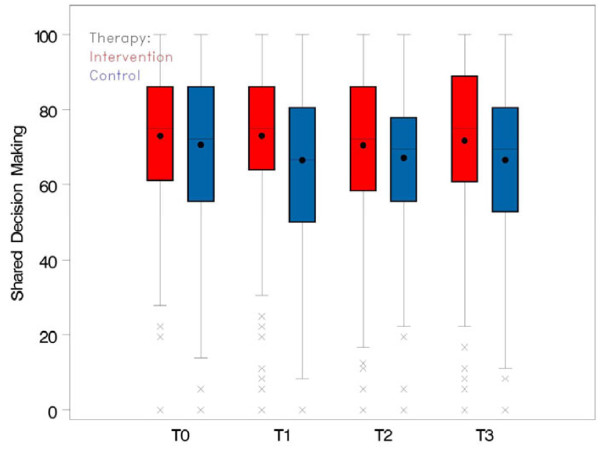
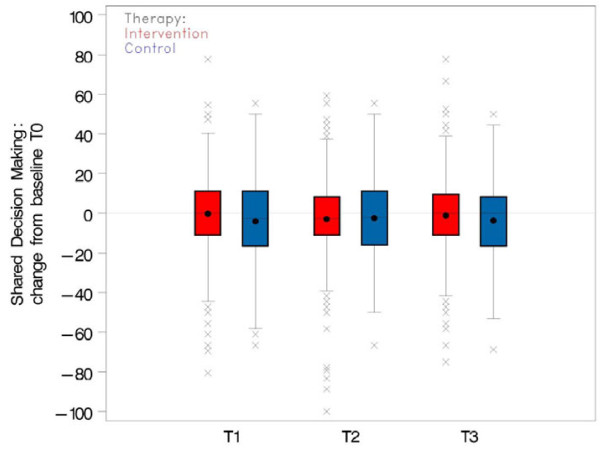
In total 1357 patients from 36 general practices were screened for blood pressure control by ambulatory blood pressure monitoring (ABPM). Thereof 1120 patients remained in the study because of uncontrolled (but treated) hypertension and/or a relevant comorbidity. At T0 the intervention group involved 17 GP practices with 552 patients and the control group 19 GP practices with 568 patients. The effectiveness analysis could not demonstrate a significant or relevant effect of the SDM training on any of the endpoints.
The study hypothesis that the SDM training enhanced patients' perceived participation and lowered their BP could not be confirmed. Further research is needed to examine the impact of patient participation on the treatment of hypertension in primary care.
German Clinical Trials Register (DRKS): DRKS00000125.
高血压是导致心血管疾病的关键因素之一。相当一部分接受治疗的高血压患者未达到推荐的血压目标值。共同决策(SDM)旨在增强患者的积极作用。由于目前关于 SDM 培训在降压治疗中的效果的信息很少,我们测试了对全科医生(GP)进行 SDM 培训计划的效果。我们的假设是,与未接受过 SDM 培训的 GP 接受常规护理的患者相比,这种 SDM 培训(1)增强了患者的参与度,(2)导致血压(BP)值的降低更为明显。
该研究采用德国西南部的 GP 实践的集群随机对照试验(cRCT)进行。每个 GP 实践都包括接受治疗但血压控制不佳和/或有相关合并症的高血压患者。在基线评估(T0)后,GP 实践被随机分配到干预组和对照组。干预组的 GP 参加了 SDM 培训。对照组的 GP 按照常规治疗患者。患者对干预措施不知情。患者层面的主要终点是(1)患者感知参与度的变化(SDM-Q-9)和(2)收缩压(24 小时平均值)的变化。次要终点是(1)舒张压(24 小时平均值)的变化,(2)患者对高血压的认识,(3)依从性(MARS-D)和(4)心血管风险评分(CVR)的变化。
共有 36 个 GP 诊所的 1357 名患者通过动态血压监测(ABPM)筛查血压控制情况。其中 1120 名患者因血压控制不佳(但接受治疗)和/或有相关合并症而继续留在研究中。在 T0,干预组有 17 个 GP 诊所的 552 名患者,对照组有 19 个 GP 诊所的 568 名患者。有效性分析未能证明 SDM 培训对任何终点都有显著或相关的效果。
SDM 培训增强了患者的感知参与度并降低了他们的血压的研究假设不能得到证实。需要进一步研究以检查患者参与对初级保健中高血压治疗的影响。
德国临床试验注册处(DRKS):DRKS00000125。