Metabolites Profiling Laboratory, Institute of Bioproduct Development, Universiti Teknologi Malaysia, UTM Skudai, 81310 Johor Bahru, Malaysia.
J Anal Methods Chem. 2013;2013:313798. doi: 10.1155/2013/313798. Epub 2013 Aug 21.
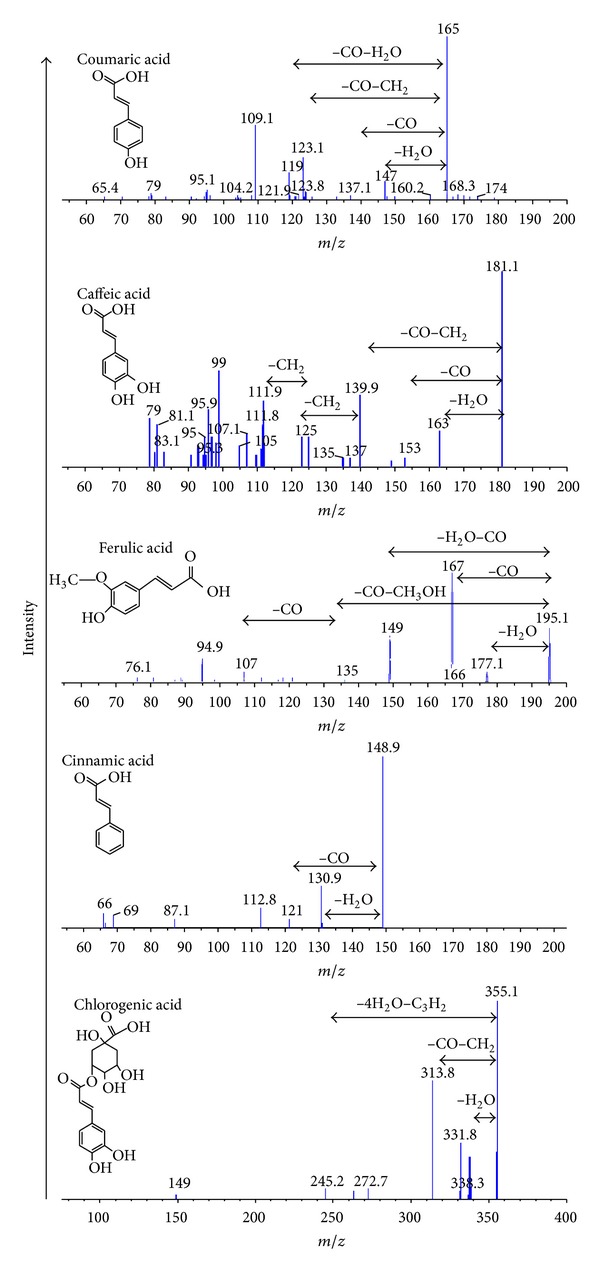
The antioxidant activities based on the free radical scavenging, reducing power, and bleaching inhibition were investigated for the three commonly used honeys in Malaysia, namely, tualang, gelam, and acacia honey. The antioxidant capacity of the honey samples was correlated with their biochemical constituents such as total phenol, total flavonoid content, and total water-soluble vitamins (vitamin B1, B2, B3, B9, B12, and vitamin C). The total flavonoid content of honey samples was strongly correlated with the three antioxidative processes (r = 0.9276-0.9910). In contrast, the total water-soluble vitamins was found to be well correlated with the free radical scavenging activity (r = 0.8226). Vitamin B3 was likely to be in the highest concentration, which covered for 69-80% of the total vitamin content. A number of five phenolic acids, three flavonoids, and two organic acids had also been detected from the honey samples using UPLC-MS/MS, without sugar-removal procedure.
研究了马来西亚三种常用蜂蜜(桐花、蓝桉和阿拉伯树胶)的自由基清除、还原能力和漂白抑制的抗氧化活性。蜂蜜样品的抗氧化能力与总酚、总黄酮含量和总水溶性维生素(维生素 B1、B2、B3、B9、B12 和维生素 C)等生化成分有关。总黄酮含量与三种抗氧化过程呈强相关性(r = 0.9276-0.9910)。相比之下,总水溶性维生素与自由基清除活性呈良好相关性(r = 0.8226)。维生素 B3 的浓度可能最高,占总维生素含量的 69-80%。使用 UPLC-MS/MS 对蜂蜜样品进行检测,无需进行糖去除处理,发现了 5 种酚酸、3 种类黄酮和 2 种有机酸。