Prescott C D, Dahlberg A E
Section of Biochemistry, Brown University, Providence, RI 02912.
EMBO J. 1990 Jan;9(1):289-94. doi: 10.1002/j.1460-2075.1990.tb08107.x.
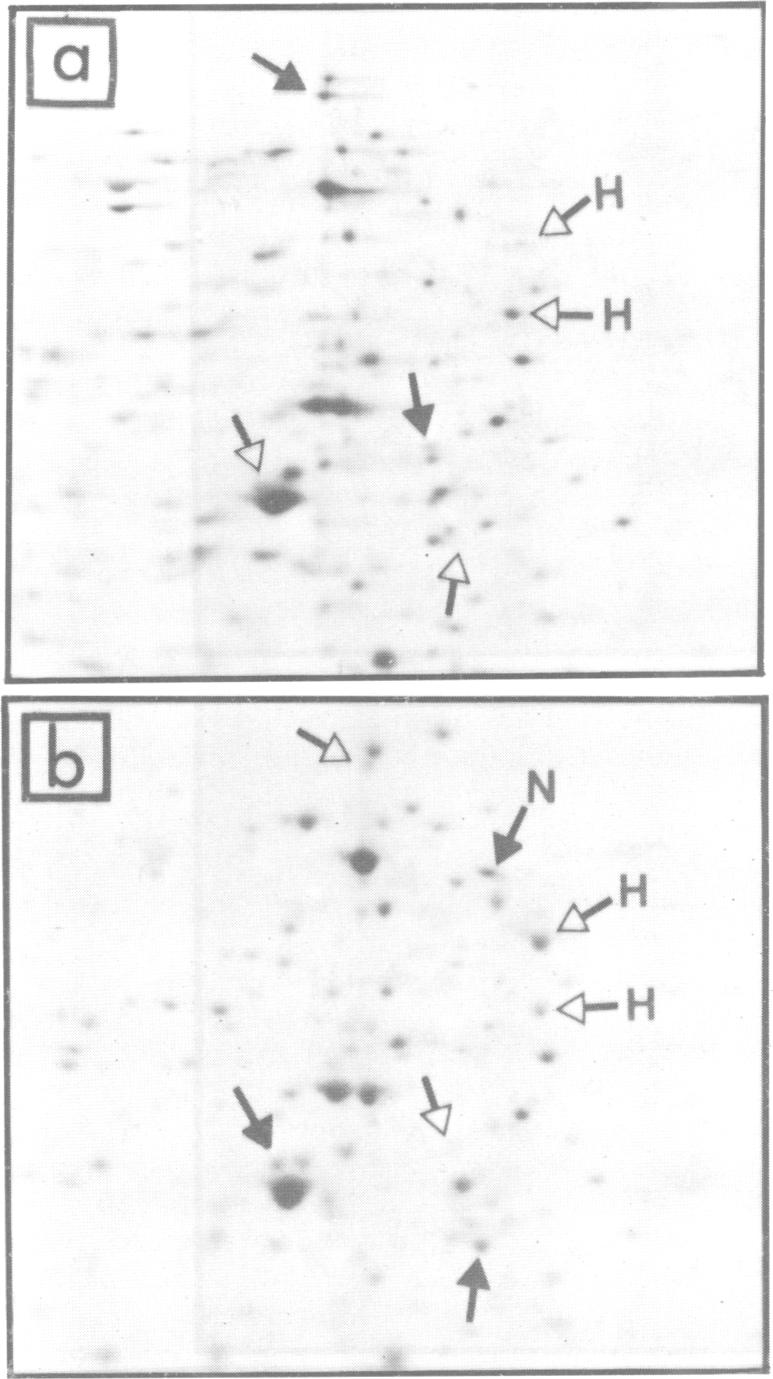
A single base change in 16S rRNA (C-726 to G) was constructed by site-directed mutagenesis and cloned into the multicopy plasmid pKK3535 (generating pKK726G) which contains the complete rrnB operon from Escherichia coli. The mutant 16S rRNA was found predominantly in the 30S subunit fraction but was present in the 70S ribosomes. Protein analyses of the free 30S subunits revealed a decrease in the levels of ribosomal proteins S2 and S21 while the composition of the 70S ribosomes was as the wild-type. Transformants of pKK726G were temperature sensitive for growth, although the mutant ribosomes themselves were translationally active in vivo at 37 and 42 degrees C. Two-dimensional gel electrophoresis of the proteins translated in vivo revealed an altered protein profile which included novel proteins, changes in the levels of normal proteins, and the presence of heat shock proteins (HSPs) at 30 degrees C. Inactivation of the host encoded wild-type ribosomes coincided with a significant decrease in the synthesis of the HSPs. We therefore believe the induction of the HSPs to be a secondary response by the cells to the presence of the abnormal proteins.
通过定点诱变构建了16S rRNA中的单个碱基变化(C-726变为G),并将其克隆到多拷贝质粒pKK3535中(产生pKK726G),该质粒包含来自大肠杆菌的完整rrnB操纵子。发现突变型16S rRNA主要存在于30S亚基部分,但也存在于70S核糖体中。对游离30S亚基的蛋白质分析显示核糖体蛋白S2和S21的水平降低,而70S核糖体的组成与野生型相同。pKK726G的转化体对生长具有温度敏感性,尽管突变核糖体本身在37和42摄氏度下在体内具有翻译活性。对体内翻译的蛋白质进行二维凝胶电泳显示蛋白质谱发生了改变,包括新蛋白质、正常蛋白质水平的变化以及在30摄氏度下热休克蛋白(HSP)的存在。宿主编码的野生型核糖体的失活与HSP合成的显著减少同时发生。因此,我们认为HSP的诱导是细胞对异常蛋白质存在的次级反应。