Department of Obstetrics and Gynecology, Faculty of Medicine, The University of Tokyo, Tokyo, Japan.
PLoS One. 2013 Sep 10;8(9):e73085. doi: 10.1371/journal.pone.0073085. eCollection 2013.
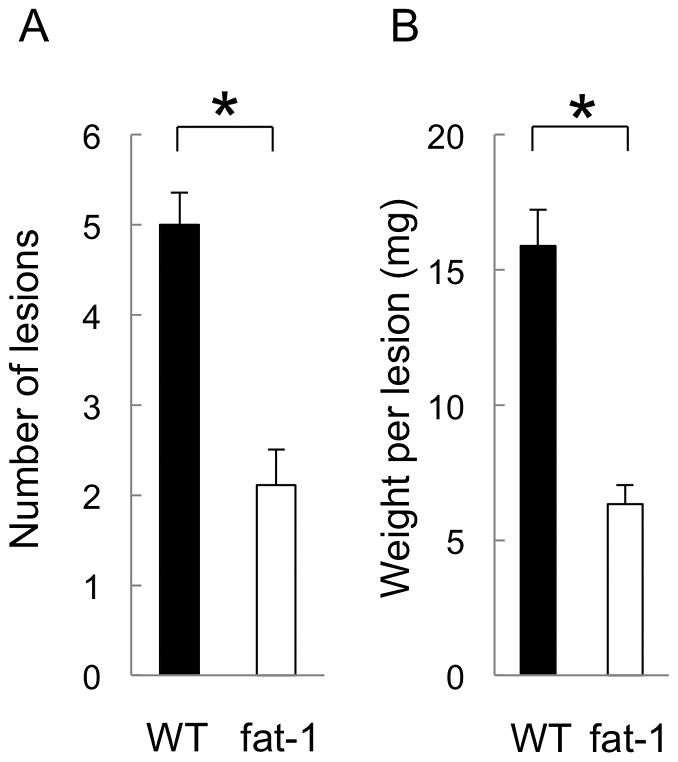
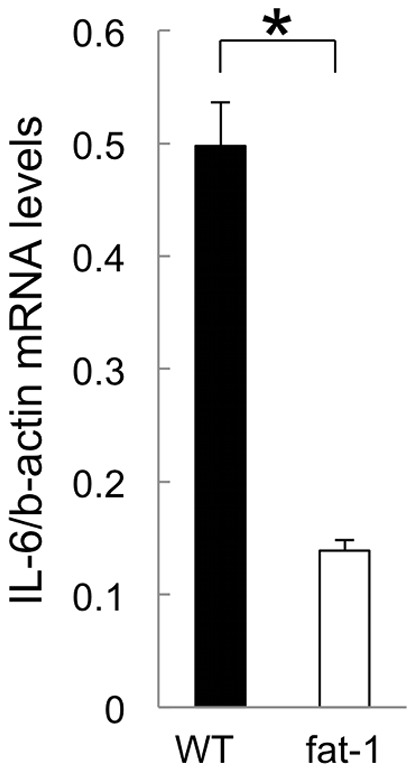
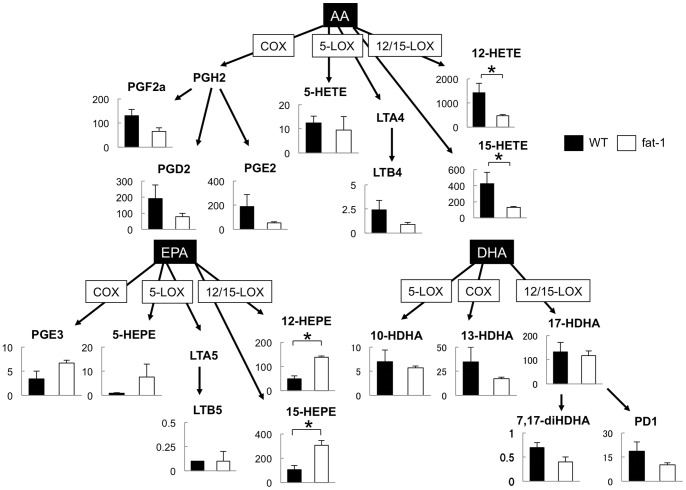
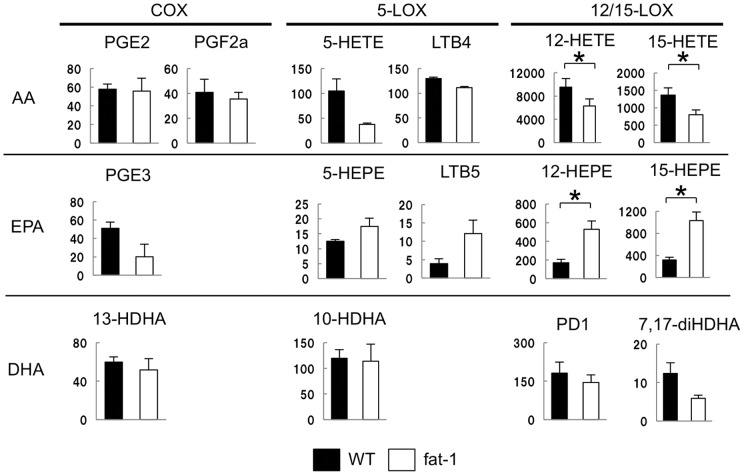
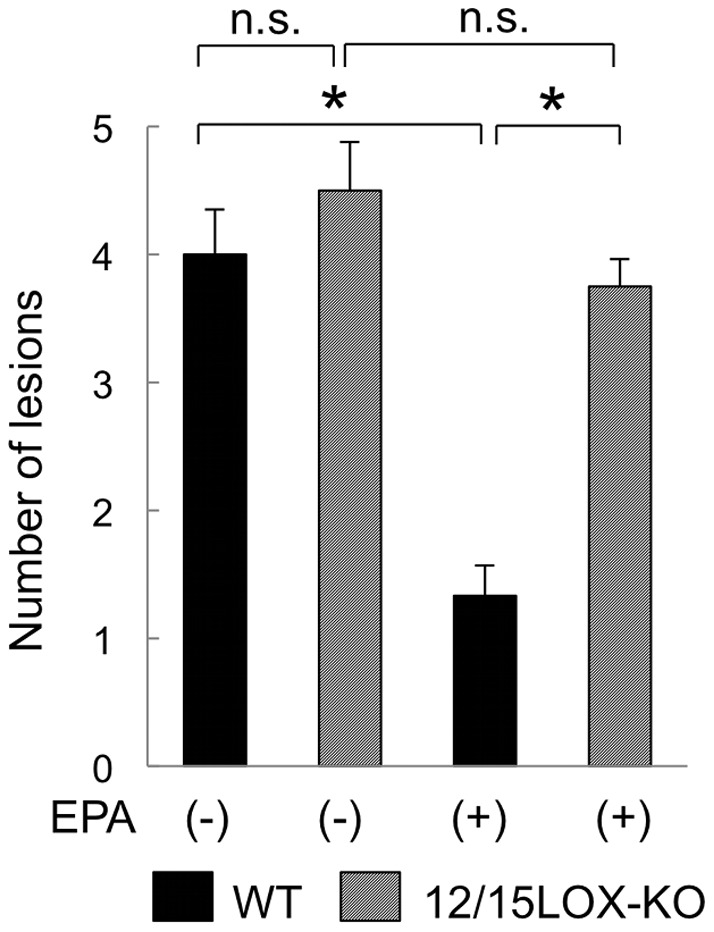
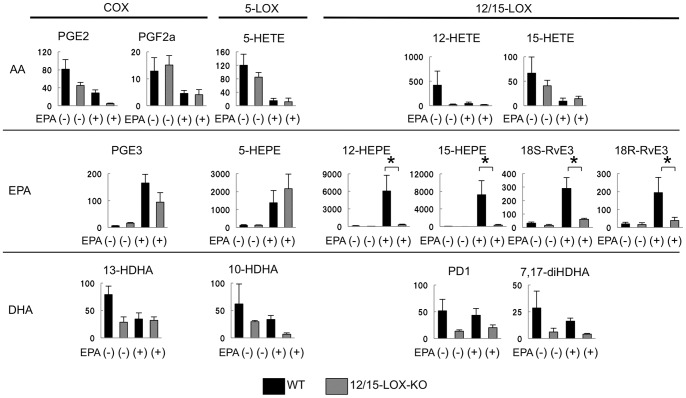
Omega-3 polyunsaturated fatty acids (omega-3 PUFAs) play a role in controlling pathological inflammatory reactions. Endometriosis is characterized by the presence of endometrial tissue on the peritoneum and an exaggerated inflammatory environment around ectopic tissues. Here peritoneal endometriosis was reproduced using a mouse model in which murine endometrial fragments were inoculated into the peritoneal cavity of mice. Fat-1 mice, in which omega-6 can be converted to omega-3 PUFAs, or wild type mice, in which it cannot, were used for the endometriosis model to address the actions of omega-3 PUFAs on the development of endometriotic lesions. The number and weight of cystic endometriotic lesions in fat-1 mice two weeks after inoculation were significantly less than half to those of controls. Mediator lipidomics revealed that cystic endometriotic lesions and peritoneal fluids were abundant in 12/15-hydroxyeicosapentaenoic acid (12/15-HEPE), derived from eicosapentaenoic acid (EPA), and their amount in fat-1 mice was significantly larger than that in controls. 12/15-Lipoxygenase (12/15-LOX)-knockout (KO) and control mice with or without EPA administration were assessed for the endometriosis model. EPA administration decreased the number of lesions in controls but not in 12/15-LOX-KO mice. The peritoneal fluids in EPA-fed 12/15-LOX-KO mice contained reduced levels of EPA metabolites such as 12/15-HEPE and EPA-derived resolvin E3 even after EPA administration. cDNA microarrays of endometriotic lesions revealed that Interleukin-6 (IL-6) expression in fat-1 mice was significantly lower than that in controls. These results suggest that both endogenous and exogenous EPA-derived PUFAs protect against the development of endometriosis through their anti-inflammatory effects and, in particular, the 12/15-LOX-pathway products of EPA may be key mediators to suppress endometriosis.
ω-3 多不饱和脂肪酸(ω-3PUFAs)在控制病理性炎症反应中发挥作用。子宫内膜异位症的特征是子宫内膜组织出现在腹膜上,并且异位组织周围存在过度炎症环境。在这里,通过将鼠子宫内膜碎片接种到小鼠的腹腔中来重现腹膜子宫内膜异位症。使用ω-6 可以转化为 ω-3 PUFAs 的 Fat-1 小鼠或不能转化的野生型小鼠来建立子宫内膜异位症模型,以研究 ω-3 PUFAs 对子宫内膜异位症病变发展的作用。接种后两周,Fat-1 小鼠的囊性子宫内膜异位症病变的数量和重量明显减少到对照组的一半以下。介质脂质组学揭示,囊性子宫内膜异位症病变和腹腔液富含来源于二十碳五烯酸(EPA)的 12/15-羟基二十碳五烯酸(12/15-HEPE),并且 Fat-1 小鼠中的含量明显大于对照组。对 12/15-脂氧合酶(12/15-LOX)敲除(KO)和用或不用 EPA 给药的对照小鼠进行了子宫内膜异位症模型评估。EPA 给药可减少对照组中病变的数量,但不能减少 12/15-LOX-KO 小鼠中的病变数量。即使在 EPA 给药后,给予 EPA 的 12/15-LOX-KO 小鼠的腹腔液中也含有较低水平的 EPA 代谢产物,例如 12/15-HEPE 和 EPA 衍生的 resolvin E3。子宫内膜异位症病变的 cDNA 微阵列显示,Fat-1 小鼠中的白细胞介素-6(IL-6)表达明显低于对照组。这些结果表明,内源性和外源性 EPA 衍生的 PUFAs 通过其抗炎作用来预防子宫内膜异位症的发展,特别是 EPA 的 12/15-LOX 途径产物可能是抑制子宫内膜异位症的关键介质。