Center for Infectious Disease Dynamics, Department of Entomology, Pennsylvania State University, , Merkle Lab, Orchard Road, University Park, PA 16802, USA.
Proc Biol Sci. 2013 Sep 18;280(1770):20132030. doi: 10.1098/rspb.2013.2030. Print 2013 Nov 7.
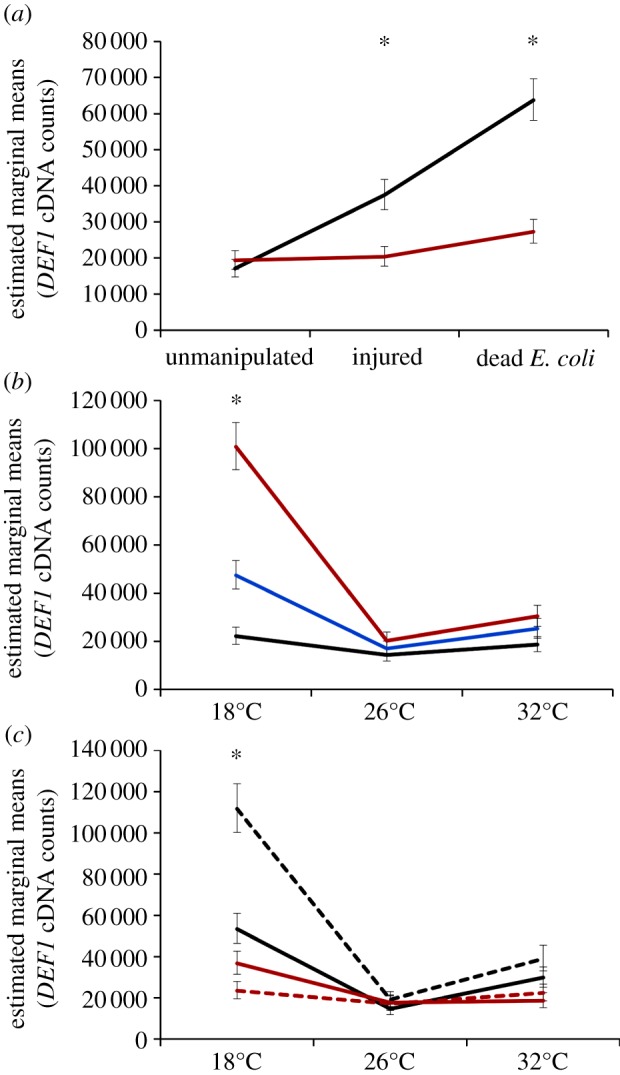
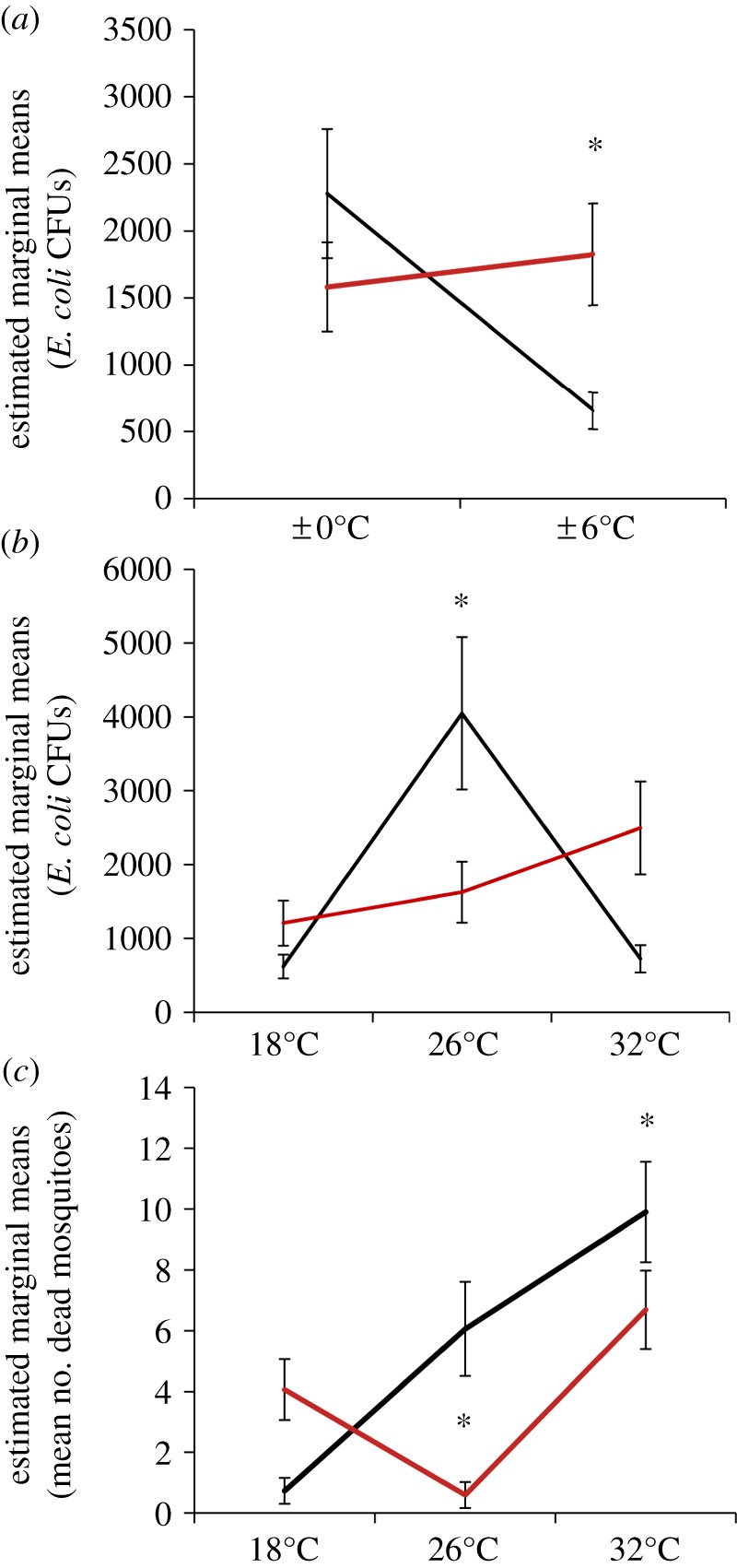
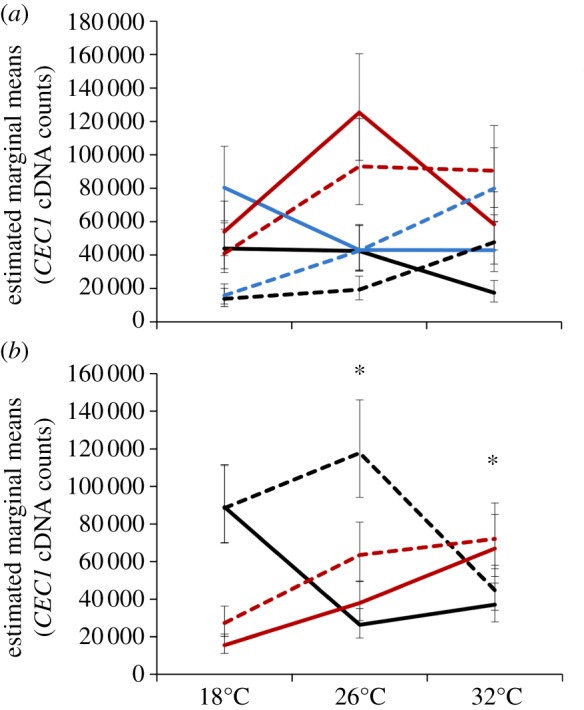
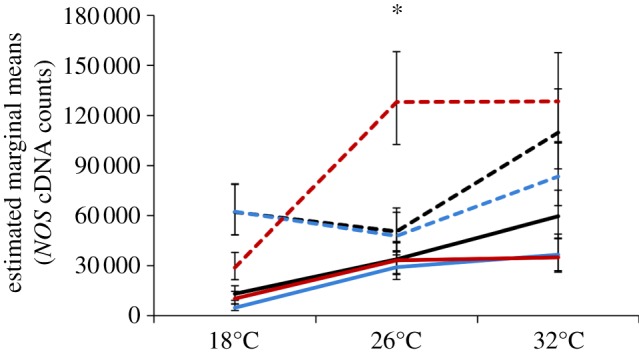
Considerable research effort has been directed at understanding the genetic and molecular basis of mosquito innate immune mechanisms. Whether environmental factors interact with these mechanisms to shape overall resistance remains largely unexplored. Here, we examine how changes in mean ambient temperature, diurnal temperature fluctuation and time of day of infection affected the immunity and resistance of Anopheles stephensi to infection with Escherichia coli. We used quantitative PCR to estimate the gene expression of three immune genes in response to challenge with heat-killed E. coli. We also infected mosquitoes with live E. coli and ran bacterial growth assays to quantify host resistance. Both mosquito immune parameters and resistance were directly affected by mean temperature, diurnal temperature fluctuation and time of day of infection. Furthermore, there was a suite of complex two- and three-way interactions yielding idiosyncratic phenotypic variation under different environmental conditions. The results demonstrate mosquito immunity and resistance to be strongly influenced by a complex interplay of environmental variables, challenging the interpretation of the very many mosquito immune studies conducted under standard laboratory conditions.
大量的研究致力于理解蚊子先天免疫机制的遗传和分子基础。环境因素是否与这些机制相互作用,从而影响整体抗性,这在很大程度上仍未得到探索。在这里,我们研究了环境平均温度、昼夜温度波动和感染时间的变化如何影响埃及伊蚊对大肠杆菌感染的免疫和抗性。我们使用定量 PCR 来估计三种免疫基因在受到热灭活大肠杆菌挑战时的基因表达情况。我们还感染了携带活大肠杆菌的蚊子,并进行了细菌生长测定以量化宿主抗性。蚊子的免疫参数和抗性都直接受到平均温度、昼夜温度波动和感染时间的影响。此外,还存在一系列复杂的二向和三向相互作用,在不同的环境条件下产生独特的表型变异。研究结果表明,蚊子的免疫和抗性受到环境变量的复杂相互作用的强烈影响,这对在标准实验室条件下进行的许多蚊子免疫研究的解释提出了挑战。