Yuan Yongbo, Dong Qingfeng, Yang Bin, Guo Fawen, Zhang Qi, Han Ming, Huang Jinsong
Department of Mechanical and Materials Engineering and Nebraska Center for Materials and Nanoscience, University of Nebraska-Lincoln, Lincoln, Nebraska 68588-0656, USA.
Sci Rep. 2013;3:2707. doi: 10.1038/srep02707.
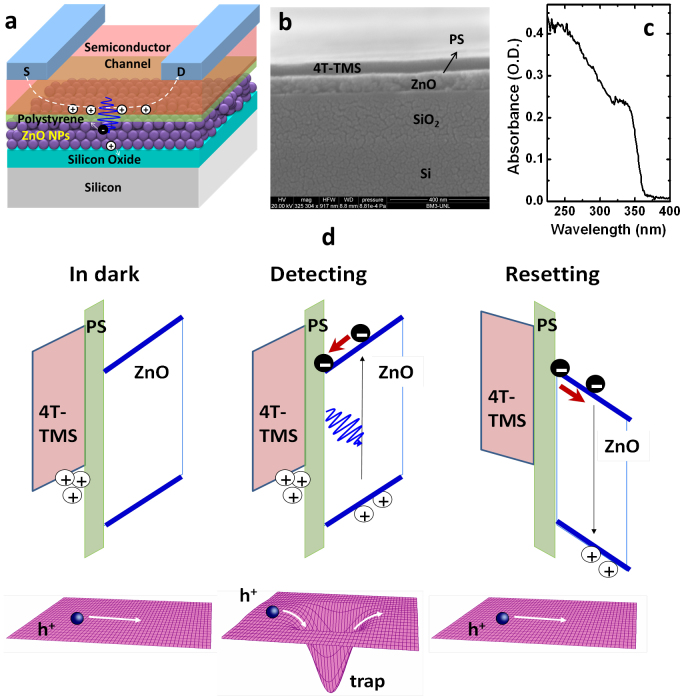
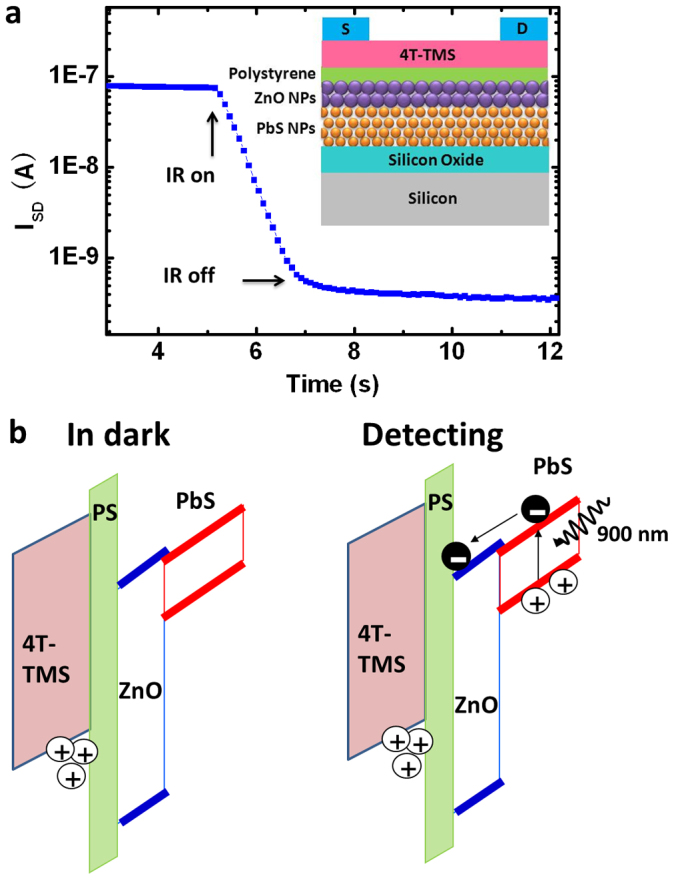
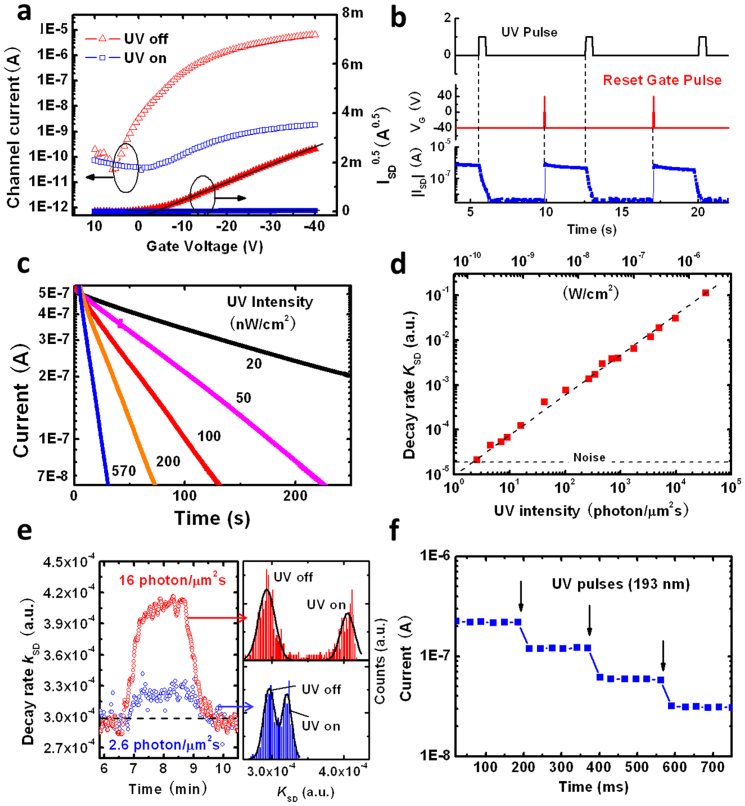
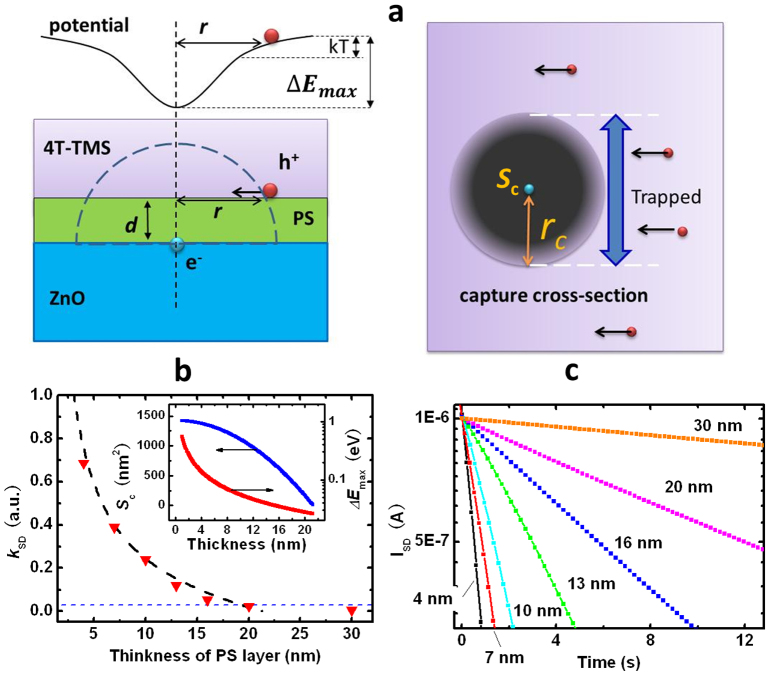
High sensitivity photodetectors in ultraviolet (UV) and infrared (IR) range have broad civilian and military applications. Here we report on an un-cooled solution-processed UV-IR photon counter based on modified organic field-effect transistors. This type of UV detectors have light absorbing zinc oxide nanoparticles (NPs) sandwiched between two gate dielectric layers as a floating gate. The photon-generated charges on the floating gate cause high resistance regions in the transistor channel and tune the source-drain output current. This "super-float-gating" mechanism enables very high sensitivity photodetectors with a minimum detectable ultraviolet light intensity of 2.6 photons/μm(2)s at room temperature as well as photon counting capability. Based on same mechansim, infrared photodetectors with lead sulfide NPs as light absorbing materials have also been demonstrated.
紫外(UV)和红外(IR)波段的高灵敏度光电探测器具有广泛的民用和军事应用。在此,我们报道一种基于改进型有机场效应晶体管的非制冷溶液处理紫外-红外光子计数器。这种类型的紫外探测器具有夹在两个栅极介电层之间的吸光氧化锌纳米颗粒(NPs)作为浮栅。浮栅上的光子产生电荷会在晶体管沟道中形成高电阻区域,并调节源漏输出电流。这种“超浮栅”机制能够实现非常高灵敏度的光电探测器,在室温下最小可探测紫外光强度为2.6光子/μm²·秒,并且具备光子计数能力。基于相同的机制,还展示了以硫化铅纳米颗粒作为吸光材料的红外光电探测器。