Ghosal Gargi, Chen Junjie
Department of Experimental Radiation Oncology, The University of Texas M. D. Anderson Cancer Center, Houston, Texas 77030, USA.
Transl Cancer Res. 2013;2(3):107-129. doi: 10.3978/j.issn.2218-676X.2013.04.01.
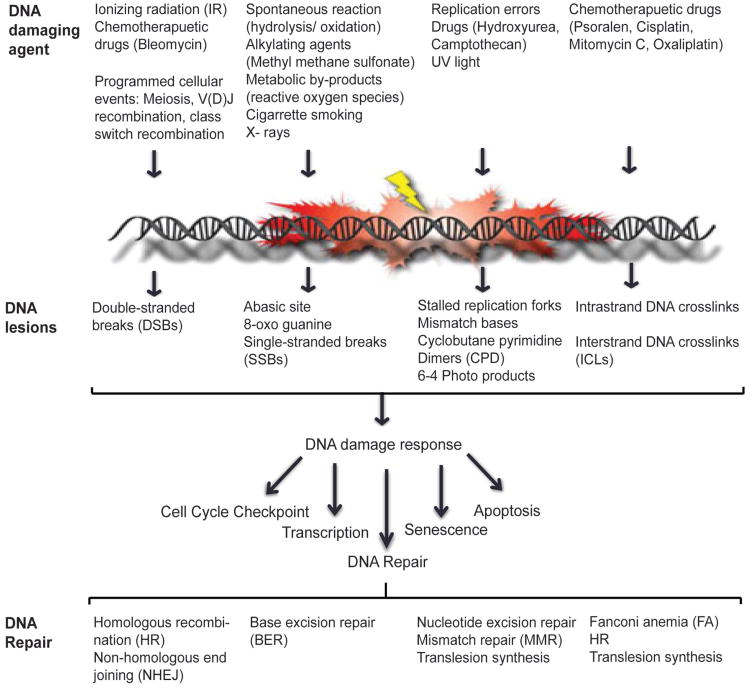
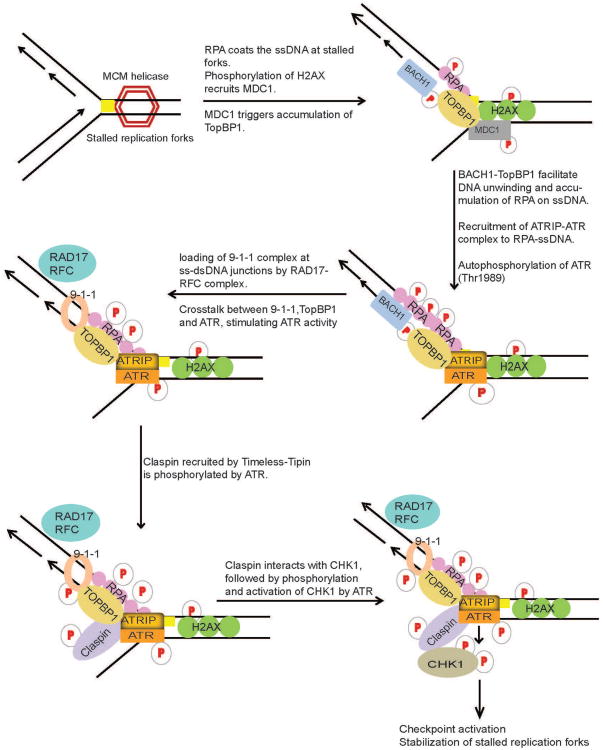
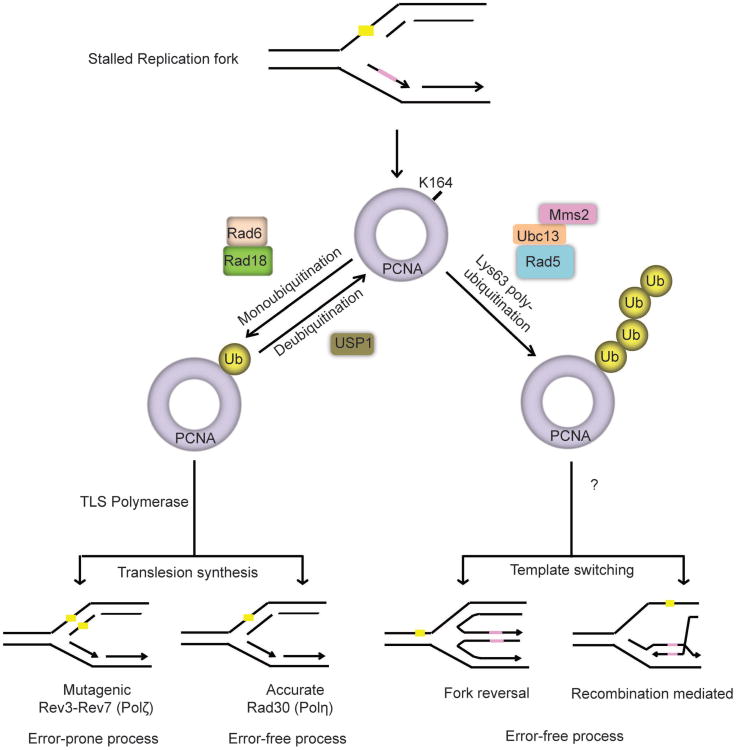
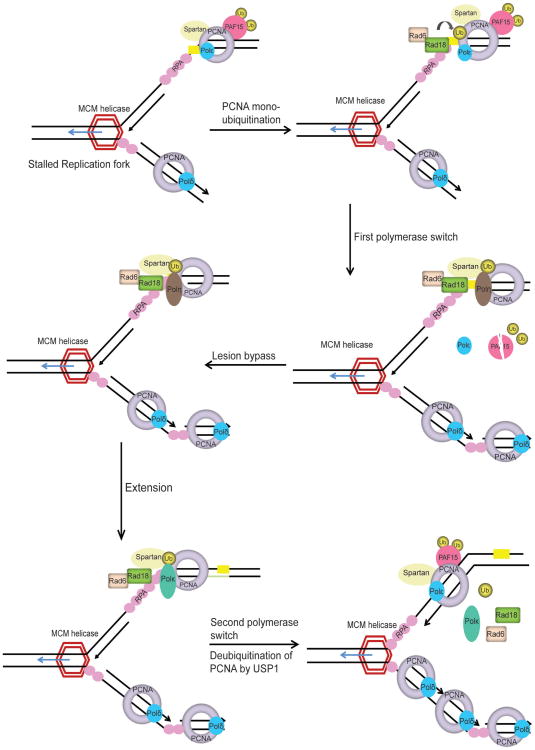
Preservation of genome integrity is an essential process for cell homeostasis. During the course of life of a single cell, the genome is constantly damaged by endogenous and exogenous agents. To ensure genome stability, cells use a global signaling network, namely the DNA damage response (DDR) to sense and repair DNA damage. DDR senses different types of DNA damage and coordinates a response that includes activation of transcription, cell cycle control, DNA repair pathways, apoptosis, senescence, and cell death. Despite several repair mechanisms that repair different types of DNA lesions, it is likely that the replication machinery would still encounter lesions that are mis-repaired or not repaired. Replication of damaged genome would result in high frequency of fork collapse and genome instability. In this scenario, the cells employ the DNA damage tolerance (DDT) pathway that recruits a specialized low fidelity translesion synthesis (TLS) polymerase to bypass the lesions for repair at a later time point. Thus, DDT is not a repair pathway per se, but provides a mechanism to tolerate DNA lesions during replication thereby increasing survival and preventing genome instability. Paradoxically, DDT process is also associated with increased mutagenesis, which can in turn drive the cell to cancer development. Thus, DDT process functions as a double-edged sword guarding the genome. In this review, we will discuss the replication stress induced DNA damage-signaling cascade, the stabilization and rescue of stalled replication forks by the DDT pathway and the effect of the DDT pathway on cancer.
基因组完整性的维持是细胞内稳态的一个重要过程。在单个细胞的生命历程中,基因组不断受到内源性和外源性因素的损伤。为确保基因组稳定性,细胞利用一个全局信号网络,即DNA损伤反应(DDR)来感知和修复DNA损伤。DDR能感知不同类型的DNA损伤,并协调包括转录激活、细胞周期控制、DNA修复途径、凋亡、衰老和细胞死亡在内的一系列反应。尽管存在多种修复不同类型DNA损伤的机制,但复制 machinery 仍可能遇到修复错误或未修复的损伤。受损基因组的复制会导致高频的复制叉崩溃和基因组不稳定。在这种情况下,细胞采用DNA损伤耐受(DDT)途径,该途径招募一种特殊的低保真跨损伤合成(TLS)聚合酶来绕过损伤,以便在稍后的时间点进行修复。因此,DDT本身并不是一种修复途径,而是提供了一种在复制过程中耐受DNA损伤的机制,从而提高细胞存活率并防止基因组不稳定。矛盾的是,DDT过程也与诱变增加有关,这反过来又可能促使细胞发展为癌症。因此,DDT过程就像一把双刃剑守护着基因组。在这篇综述中,我们将讨论复制应激诱导的DNA损伤信号级联反应、DDT途径对停滞复制叉的稳定和拯救作用以及DDT途径对癌症的影响。
原文中“replication machinery”直译为“复制 machinery”,这里可能是有特定专业术语表述不完整,可结合具体专业背景进一步准确翻译。