Applied Cachexia Research, Department of Cardiology, Charité Medical School, Campus Virchow-Klinikum, Berlin 13353, Germany.
Nutrients. 2013 Sep 23;5(9):3730-9. doi: 10.3390/nu5093730.
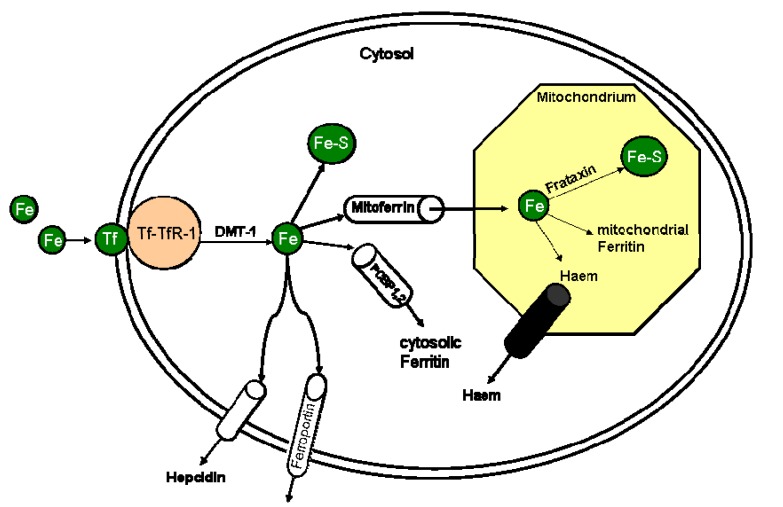
Iron is an element necessary for cells due to its capacity of transporting oxygen and electrons. One of the important co-morbidities in heart failure is iron deficiency. Iron has relevant biological functions, for example, the formation of haemoglobin, myoglobin and numerous enzymatic groups. The prevalence of iron deficiency increases with the severity of heart failure. For a long time, the influence of iron deficiency was underestimated especially in terms of worsening of cardiovascular diseases and of developing anaemia. In recent years, studies with intravenous iron agents in patients with iron deficiency and cardiovascular diseases indicated new insights in the improvement of therapy. Experimental studies support the understanding of iron metabolism. Many physicians remain doubtful of the use of intravenous iron due to reports of side effects. The aim of this review is to describe iron metabolism in humans, to highlight the influence of iron deficiency on the course and symptoms of heart failure, discuss diagnostic tools of iron deficiency and provide guidance on the use of intravenous iron.
铁是细胞必需的元素,因为它具有运输氧气和电子的能力。心力衰竭的一个重要合并症是缺铁。铁具有相关的生物学功能,例如血红蛋白、肌红蛋白和许多酶组的形成。缺铁的患病率随着心力衰竭的严重程度而增加。长期以来,铁缺乏的影响被低估了,尤其是在心血管疾病恶化和贫血发展方面。近年来,对缺铁和心血管疾病患者进行静脉铁剂治疗的研究为改善治疗提供了新的见解。实验研究支持对铁代谢的理解。由于报告了副作用,许多医生对静脉铁的使用仍持怀疑态度。本综述的目的是描述人类的铁代谢,强调缺铁对心力衰竭过程和症状的影响,讨论缺铁的诊断工具,并提供静脉铁使用的指导。