Division of Kidney Diseases and Hypertension, University of Colorado Denver, Aurora, Colorado.
Diabetes. 2013 Oct;62(10):3307-15. doi: 10.2337/db12-1814.
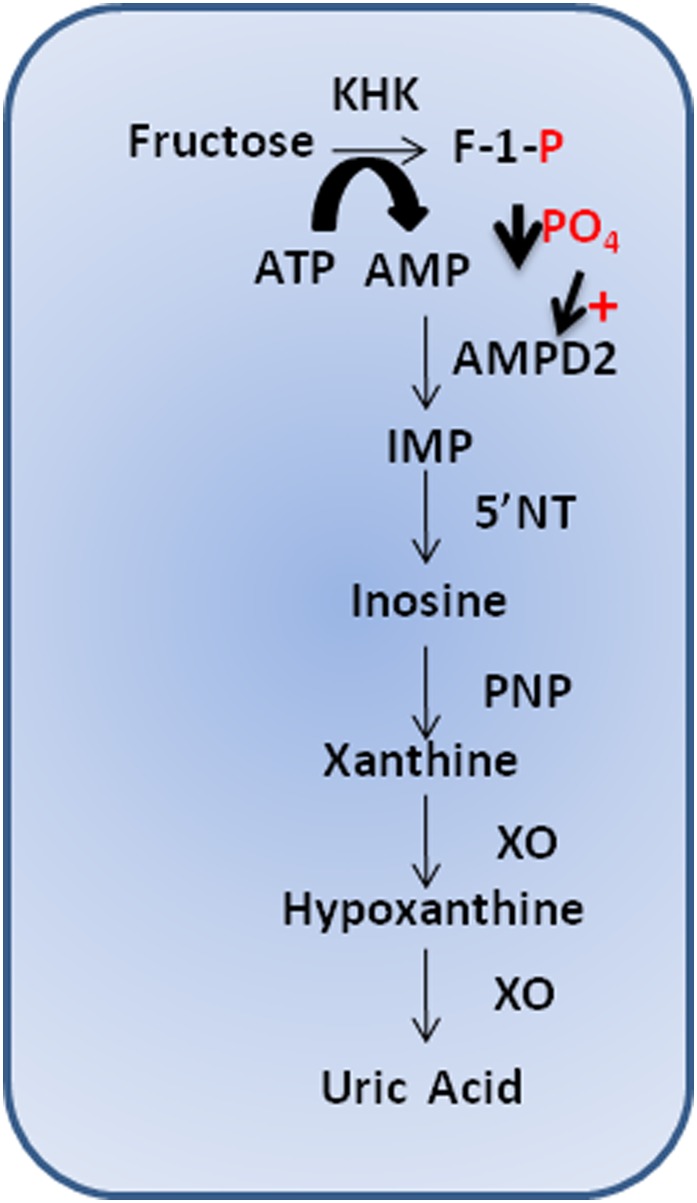
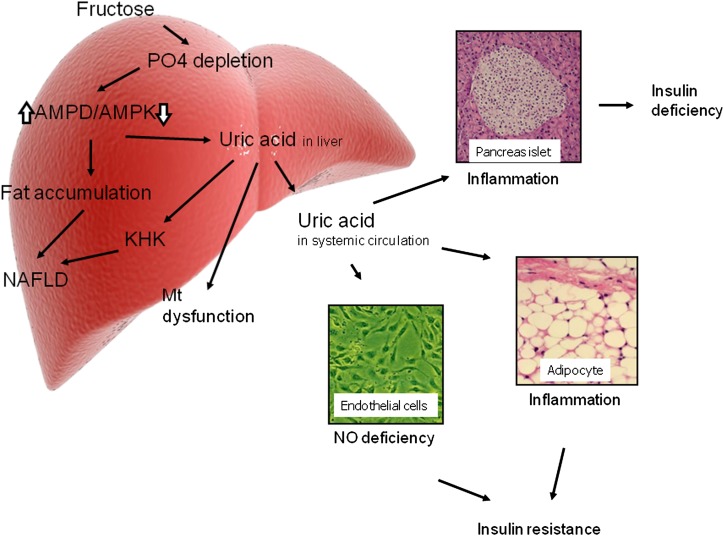
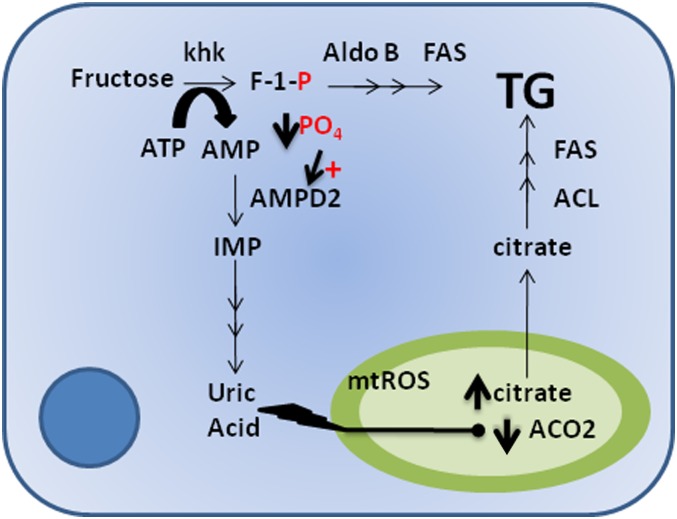
The intake of added sugars, such as from table sugar (sucrose) and high-fructose corn syrup has increased dramatically in the last hundred years and correlates closely with the rise in obesity, metabolic syndrome, and diabetes. Fructose is a major component of added sugars and is distinct from other sugars in its ability to cause intracellular ATP depletion, nucleotide turnover, and the generation of uric acid. In this article, we revisit the hypothesis that it is this unique aspect of fructose metabolism that accounts for why fructose intake increases the risk for metabolic syndrome. Recent studies show that fructose-induced uric acid generation causes mitochondrial oxidative stress that stimulates fat accumulation independent of excessive caloric intake. These studies challenge the long-standing dogma that "a calorie is just a calorie" and suggest that the metabolic effects of food may matter as much as its energy content. The discovery that fructose-mediated generation of uric acid may have a causal role in diabetes and obesity provides new insights into pathogenesis and therapies for this important disease.
在过去的一百年中,添加糖(如食糖[蔗糖]和高果糖玉米糖浆)的摄入量急剧增加,与肥胖、代谢综合征和糖尿病的发病率密切相关。果糖是添加糖的主要成分,其独特之处在于它能够导致细胞内 ATP 耗竭、核苷酸周转和尿酸生成。在本文中,我们重新审视了这样一个假设,即果糖代谢的这一独特方面解释了为什么果糖摄入会增加代谢综合征的风险。最近的研究表明,果糖诱导的尿酸生成会导致线粒体氧化应激,从而刺激脂肪积累,而与过量热量摄入无关。这些研究挑战了“卡路里就是卡路里”这一长期存在的观点,并表明食物的代谢效应可能与能量含量同样重要。发现果糖介导的尿酸生成可能在糖尿病和肥胖症中起因果作用,为这一重要疾病的发病机制和治疗提供了新的见解。