Department of Biomedical Engineering, Stony Brook University, Stony Brook, New York, United States of America.
PLoS Comput Biol. 2013;9(9):e1003220. doi: 10.1371/journal.pcbi.1003220. Epub 2013 Sep 12.
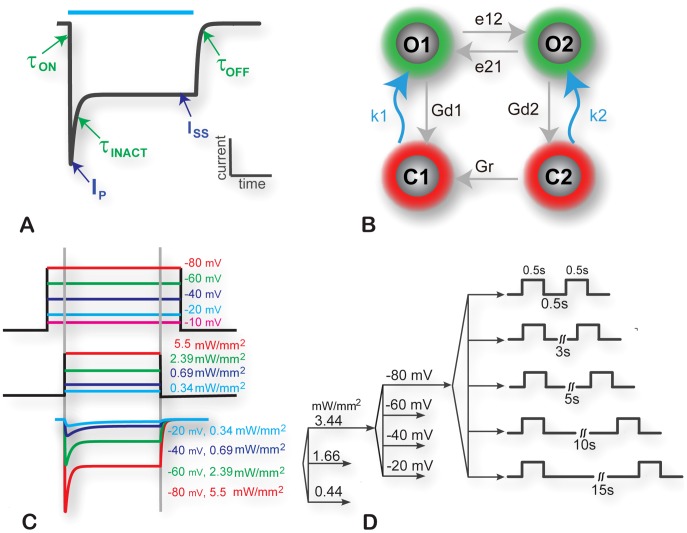
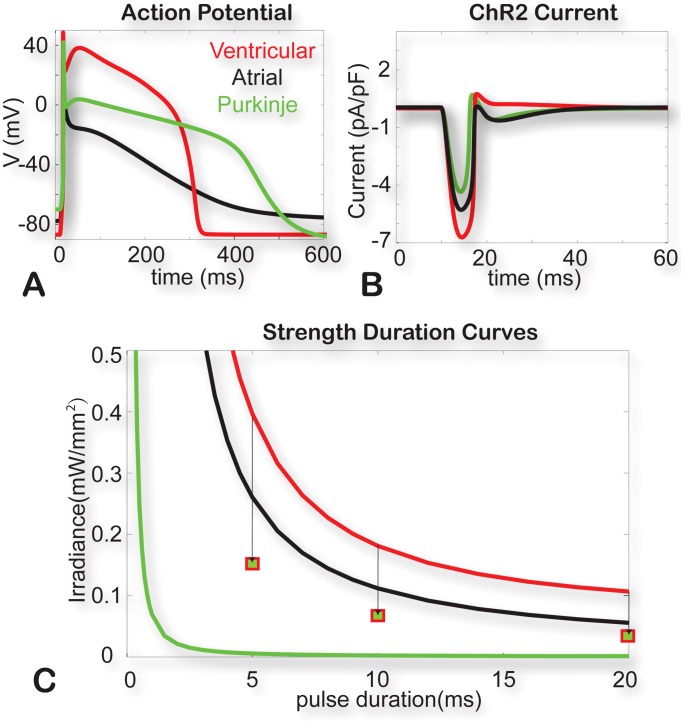
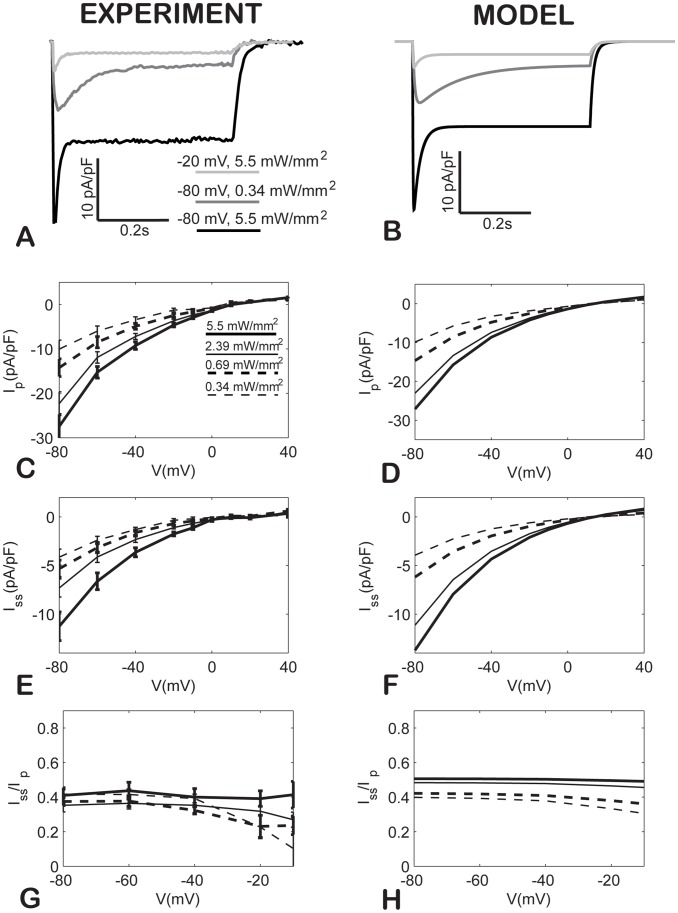
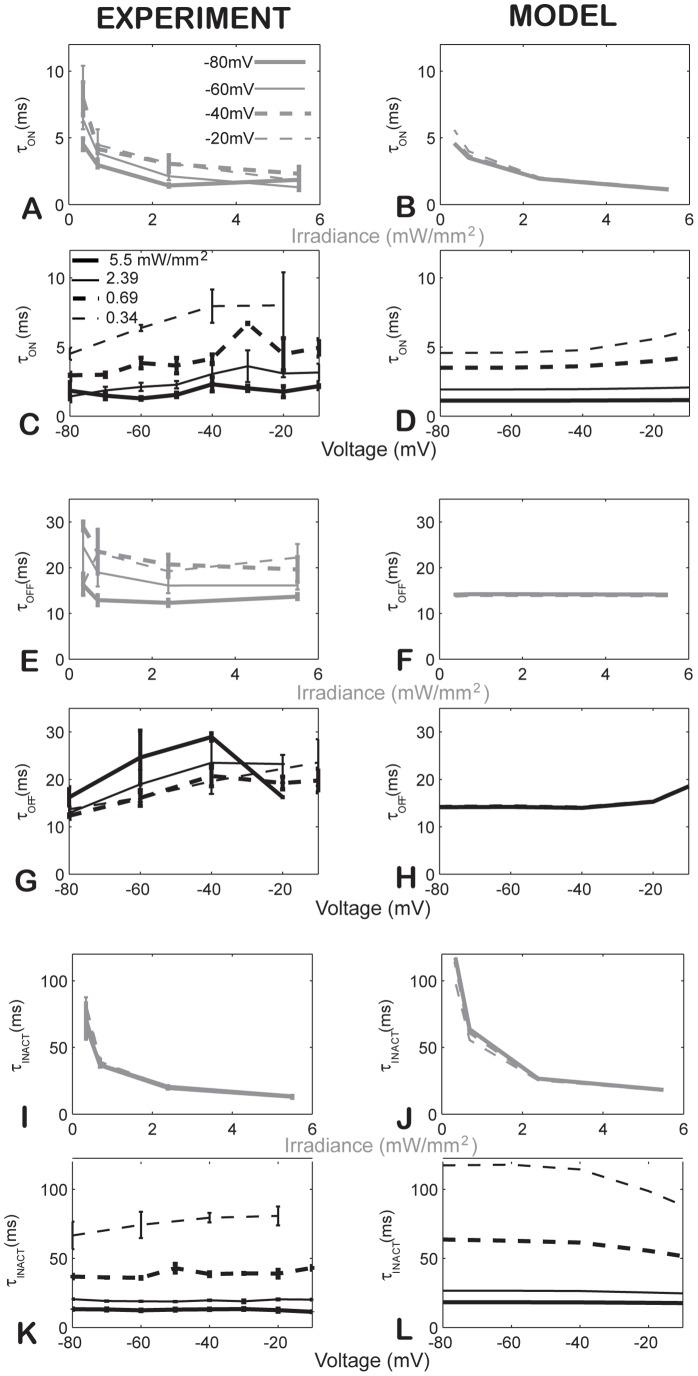
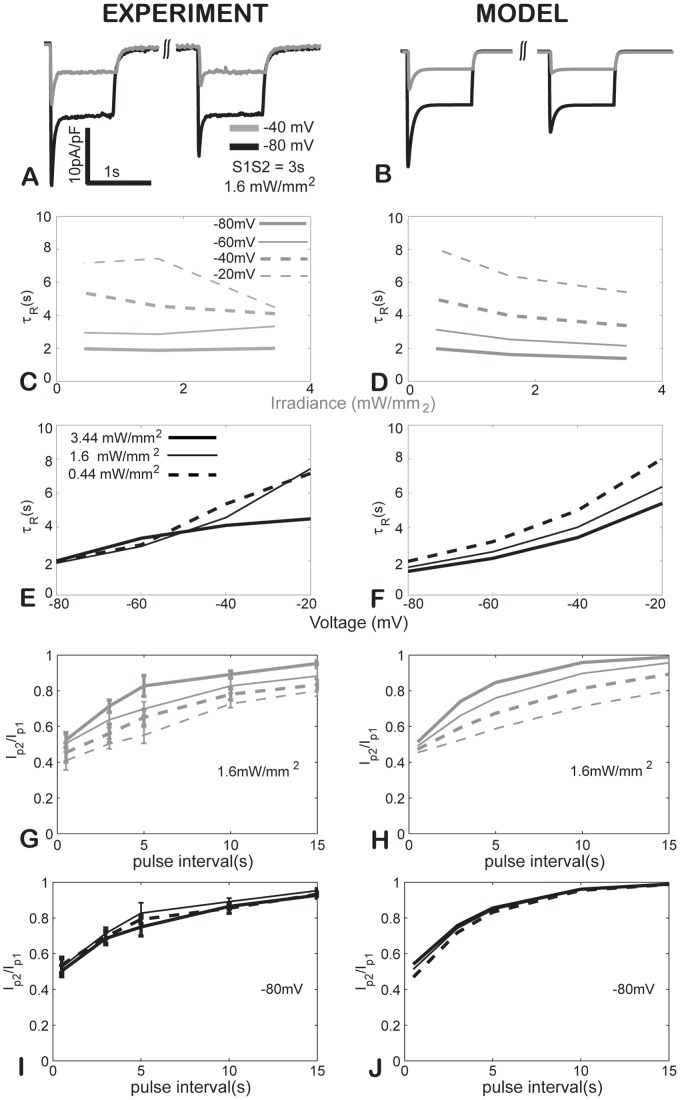
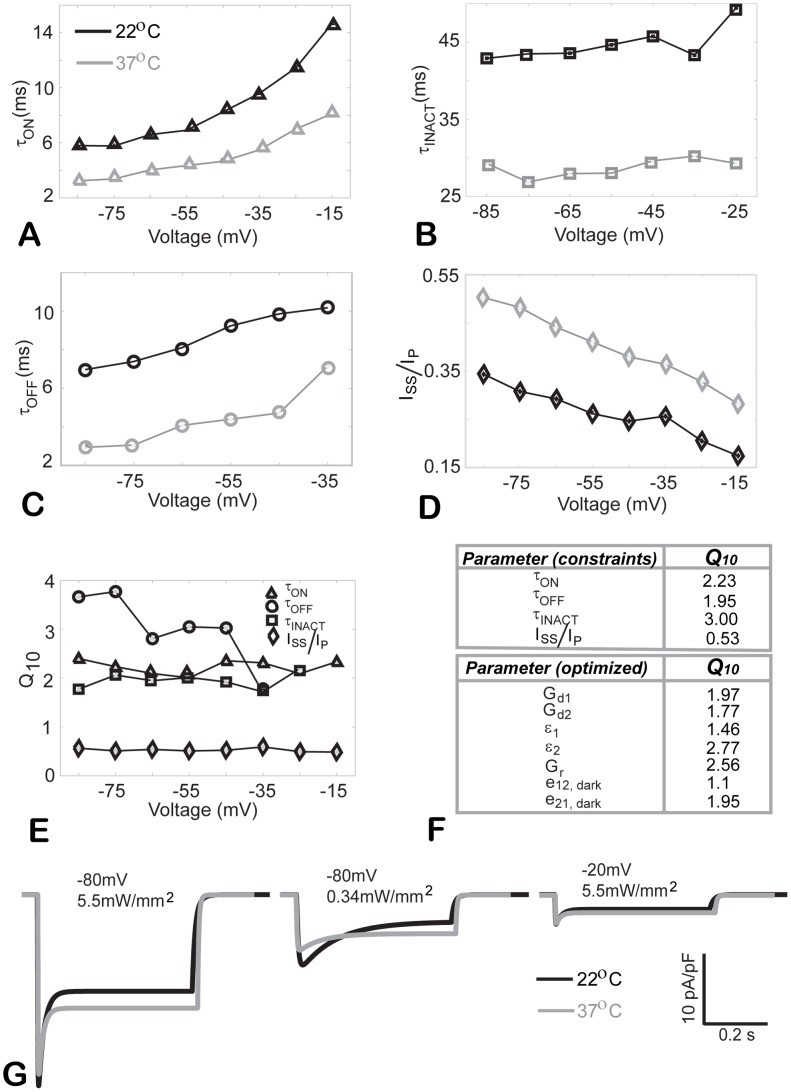
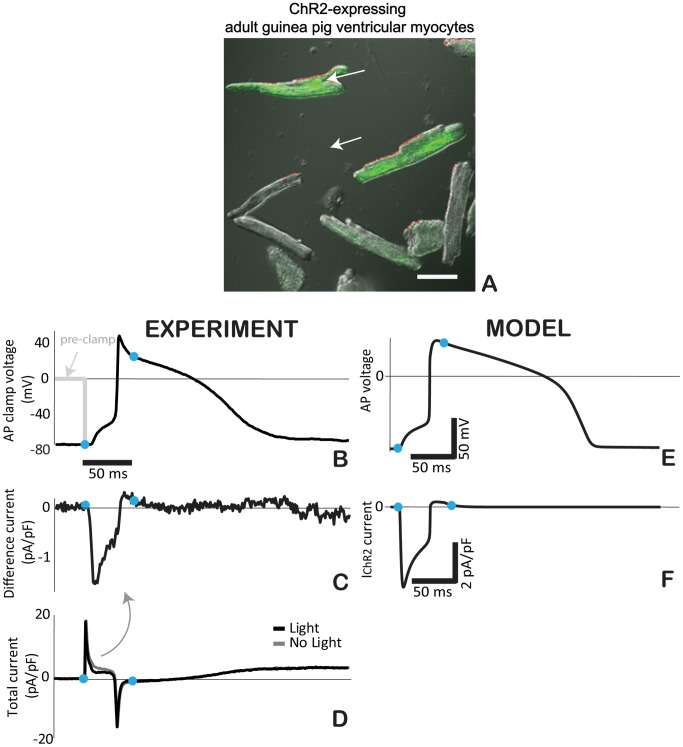
Channelrhodospin-2 (ChR2), a light-sensitive ion channel, and its variants have emerged as new excitatory optogenetic tools not only in neuroscience, but also in other areas, including cardiac electrophysiology. An accurate quantitative model of ChR2 is necessary for in silico prediction of the response to optical stimulation in realistic tissue/organ settings. Such a model can guide the rational design of new ion channel functionality tailored to different cell types/tissues. Focusing on one of the most widely used ChR2 mutants (H134R) with enhanced current, we collected a comprehensive experimental data set of the response of this ion channel to different irradiances and voltages, and used these data to develop a model of ChR2 with empirically-derived voltage- and irradiance- dependence, where parameters were fine-tuned via simulated annealing optimization. This ChR2 model offers: 1) accurate inward rectification in the current-voltage response across irradiances; 2) empirically-derived voltage- and light-dependent kinetics (activation, deactivation and recovery from inactivation); and 3) accurate amplitude and morphology of the response across voltage and irradiance settings. Temperature-scaling factors (Q10) were derived and model kinetics was adjusted to physiological temperatures. Using optical action potential clamp, we experimentally validated model-predicted ChR2 behavior in guinea pig ventricular myocytes. The model was then incorporated in a variety of cardiac myocytes, including human ventricular, atrial and Purkinje cell models. We demonstrate the ability of ChR2 to trigger action potentials in human cardiomyocytes at relatively low light levels, as well as the differential response of these cells to light, with the Purkinje cells being most easily excitable and ventricular cells requiring the highest irradiance at all pulse durations. This new experimentally-validated ChR2 model will facilitate virtual experimentation in neural and cardiac optogenetics at the cell and organ level and provide guidance for the development of in vivo tools.
通道视紫红质 2(ChR2)是一种光敏感离子通道,及其变体不仅在神经科学领域,而且在包括心脏电生理学在内的其他领域,已成为新的兴奋性光遗传学工具。为了在真实组织/器官环境中对光刺激的反应进行计算机预测,需要建立 ChR2 的精确定量模型。这种模型可以指导新的离子通道功能的合理设计,以适应不同的细胞类型/组织。本研究集中于最广泛使用的 ChR2 突变体之一(H134R),该突变体具有增强的电流,我们收集了该离子通道对不同辐照度和电压的反应的综合实验数据集,并使用这些数据开发了具有经验依赖性的电压和辐照度依赖性的 ChR2 模型,其中参数通过模拟退火优化进行了微调。该 ChR2 模型具有以下特点:1)在整个辐照度范围内,电流-电压响应具有精确的内向整流;2)具有经验依赖性的电压和光依赖性动力学(激活、失活和恢复);3)在整个电压和辐照度设置下,具有精确的响应幅度和形态。推导了温度缩放因子(Q10),并调整了模型动力学以适应生理温度。使用光动作电位钳,我们在豚鼠心室肌细胞中实验验证了模型预测的 ChR2 行为。然后,该模型被整合到各种心肌细胞中,包括人心室、心房和浦肯野细胞模型。我们证明了 ChR2 在相对低光水平下能够引发人心肌细胞的动作电位,以及这些细胞对光的不同反应,浦肯野细胞最容易兴奋,而心室细胞在所有脉冲持续时间下都需要最高的辐照度。这种新的经过实验验证的 ChR2 模型将促进神经和心脏光遗传学在细胞和器官水平上的虚拟实验,并为体内工具的开发提供指导。