Department of Pharmaceutical Sciences, University of Colorado Denver Anschutz Medical Campus, Aurora, Colorado, United States of America.
PLoS One. 2013 Sep 20;8(9):e75868. doi: 10.1371/journal.pone.0075868. eCollection 2013.
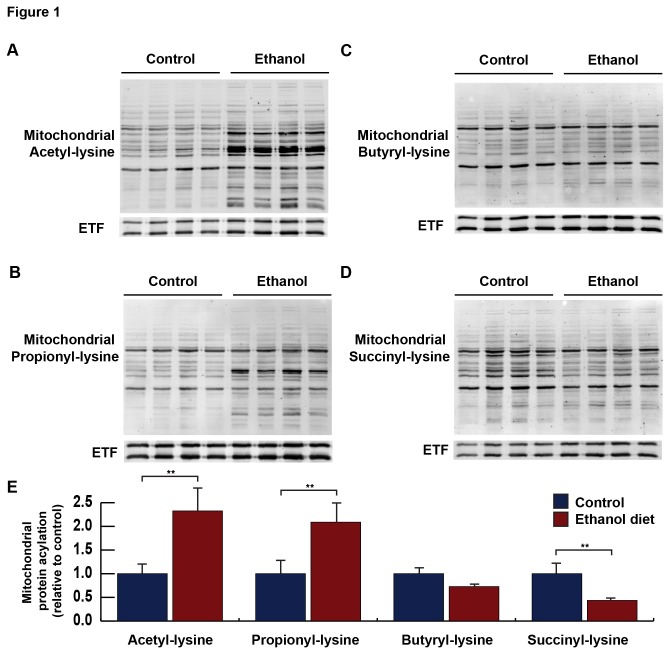
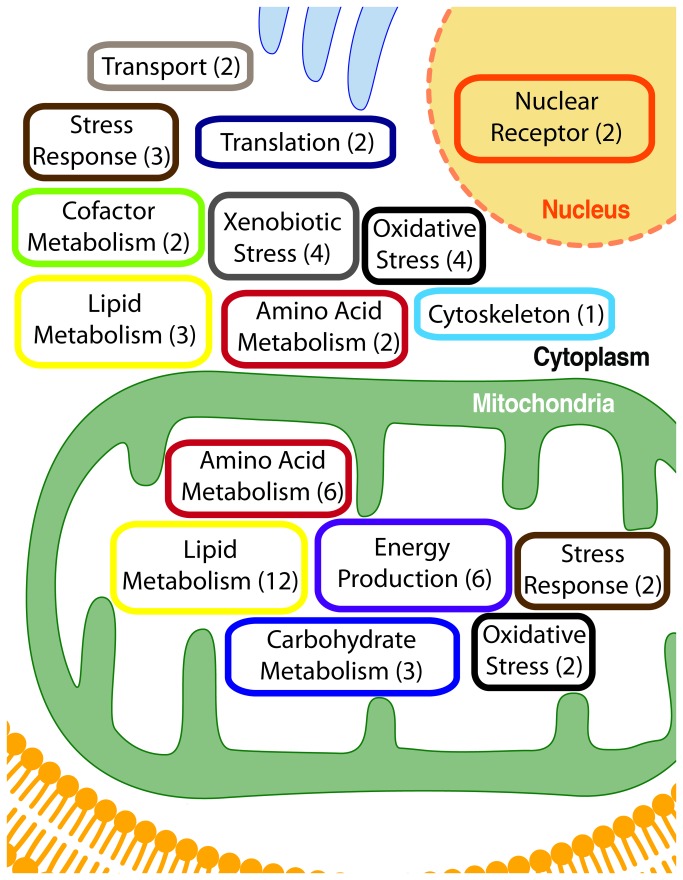
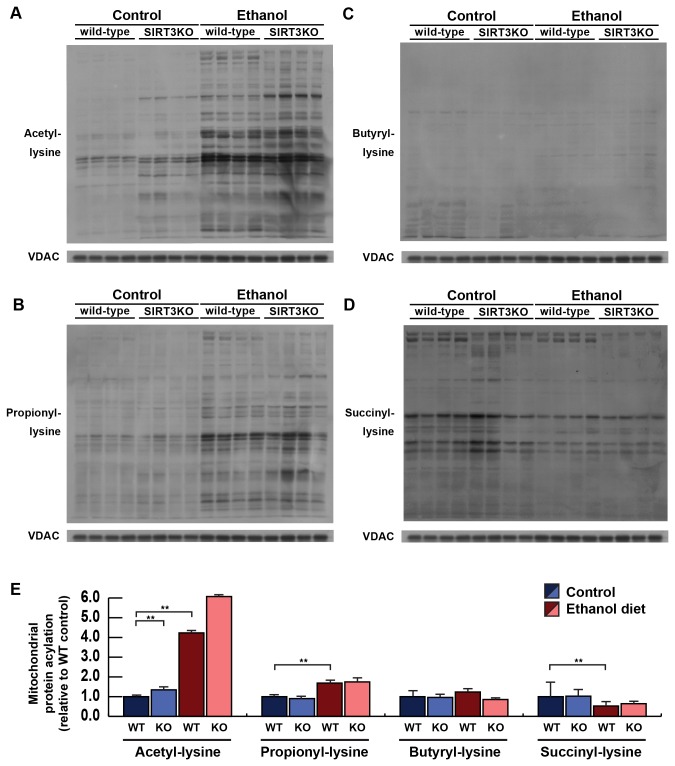
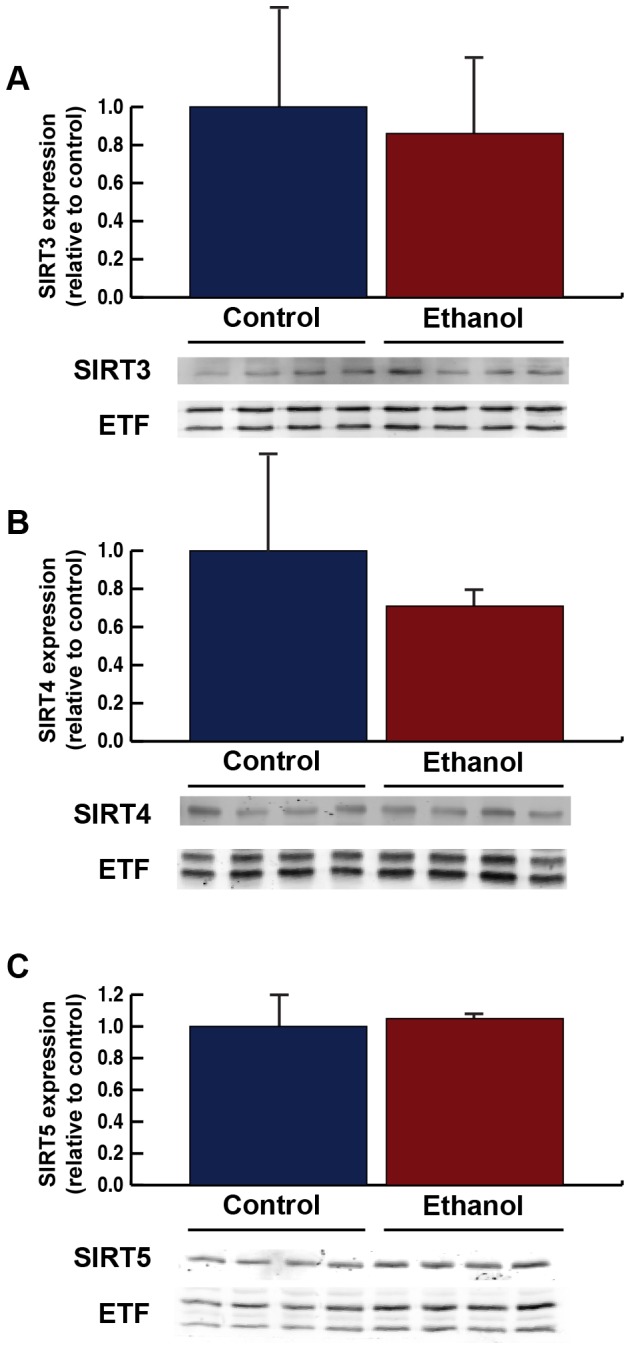
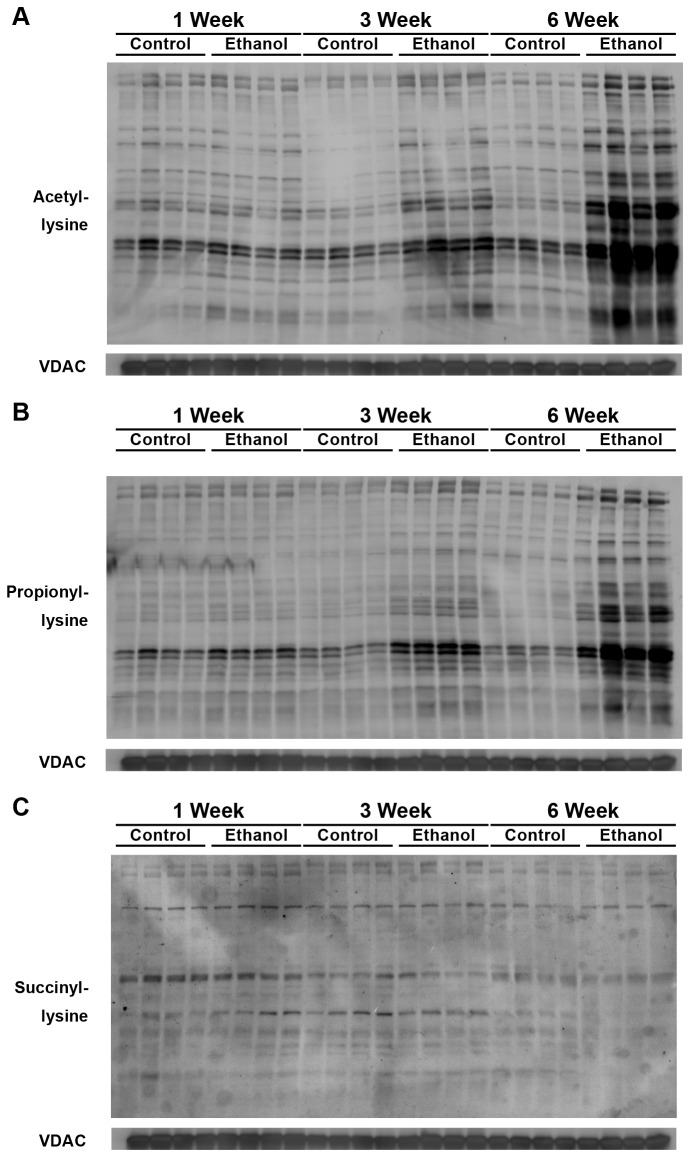
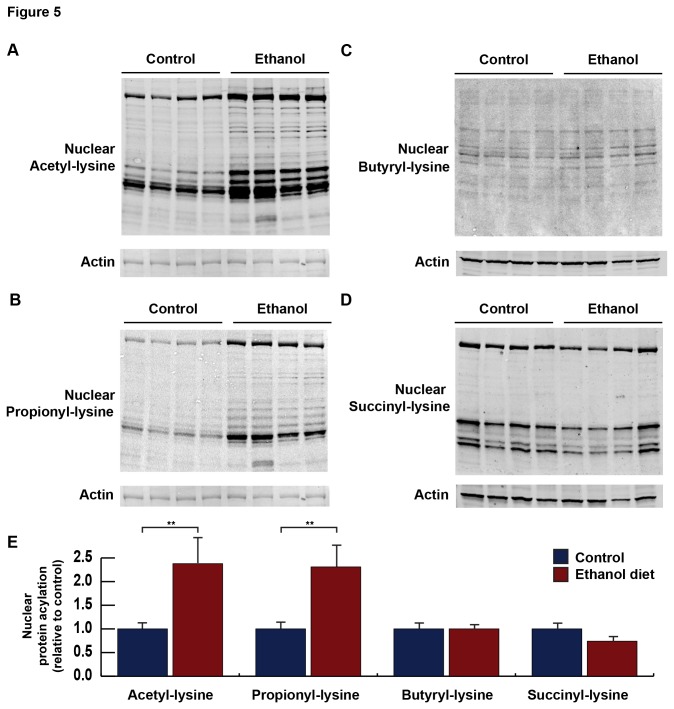
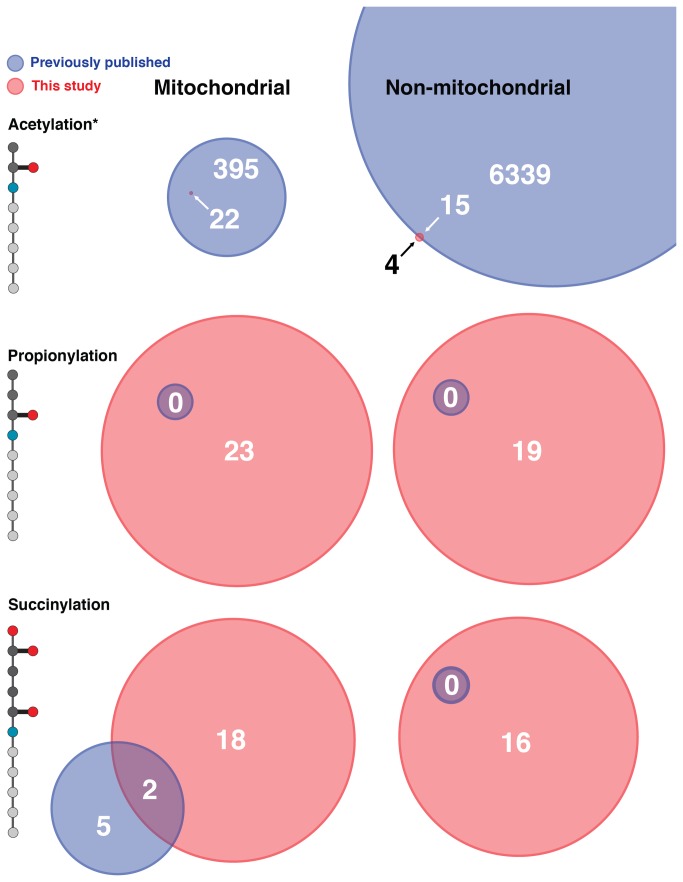
Mitochondrial protein acetylation increases in response to chronic ethanol ingestion in mice, and is thought to reduce mitochondrial function and contribute to the pathogenesis of alcoholic liver disease. The mitochondrial deacetylase SIRT3 regulates the acetylation status of several mitochondrial proteins, including those involved in ethanol metabolism. The newly discovered desuccinylase activity of the mitochondrial sirtuin SIRT5 suggests that protein succinylation could be an important post-translational modification regulating mitochondrial metabolism. To assess the possible role of protein succinylation in ethanol metabolism, we surveyed hepatic sub-cellular protein fractions from mice fed a control or ethanol-supplemented diet for succinyl-lysine, as well as acetyl-, propionyl-, and butyryl-lysine post-translational modifications. We found mitochondrial protein propionylation increases, similar to mitochondrial protein acetylation. In contrast, mitochondrial protein succinylation is reduced. These mitochondrial protein modifications appear to be primarily driven by ethanol metabolism, and not by changes in mitochondrial sirtuin levels. Similar trends in acyl modifications were observed in the nucleus. However, comparatively fewer acyl modifications were observed in the cytoplasmic or the microsomal compartments, and were generally unchanged by ethanol metabolism. Using a mass spectrometry proteomics approach, we identified several candidate acetylated, propionylated, and succinylated proteins, which were enriched using antibodies against each modification. Additionally, we identified several acetyl and propionyl lysine residues on the same sites for a number of proteins and supports the idea of the overlapping nature of lysine-specific acylation. Thus, we show that novel post-translational modifications are present in hepatic mitochondrial, nuclear, cytoplasmic, and microsomal compartments and ethanol ingestion, and its associated metabolism, induce specific changes in these acyl modifications. These data suggest that protein acylation, beyond protein acetylation, contributes to the overall metabolic regulatory network and could play an important role in the pathogenesis of alcoholic liver disease.
线粒体蛋白乙酰化水平在慢性乙醇摄入后增加,被认为会降低线粒体功能,并导致酒精性肝病的发病机制。线粒体去乙酰化酶 SIRT3 调节几种线粒体蛋白的乙酰化状态,包括参与乙醇代谢的蛋白。新发现的线粒体 SIRT5 的去琥珀酰化酶活性表明蛋白琥珀酰化可能是调节线粒体代谢的重要翻译后修饰。为了评估蛋白琥珀酰化在乙醇代谢中的可能作用,我们检测了接受对照或乙醇补充饮食的小鼠肝亚细胞蛋白组分中琥珀酰赖氨酸,以及乙酰基、丙酰基和丁酰基赖氨酸的翻译后修饰。我们发现线粒体蛋白丙酰化增加,类似于线粒体蛋白乙酰化。相比之下,线粒体蛋白琥珀酰化减少。这些线粒体蛋白修饰主要由乙醇代谢驱动,而不是由线粒体 Sirtuin 水平变化驱动。在核中也观察到类似的酰基修饰趋势。然而,在细胞质或微粒体部分观察到的酰基修饰较少,并且一般不受乙醇代谢的影响。使用质谱蛋白质组学方法,我们鉴定了几种候选的乙酰化、丙酰化和琥珀酰化蛋白,这些蛋白使用针对每种修饰的抗体进行了富集。此外,我们还鉴定了一些蛋白上的乙酰和丙酰赖氨酸残基位于同一位置,支持赖氨酸特异性酰化的重叠性质的观点。因此,我们表明新的翻译后修饰存在于肝线粒体、核、细胞质和微粒体部分,乙醇摄入及其相关代谢会引起这些酰基修饰的特定变化。这些数据表明,除了蛋白乙酰化之外,蛋白酰化还会对整体代谢调控网络做出贡献,并可能在酒精性肝病的发病机制中发挥重要作用。