Graduate Program in Genetic, Molecular and Cellular Biology, Keck School of Medicine, University of Southern California, Los Angeles, California, United States of America ; Zilkha Neurogenetic Institute, Department of Cell and Neurobiology, Keck School of Medicine, University of Southern California, Los Angeles, California, United States of America.
PLoS Genet. 2013;9(9):e1003831. doi: 10.1371/journal.pgen.1003831. Epub 2013 Sep 26.
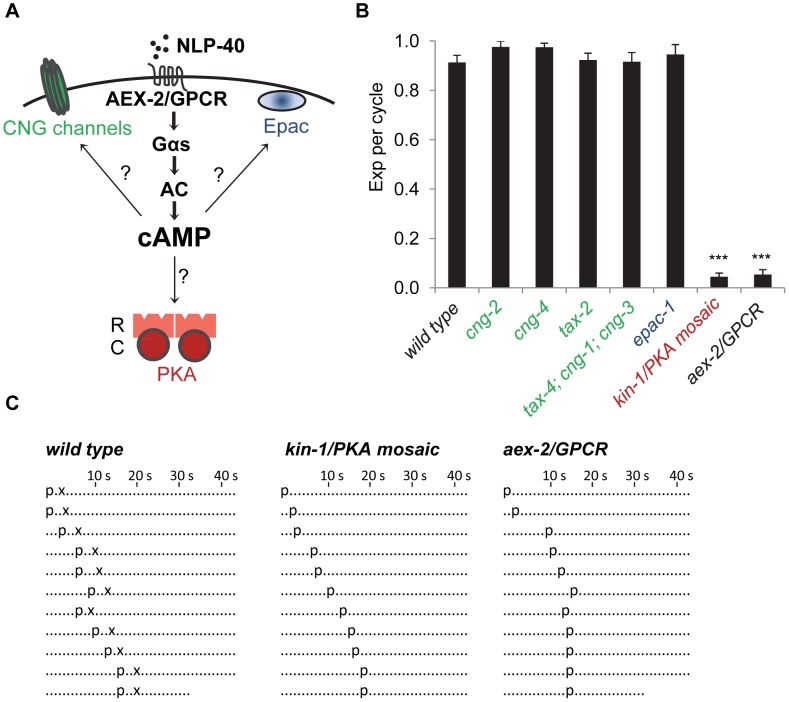
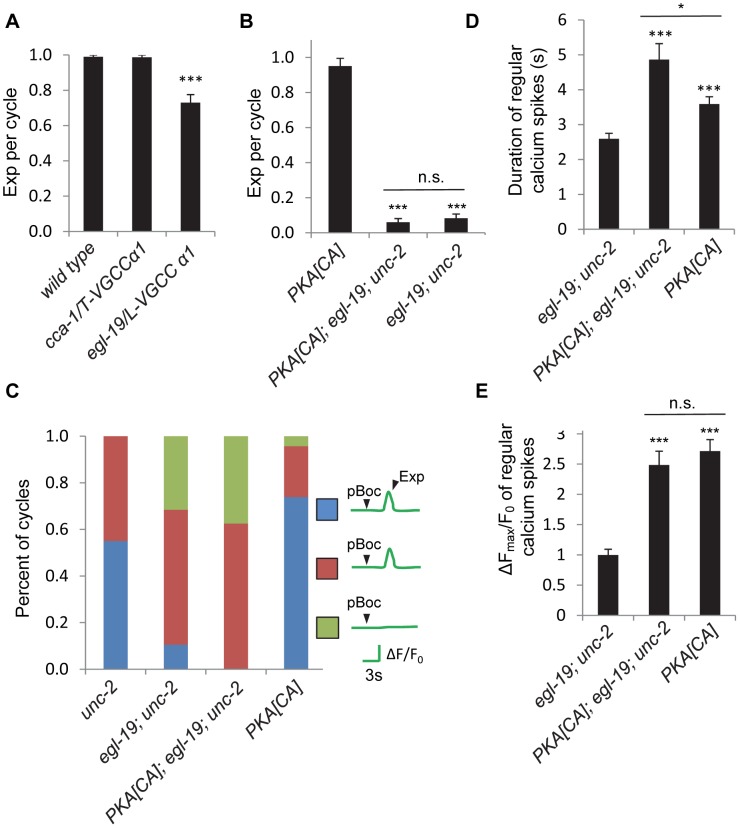
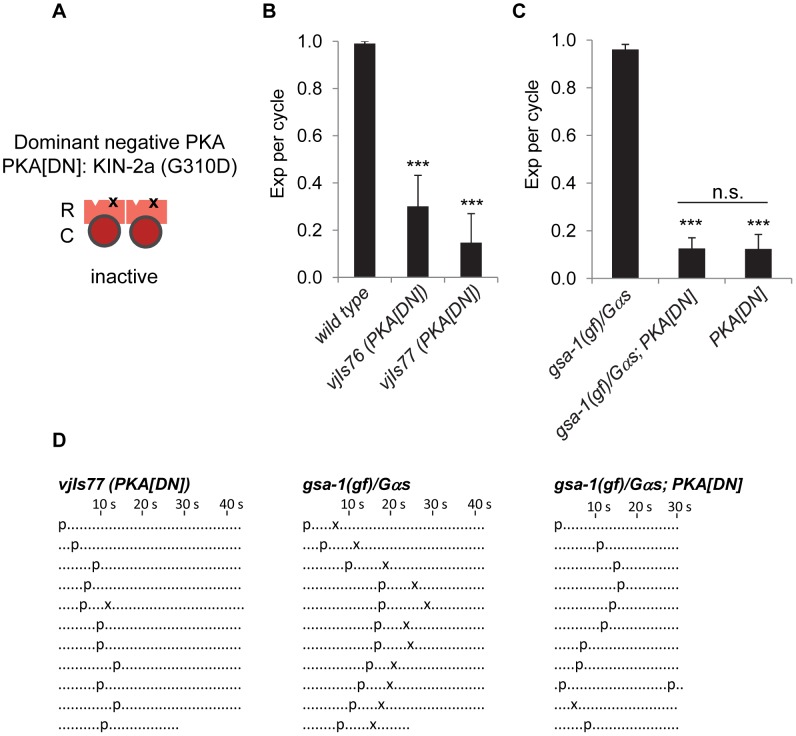
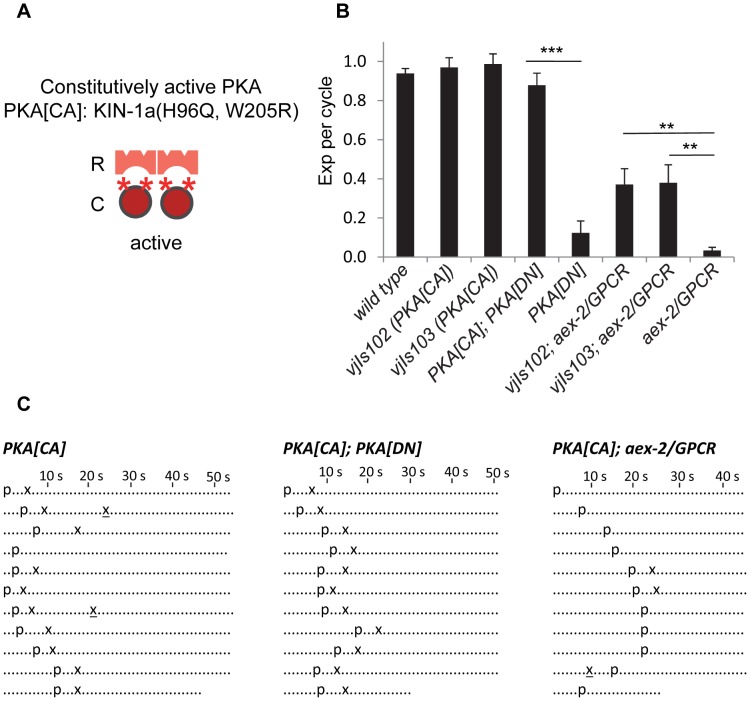
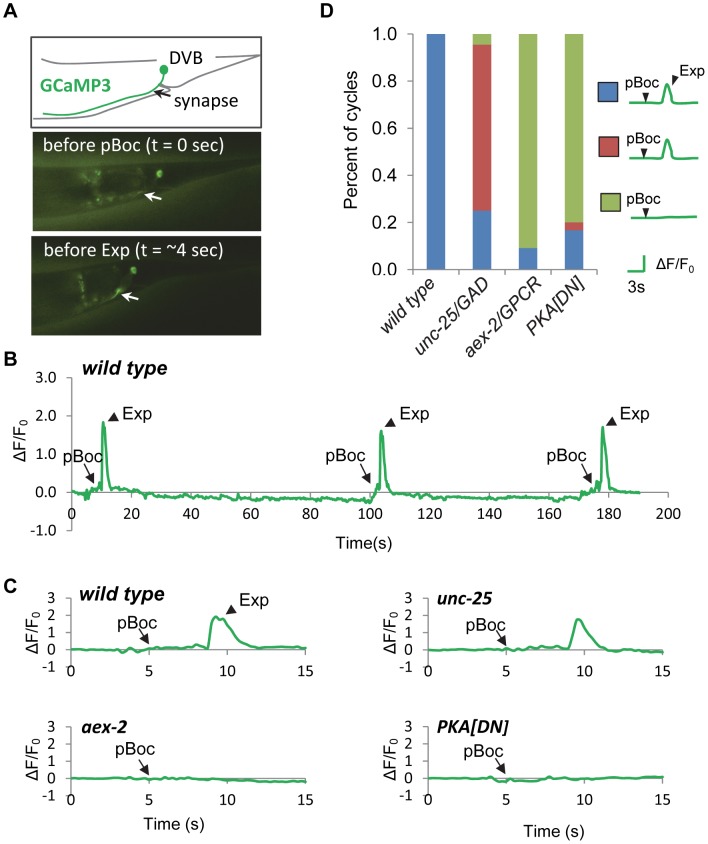
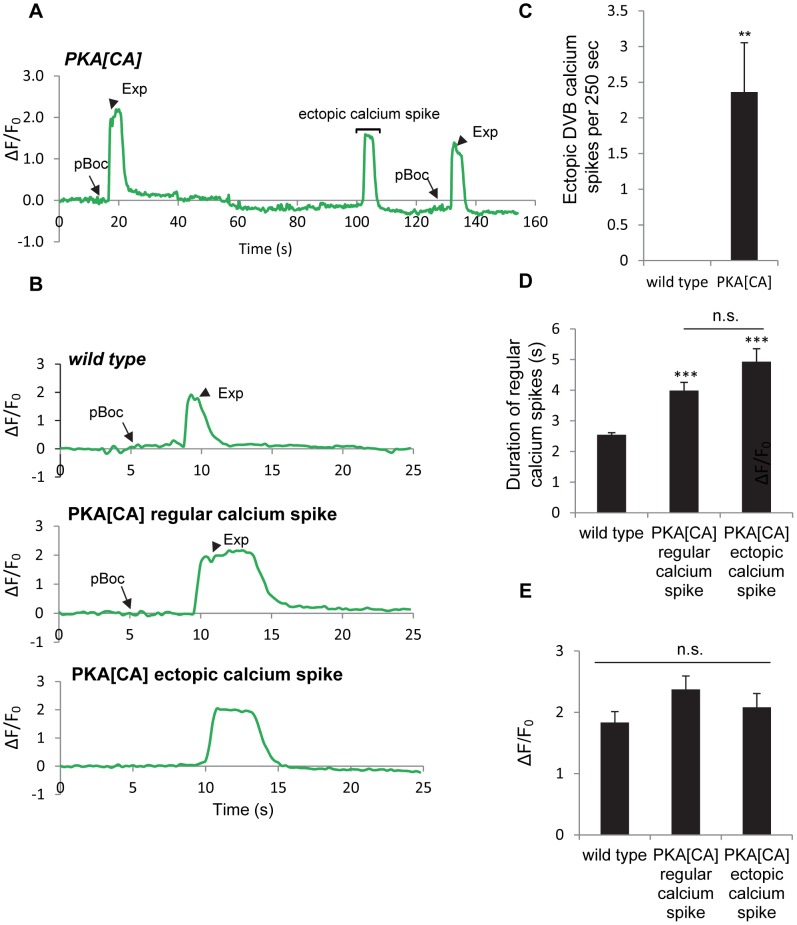
Cyclic adenosine monophosphate (cAMP) has been implicated in the execution of diverse rhythmic behaviors, but how cAMP functions in neurons to generate behavioral outputs remains unclear. During the defecation motor program in C. elegans, a peptide released from the pacemaker (the intestine) rhythmically excites the GABAergic neurons that control enteric muscle contractions by activating a G protein-coupled receptor (GPCR) signaling pathway that is dependent on cAMP. Here, we show that the C. elegans PKA catalytic subunit, KIN-1, is the sole cAMP target in this pathway and that PKA is essential for enteric muscle contractions. Genetic analysis using cell-specific expression of dominant negative or constitutively active PKA transgenes reveals that knockdown of PKA activity in the GABAergic neurons blocks enteric muscle contractions, whereas constitutive PKA activation restores enteric muscle contractions to mutants defective in the peptidergic signaling pathway. Using real-time, in vivo calcium imaging, we find that PKA activity in the GABAergic neurons is essential for the generation of synaptic calcium transients that drive GABA release. In addition, constitutively active PKA increases the duration of calcium transients and causes ectopic calcium transients that can trigger out-of-phase enteric muscle contractions. Finally, we show that the voltage-gated calcium channels UNC-2 and EGL-19, but not CCA-1 function downstream of PKA to promote enteric muscle contractions and rhythmic calcium influx in the GABAergic neurons. Thus, our results suggest that PKA activates neurons during a rhythmic behavior by promoting presynaptic calcium influx through specific voltage-gated calcium channels.
环磷酸腺苷(cAMP)已被牵涉到多种节律行为的执行中,但 cAMP 如何在神经元中发挥作用以产生行为输出尚不清楚。在秀丽隐杆线虫的排粪运动程序中,一种由起搏器(肠道)释放的肽通过激活 G 蛋白偶联受体(GPCR)信号通路,周期性地兴奋控制肠肌收缩的 GABA 能神经元,该通路依赖于 cAMP。在这里,我们表明,秀丽隐杆线虫的 PKA 催化亚基 KIN-1 是该通路中唯一的 cAMP 靶标,并且 PKA 对于肠肌收缩是必不可少的。使用细胞特异性表达显性负或组成型激活的 PKA 转基因的遗传分析表明,GABA 能神经元中 PKA 活性的敲低会阻止肠肌收缩,而组成型 PKA 激活则会恢复到在肽信号通路缺陷的突变体中的肠肌收缩。使用实时、体内钙成像,我们发现 GABA 能神经元中的 PKA 活性对于驱动 GABA 释放的突触钙瞬变的产生是必不可少的。此外,组成型激活的 PKA 增加钙瞬变的持续时间,并导致异位钙瞬变,从而引发不同步的肠肌收缩。最后,我们表明 UNC-2 和 EGL-19 电压门控钙通道,但不是 CCA-1 在后生神经元中起作用,以促进肠肌收缩和 GABA 能神经元中的节律性钙内流。因此,我们的结果表明,PKA 通过促进特定电压门控钙通道的突触前钙内流来激活神经元,从而在节律性行为中发挥作用。