Cowan Peter J, Cooper David K C, d'Apice Anthony J F
1] Immunology Research Centre, St Vincent's Hospital, Melbourne, Victoria, Australia [2] Department of Medicine, University of Melbourne, Melbourne, Victoria, Australia.
Thomas E. Starzl Transplantation Institute, University of Pittsburgh Medical Center, Pittsburgh, Pennsylvania, USA.
Kidney Int. 2014 Feb;85(2):265-75. doi: 10.1038/ki.2013.381. Epub 2013 Oct 2.
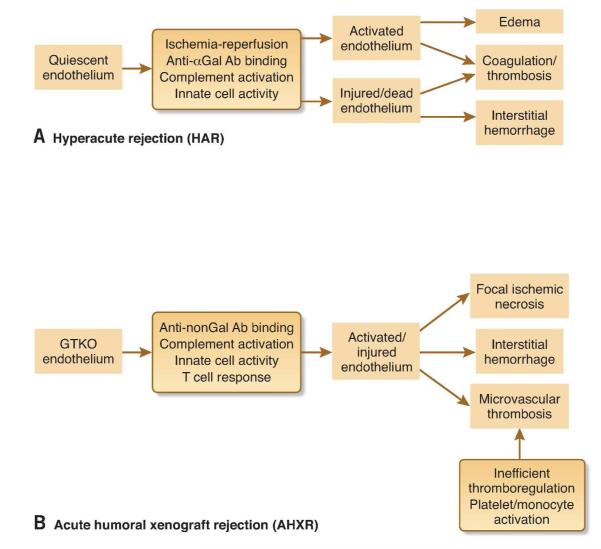
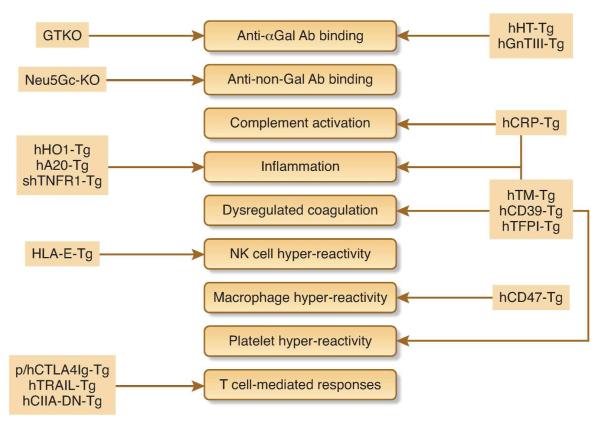
Xenotransplantation using pigs as donors offers the possibility of eliminating the chronic shortage of donor kidneys, but there are several obstacles to be overcome before this goal can be achieved. Preclinical studies have shown that, while porcine renal xenografts are broadly compatible physiologically, they provoke a complex rejection process involving preformed and elicited antibodies, heightened innate immune cell reactivity, dysregulated coagulation, and a strong T cell-mediated adaptive response. Furthermore, the susceptibility of the xenograft to proinflammatory and procoagulant stimuli is probably increased by cross-species molecular defects in regulatory pathways. To balance these disadvantages, xenotransplantation has at its disposal a unique tool to address particular rejection mechanisms and incompatibilities: genetic modification of the donor. This review focuses on the pathophysiology of porcine renal xenograft rejection, and on the significant genetic, pharmacological, and technical progress that has been made to prolong xenograft survival.
使用猪作为供体的异种移植为消除供体肾脏长期短缺提供了可能性,但在实现这一目标之前,仍有几个障碍需要克服。临床前研究表明,虽然猪肾异种移植在生理上具有广泛的兼容性,但它们会引发一个复杂的排斥过程,涉及预先形成的和诱发的抗体、增强的先天性免疫细胞反应性、凝血失调以及强烈的T细胞介导的适应性反应。此外,异种移植对促炎和促凝血刺激的易感性可能因调节途径中的跨物种分子缺陷而增加。为了平衡这些缺点,异种移植有一个独特的工具来解决特定的排斥机制和不相容性:对供体进行基因改造。本综述重点关注猪肾异种移植排斥的病理生理学,以及为延长异种移植存活时间所取得的重大遗传、药理学和技术进展。