Healy Kevin, McNally Luke, Ruxton Graeme D, Cooper Natalie, Jackson Andrew L
Department of Zoology, School of Natural Sciences, Trinity College Dublin, Ireland ; Trinity Centre for Biodiversity Research, Trinity College Dublin, Ireland.
Anim Behav. 2013 Oct;86(4):685-696. doi: 10.1016/j.anbehav.2013.06.018.
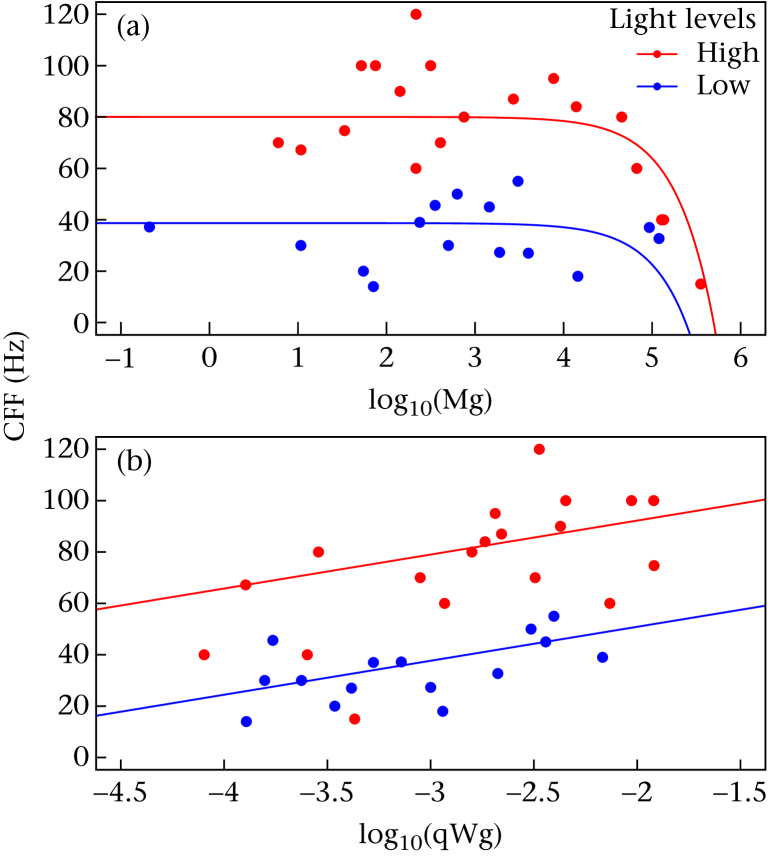
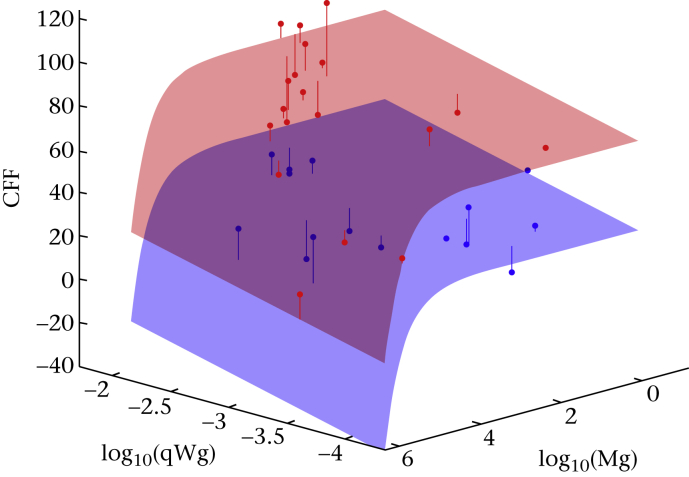
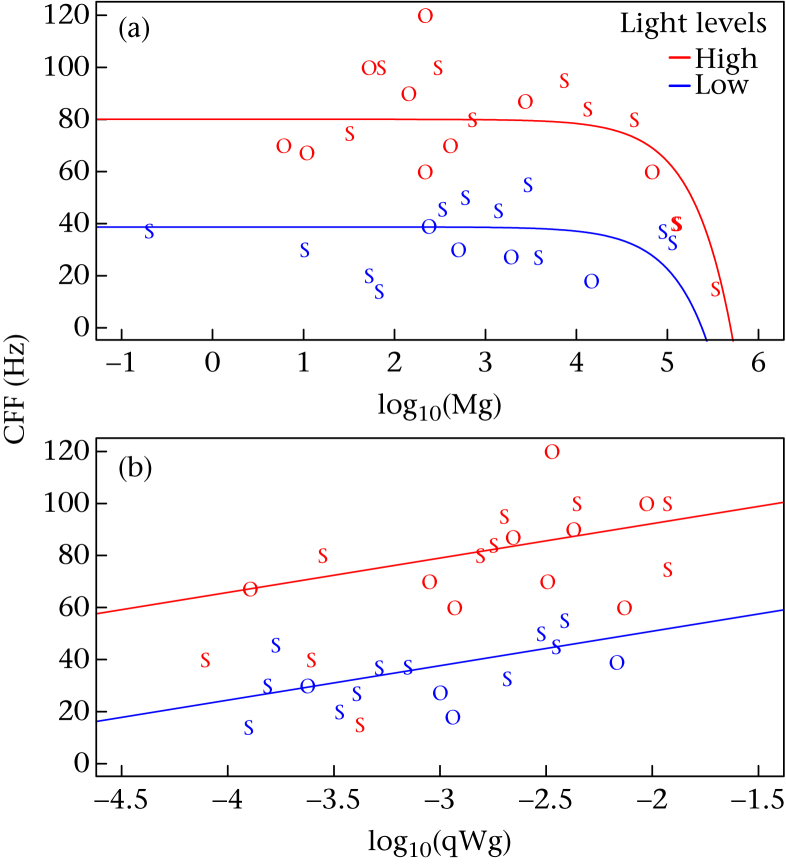
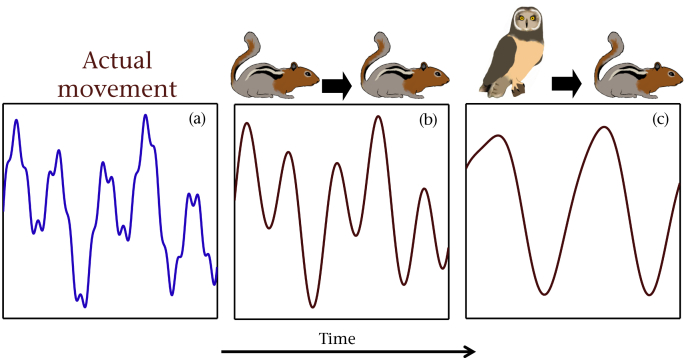
Body size and metabolic rate both fundamentally constrain how species interact with their environment, and hence ultimately affect their niche. While many mechanisms leading to these constraints have been explored, their effects on the resolution at which temporal information is perceived have been largely overlooked. The visual system acts as a gateway to the dynamic environment and the relative resolution at which organisms are able to acquire and process visual information is likely to restrict their ability to interact with events around them. As both smaller size and higher metabolic rates should facilitate rapid behavioural responses, we hypothesized that these traits would favour perception of temporal change over finer timescales. Using critical flicker fusion frequency, the lowest frequency of flashing at which a flickering light source is perceived as constant, as a measure of the maximum rate of temporal information processing in the visual system, we carried out a phylogenetic comparative analysis of a wide range of vertebrates that supported this hypothesis. Our results have implications for the evolution of signalling systems and predator-prey interactions, and, combined with the strong influence that both body mass and metabolism have on a species' ecological niche, suggest that time perception may constitute an important and overlooked dimension of niche differentiation.
体型和代谢率从根本上限制了物种与环境的相互作用方式,进而最终影响其生态位。虽然导致这些限制的许多机制已被探究,但它们对时间信息感知分辨率的影响在很大程度上被忽视了。视觉系统是通向动态环境的门户,生物体获取和处理视觉信息的相对分辨率可能会限制它们与周围事件相互作用的能力。由于较小的体型和较高的代谢率都应有助于快速的行为反应,我们推测这些特征将有利于在更精细的时间尺度上感知时间变化。我们使用临界闪烁融合频率(即闪烁光源被视为恒定的最低闪烁频率)作为视觉系统中时间信息处理最大速率的指标,对广泛的脊椎动物进行了系统发育比较分析,结果支持了这一假设。我们的研究结果对信号系统和捕食者 - 猎物相互作用的进化具有启示意义,并且,结合体重和代谢对物种生态位的强大影响,表明时间感知可能构成生态位分化的一个重要且被忽视的维度。