Miao Yinglong, Nichols Sara E, McCammon J Andrew
Howard Hughes Medical Institute, University of California at San Diego, La Jolla, CA, 92093, USA.
Chem Biol Drug Des. 2014 Feb;83(2):237-46. doi: 10.1111/cbdd.12233. Epub 2013 Oct 30.
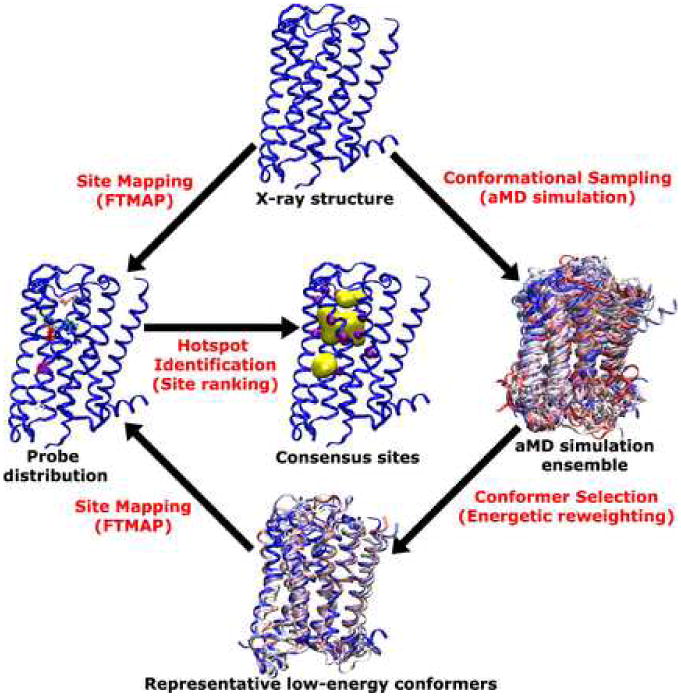
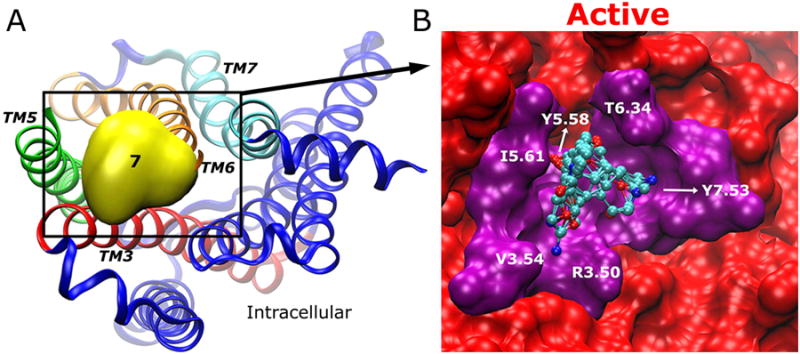
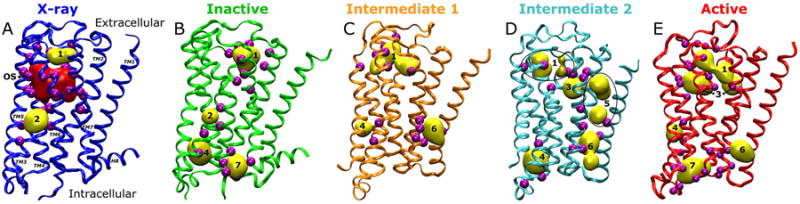
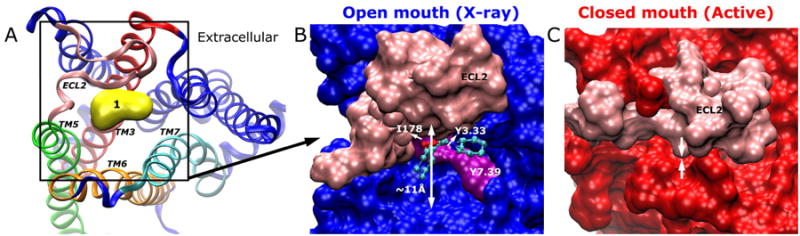
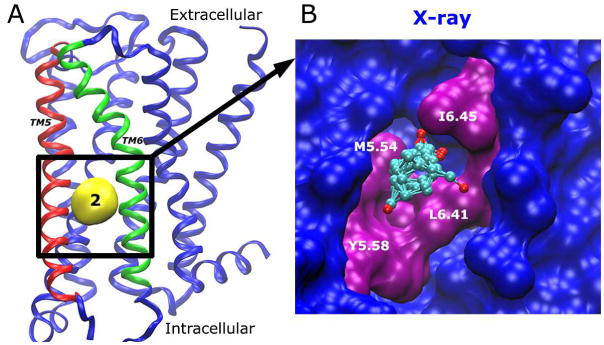
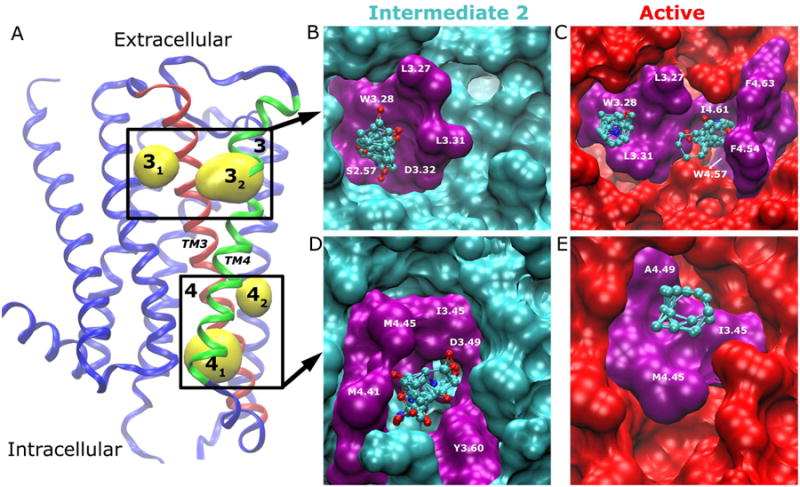
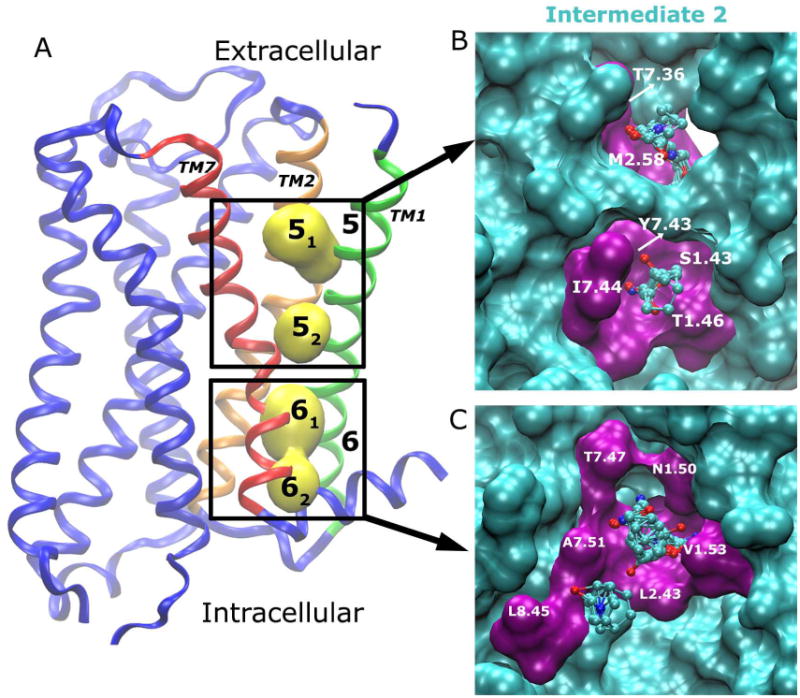
G-protein-coupled receptors (GPCRs) are key cellular signaling proteins and have been targeted by approximately 30-40% of marketed drugs for treating many human diseases including cancer and heart failure. Recently, we directly observed activation of the M2 muscarinic receptor through long-timescale accelerated molecular dynamics (aMD) simulation, which revealed distinct inactive, intermediate and active conformers of the receptor. Here, FTMAP is applied to search for 'hot spots' in these activation-associated conformers using a library of 16 organic probe molecules that represent fragments of potential drugs. Seven allosteric (non-orthosteric) binding sites are identified in the M2 receptor through the FTMAP analysis. These sites are distributed in the solvent-exposed extracellular and intracellular mouth regions, as well as the lipid-exposed pockets formed by the transmembrane α helices TM3-TM4, TM5-TM6 and TM7-TM1/TM2. They serve as promising target sites for designing novel allosteric modulators as receptor-selective drugs.
G蛋白偶联受体(GPCRs)是关键的细胞信号蛋白,约30%-40%的已上市治疗包括癌症和心力衰竭在内的多种人类疾病的药物都以其为靶点。最近,我们通过长时间尺度加速分子动力学(aMD)模拟直接观察到了M2毒蕈碱受体的激活,该模拟揭示了该受体不同的无活性、中间态和活性构象。在此,使用代表潜在药物片段的16种有机探针分子库,应用FTMAP在这些与激活相关的构象中寻找“热点”。通过FTMAP分析,在M2受体中鉴定出7个变构(非正构)结合位点。这些位点分布在溶剂暴露的细胞外和细胞内口区,以及由跨膜α螺旋TM3-TM4、TM5-TM6和TM7-TM1/TM2形成的脂质暴露口袋中。它们是设计新型变构调节剂作为受体选择性药物的有前景的靶点。