MRC Biostatistics Unit, Cambridge, UK.
BMC Med Res Methodol. 2013 Oct 23;13:129. doi: 10.1186/1471-2288-13-129.
A common characteristic of environmental epidemiology is the multi-dimensional aspect of exposure patterns, frequently reduced to a cumulative exposure for simplicity of analysis. By adopting a flexible Bayesian clustering approach, we explore the risk function linking exposure history to disease. This approach is applied here to study the relationship between different smoking characteristics and lung cancer in the framework of a population based case control study.
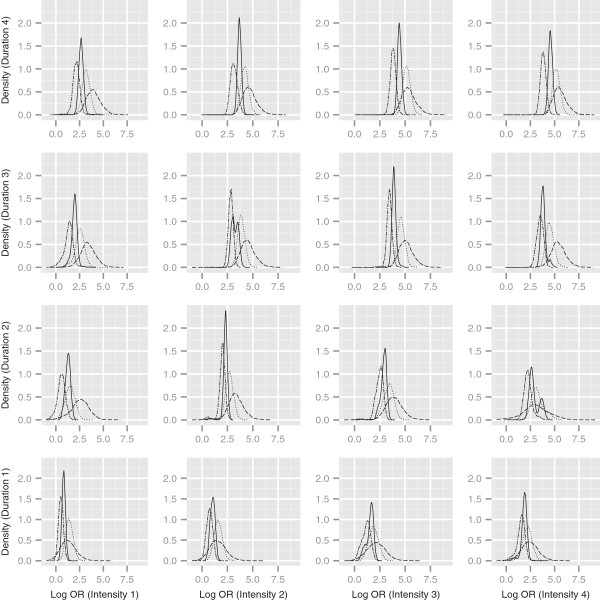
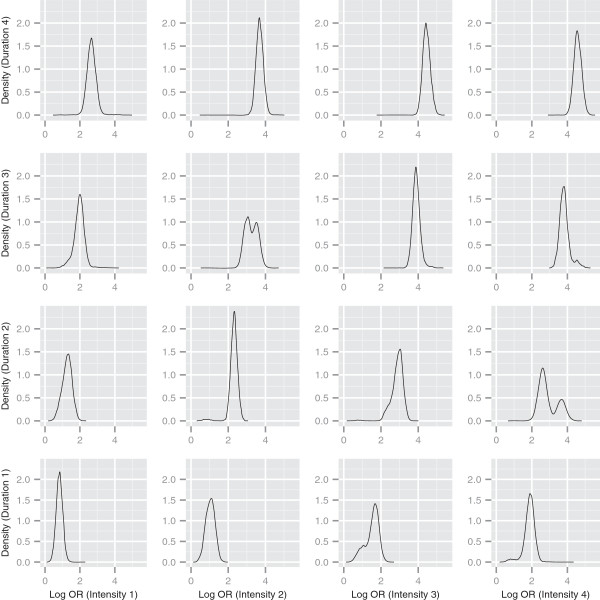
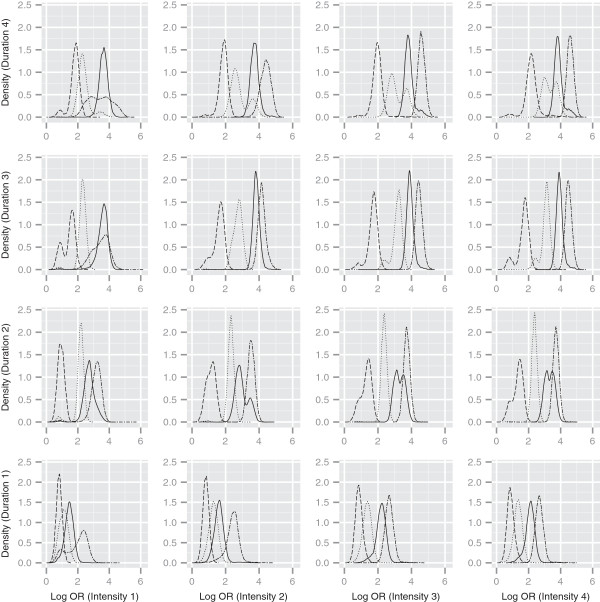
Our study includes 4658 males (1995 cases, 2663 controls) with full smoking history (intensity, duration, time since cessation, pack-years) from the ICARE multi-centre study conducted from 2001-2007. We extend Bayesian clustering techniques to explore predictive risk surfaces for covariate profiles of interest.
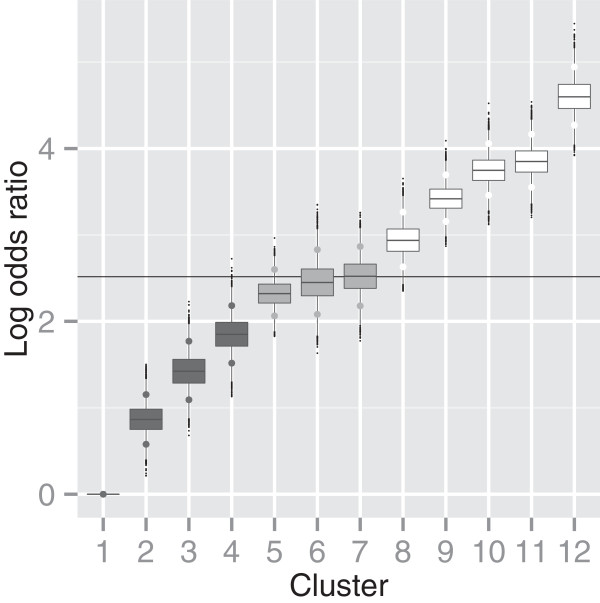
We were able to partition the population into 12 clusters with different smoking profiles and lung cancer risk. Our results confirm that when compared to intensity, duration is the predominant driver of risk. On the other hand, using pack-years of cigarette smoking as a single summary leads to a considerable loss of information.
Our method estimates a disease risk associated to a specific exposure profile by robustly accounting for the different dimensions of exposure and will be helpful in general to give further insight into the effect of exposures that are accumulated through different time patterns.
环境流行病学的一个共同特点是暴露模式的多维性,为了分析的简便,通常简化为累积暴露。我们采用灵活的贝叶斯聚类方法,探索将暴露史与疾病联系起来的风险函数。本研究采用这种方法,在一项基于人群的病例对照研究框架下,研究了不同吸烟特征与肺癌之间的关系。
我们的研究包括来自于 2001-2007 年进行的 ICARE 多中心研究的 4658 名男性(1995 例病例,2663 例对照),他们具有完整的吸烟史(强度、持续时间、戒烟时间、吸烟年数)。我们将贝叶斯聚类技术扩展到探索感兴趣的协变量分布的预测风险曲面。
我们能够将人群分为 12 个具有不同吸烟特征和肺癌风险的聚类。我们的结果证实,与强度相比,持续时间是风险的主要驱动因素。另一方面,将吸烟的包年数作为单一指标进行汇总会导致大量信息的损失。
我们的方法通过稳健地考虑暴露的不同维度来估计与特定暴露模式相关的疾病风险,这将有助于深入了解通过不同时间模式累积的暴露的影响。