Department of Chemistry and Biochemistry, California State University, Fullerton, CA 92834-6866, USA.
Nutrients. 2013 Oct 10;5(10):4022-50. doi: 10.3390/nu5104022.
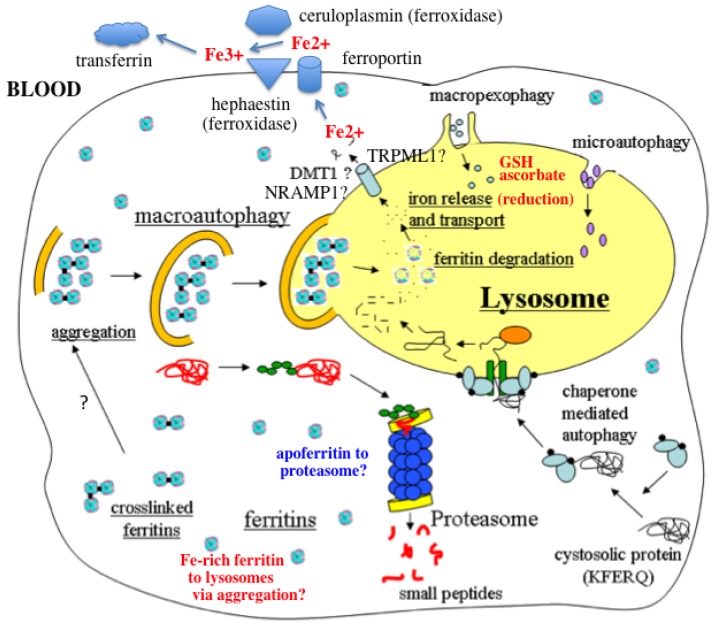
From the nutritional standpoint, several aspects of the biochemistry and physiology of iron are unique. In stark contrast to most other elements, most of the iron in mammals is in the blood attached to red blood cell hemoglobin and transporting oxygen to cells for oxidative phosphorylation and other purposes. Controlled and uncontrolled blood loss thus has a major impact on iron availability. Also, in contrast to most other nutrients, iron is poorly absorbed and poorly excreted. Moreover, amounts absorbed (1 mg/day in adults) are much less than the total iron (20 mg/day) cycling into and out of hemoglobin, involving bone marrow erythropoiesis and reticuloendothelial cell degradation of aged red cells. In the face of uncertainties in iron bioavailability, the mammalian organism has evolved a complex system to retain and store iron not immediately in use, and to make that iron available when and where it is needed. Iron is stored innocuously in the large hollow protein, ferritin, particularly in cells of the liver, spleen and bone marrow. Our current understanding of the molecular, cellular and physiological mechanisms by which this stored iron in ferritin is mobilized and distributed-within the cell or to other organs-is the subject of this review.
从营养角度来看,铁的生物化学和生理学有几个独特的方面。与大多数其他元素形成鲜明对比的是,哺乳动物体内的大部分铁都存在于血液中,与红细胞血红蛋白结合,并将氧气输送到细胞中进行氧化磷酸化和其他目的。因此,可控和不可控的失血对铁的供应有重大影响。此外,与大多数其他营养素相比,铁的吸收率低,排泄率也低。此外,吸收的量(成人每天约 1 毫克)远低于循环进入和离开血红蛋白的总铁量(每天 20 毫克),涉及骨髓红细胞生成和网状内皮细胞降解衰老的红细胞。面对铁生物利用度的不确定性,哺乳动物机体已经进化出一种复杂的系统来保留和储存未立即使用的铁,并在需要时提供铁。铁以无害的方式储存在大型空蛋白——铁蛋白中,特别是在肝脏、脾脏和骨髓的细胞中。目前,我们对铁蛋白中铁的储存如何被动员和分配——在细胞内或分配到其他器官——的分子、细胞和生理机制的理解是这篇综述的主题。