Department of Medicine, University of California, San Francisco, CA, USA.
Lancet. 2013 Nov 2;382(9903):1525-33. doi: 10.1016/S0140-6736(13)61809-7. Epub 2013 Oct 23.
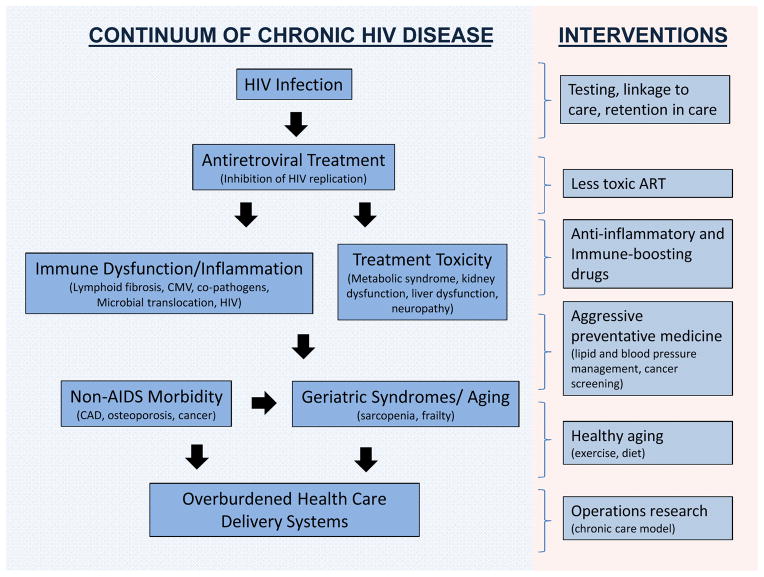
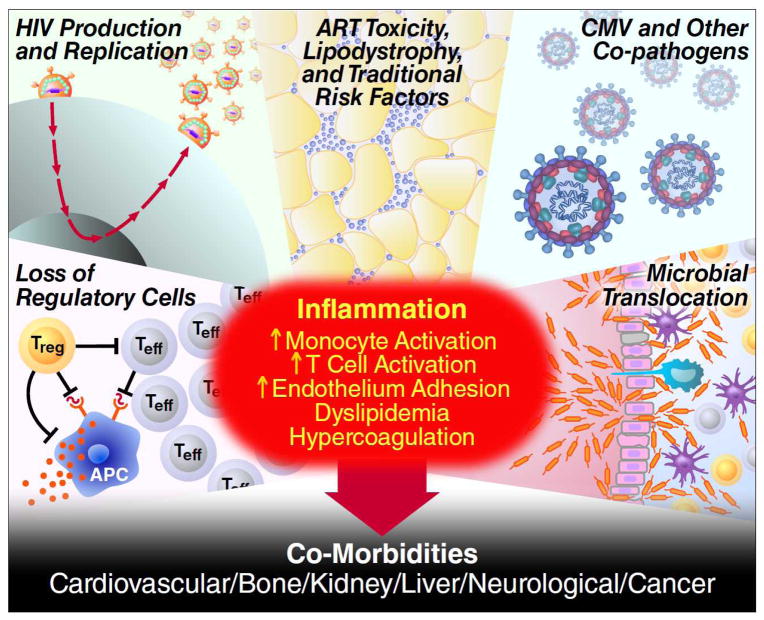
The success of antiretroviral therapy has led some people to now ask whether the end of AIDS is possible. For patients who are motivated to take therapy and who have access to lifelong treatment, AIDS-related illnesses are no longer the primary threat, but a new set of HIV-associated complications have emerged, resulting in a novel chronic disease that for many will span several decades of life. Treatment does not fully restore immune health; as a result, several inflammation-associated or immunodeficiency complications such as cardiovascular disease and cancer are increasing in importance. Cumulative toxic effects from exposure to antiretroviral drugs for decades can cause clinically-relevant metabolic disturbances and end-organ damage. Concerns are growing that the multimorbidity associated with HIV disease could affect healthy ageing and overwhelm some health-care systems, particularly those in resource-limited regions that have yet to develop a chronic care model fully. In view of the problems inherent in the treatment and care for patients with a chronic disease that might persist for several decades, a global effort to identify a cure is now underway.
抗逆转录病毒疗法的成功使得一些人开始询问艾滋病是否可能被终结。对于那些有动力接受治疗并能够获得终身治疗的患者来说,艾滋病相关疾病不再是主要威胁,而是出现了一系列新的与 HIV 相关的并发症,导致一种新的慢性疾病,许多人将在未来几十年的生命中与之共存。治疗并不能完全恢复免疫健康;因此,一些与炎症或免疫缺陷相关的并发症,如心血管疾病和癌症,变得越来越重要。数十年来接触抗逆转录病毒药物所产生的累积毒性作用可导致临床上显著的代谢紊乱和终末器官损伤。人们越来越担心,与 HIV 疾病相关的多种合并症可能会影响健康老龄化,并使一些卫生保健系统不堪重负,特别是在资源有限的地区,这些地区尚未完全建立慢性护理模式。鉴于可能持续数十年的慢性疾病患者的治疗和护理所固有的问题,目前正在全球范围内努力寻找治愈方法。