Whitehead Institute for Biomedical Research (WIBR), Cambridge, MA 02142, USA.
Science. 2013 Nov 22;342(6161):979-83. doi: 10.1126/science.1245321. Epub 2013 Oct 24.
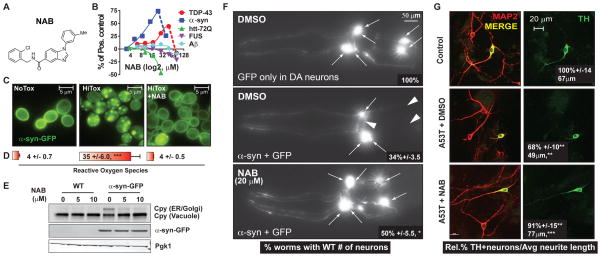
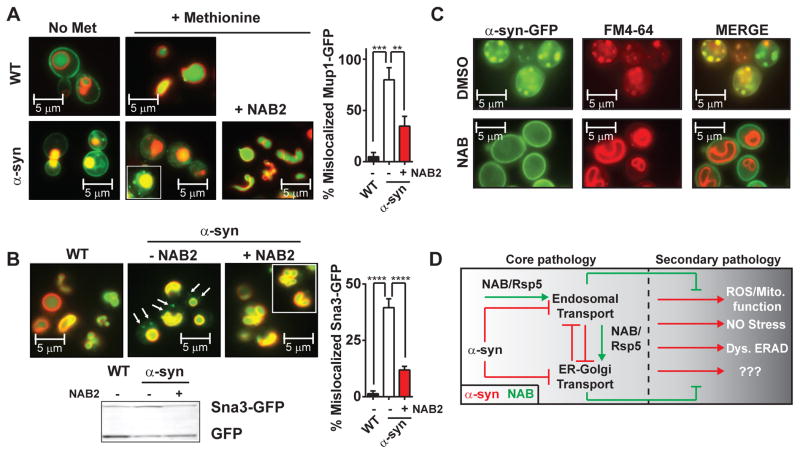
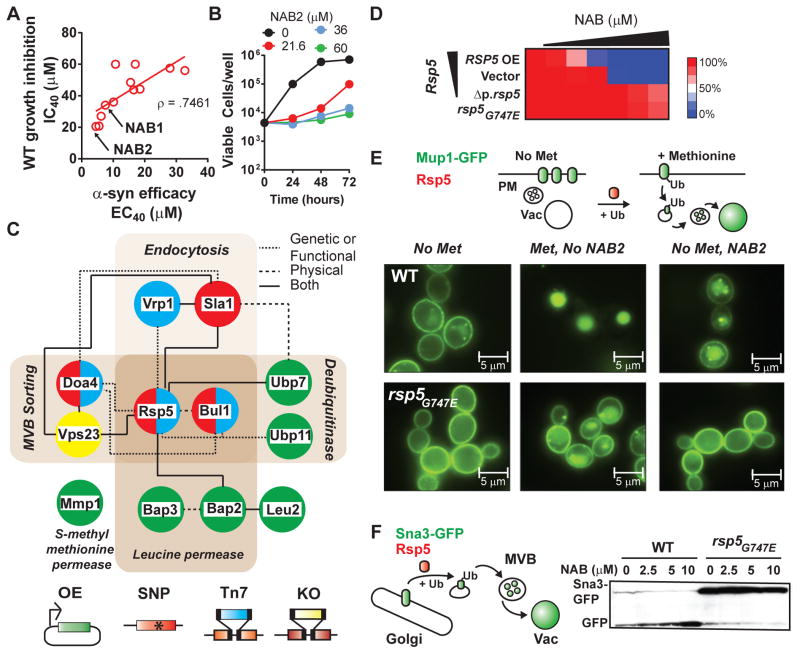
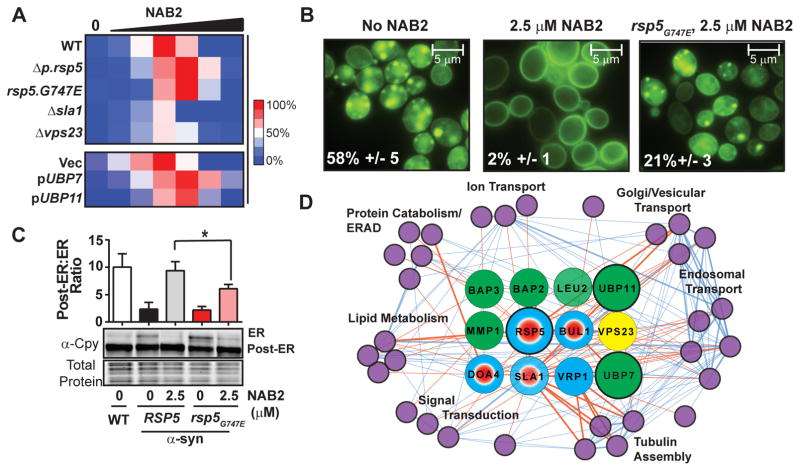
α-Synuclein (α-syn) is a small lipid-binding protein implicated in several neurodegenerative diseases, including Parkinson's disease, whose pathobiology is conserved from yeast to man. There are no therapies targeting these underlying cellular pathologies, or indeed those of any major neurodegenerative disease. Using unbiased phenotypic screens as an alternative to target-based approaches, we discovered an N-aryl benzimidazole (NAB) that strongly and selectively protected diverse cell types from α-syn toxicity. Three chemical genetic screens in wild-type yeast cells established that NAB promoted endosomal transport events dependent on the E3 ubiquitin ligase Rsp5/Nedd4. These same steps were perturbed by α-syn itself. Thus, NAB identifies a druggable node in the biology of α-syn that can correct multiple aspects of its underlying pathology, including dysfunctional endosomal and endoplasmic reticulum-to-Golgi vesicle trafficking.
α-突触核蛋白(α-syn)是一种与多种神经退行性疾病有关的小脂结合蛋白,包括帕金森病,其发病机制从酵母到人是保守的。目前还没有针对这些潜在细胞病理学的治疗方法,也没有针对任何主要神经退行性疾病的治疗方法。我们使用无偏性表型筛选作为靶向方法的替代方法,发现了一种 N-芳基苯并咪唑(NAB),它可以强烈且选择性地保护多种细胞类型免受 α-syn 毒性的影响。在野生型酵母细胞中的三种化学遗传筛选确定 NAB 促进了依赖 E3 泛素连接酶 Rsp5/Nedd4 的内体运输事件。α-syn 本身也会干扰这些相同的步骤。因此,NAB 确定了 α-syn 生物学中的一个可药物治疗的节点,它可以纠正其潜在病理学的多个方面,包括功能失调的内体和内质网到高尔基体囊泡运输。