Department of Pharmaceutics, Faculty of Pharmacy and Pharmaceutical Sciences, Kwame Nkrumah University of Science and Technology, Kumasi, Ghana ; Center for Discovery and Innovation in Parasitic Diseases, Department of Pathology, University of California San Francisco, San Francisco, CA 94158-2330, USA.
Evid Based Complement Alternat Med. 2013;2013:632927. doi: 10.1155/2013/632927. Epub 2013 Sep 15.
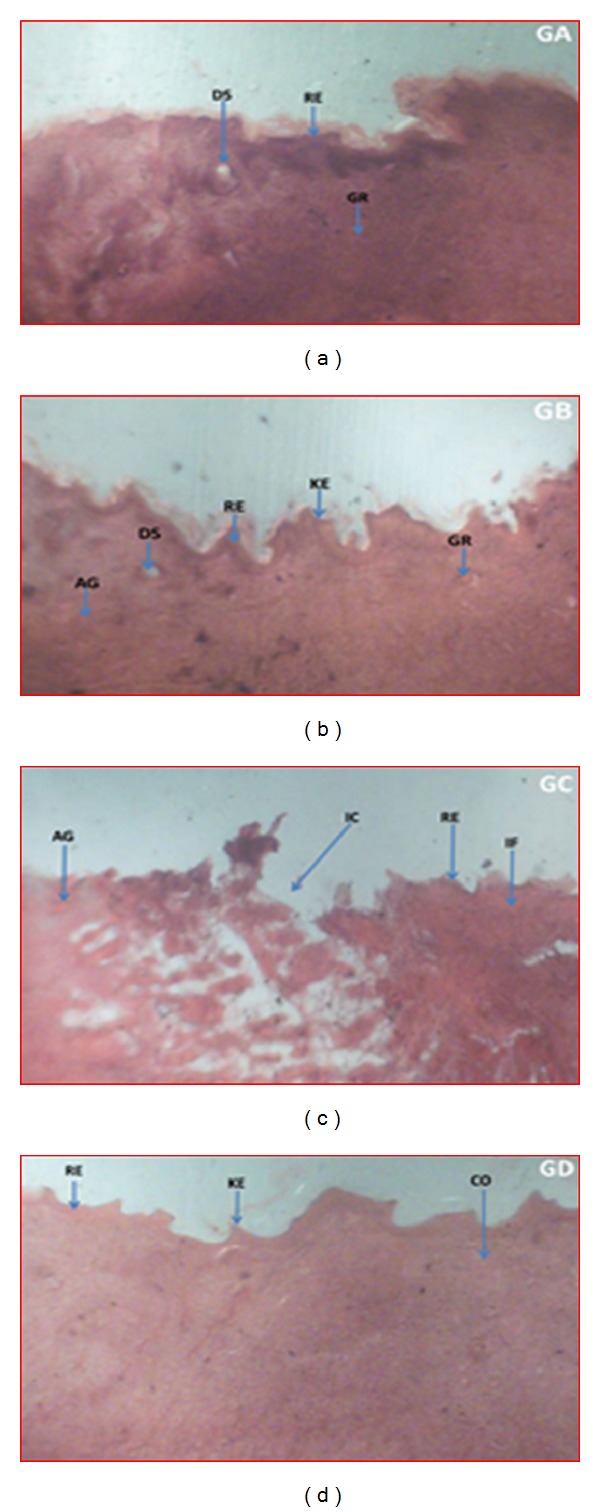
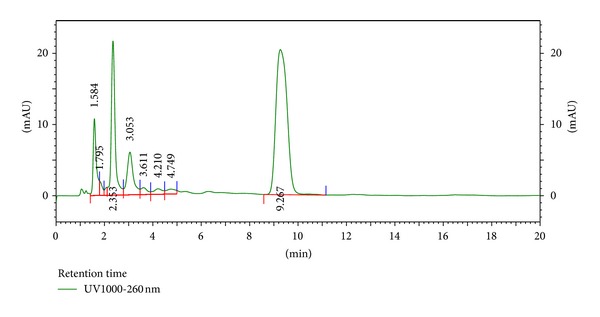
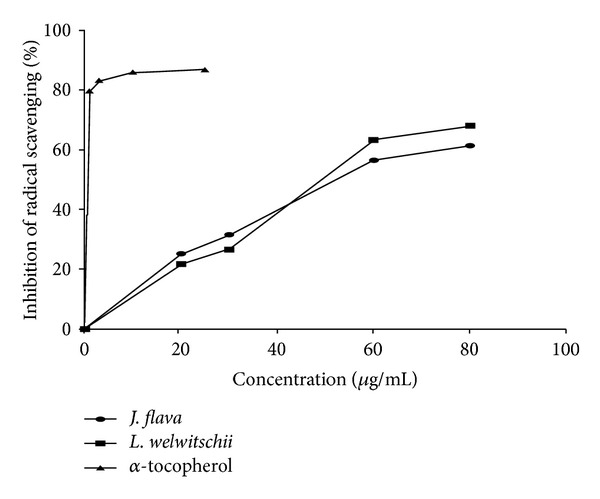
Microbial infections of various types of wounds are a challenge to the treatment of wounds and wound healing. The aim of the study is to determine the antimicrobial, antioxidant, and in vivo wound healing properties of methanol leaf extracts of Justicia flava and Lannea welwitschii. The antimicrobial activity was investigated using agar well diffusion and microdilution methods. The free radical scavenging activity of the methanol leaf extracts was performed using 1,1-diphenyl-2-picryl-hydrazyl (DPPH). The rate of wound contraction was determined using excision model. The test organisms used were Escherichia coli ATCC 25922, Pseudomonas aeruginosa ATCC 4853, Bacillus subtilis NTCC 10073, Staphylococcus aureus ATCC 25923, and clinical strains of Candida albicans. The MICs of methanol leaf extract of J. flava against test organisms were E. coli (7.5 mg/mL); P. aeruginosa (7.5 mg/mL); S. aureus (5 mg/mL); B. subtilis (7.5 mg/mL); and C. albicans (5 mg/mL). The MICs of methanol leaf extract of L. welwitschii against test organisms were E. coli (5 mg/mL); P. aeruginosa (10 mg/mL); S. aureus (5 mg/mL); B. subtilis (2.5 mg/mL); and C. albicans (2.5 mg/mL). The MBC/MFC of the extract was between 10 and 50 mg/mL. The IC50 of the reference antioxidant, α -tocopherol, was 1.5 μ g/mL and the methanol leaf extracts of J. flava and L. welwitschii had IC50 of 65.3 μ g/mL and 81.8 μ g/mL, respectively. The methanol leaf extracts of J. flava and L. welwitschii gave a significant reduction in wound size as compared to the untreated. The rates of wound closure after the application of the extracts (7.5% w/w) were compared to the untreated wounds. On the 9th day, J. flava extract had a percentage wound closure of 99% (P < 0.01) and that of L. welwitschii exhibited wound closure of 95% (P < 0.05) on the 13th day compared to the untreated wounds. The two extracts significantly (P < 0.01) increased the tensile strength of wounds compared to the untreated wounds. The extracts treated wound tissues showed improved angiogenesis, collagenation, and reepithelialization compared to the untreated wound tissues. The preliminary phytochemical screening of J. flava and L. welwitschii leaf extracts revealed the presence of tannins, alkaloids, flavonoids, and glycosides. The above results indicate that methanol leaf extracts of J. flava and L. welwitschii possess antimicrobial and wound healing properties which may justify the traditional uses of J. flava and L. welwitschii in the treatment of wounds and infections.
各种类型的伤口的微生物感染对伤口治疗和伤口愈合都是一个挑战。本研究的目的是确定 Justicia flava 和 Lannea welwitschii 甲醇叶提取物的抗菌、抗氧化和体内伤口愈合特性。使用琼脂孔扩散和微量稀释法研究了抗菌活性。使用 1,1-二苯基-2-苦基肼(DPPH)测定甲醇叶提取物的自由基清除活性。使用切除模型确定伤口收缩率。使用的试验菌为大肠杆菌 ATCC 25922、铜绿假单胞菌 ATCC 4853、枯草芽孢杆菌 NTCC 10073、金黄色葡萄球菌 ATCC 25923 和临床白色念珠菌株。J. flava 甲醇叶提取物对试验菌的 MIC 分别为大肠杆菌(7.5mg/mL);铜绿假单胞菌(7.5mg/mL);金黄色葡萄球菌(5mg/mL);枯草芽孢杆菌(7.5mg/mL);白色念珠菌(5mg/mL)。L. welwitschii 甲醇叶提取物对试验菌的 MIC 分别为大肠杆菌(5mg/mL);铜绿假单胞菌(10mg/mL);金黄色葡萄球菌(5mg/mL);枯草芽孢杆菌(2.5mg/mL);白色念珠菌(2.5mg/mL)。提取物的 MBC/MFC 介于 10 和 50mg/mL 之间。参考抗氧化剂α-生育酚的 IC50 为 1.5μg/mL,J. flava 和 L. welwitschii 甲醇叶提取物的 IC50 分别为 65.3μg/mL 和 81.8μg/mL。与未处理的相比,J. flava 和 L. welwitschii 甲醇叶提取物显著减少了伤口面积。与未处理的伤口相比,应用提取物(7.5%w/w)后的伤口闭合率进行了比较。在第 9 天,J. flava 提取物的伤口闭合率为 99%(P<0.01),而 L. welwitschii 在第 13 天的伤口闭合率为 95%(P<0.05)与未处理的伤口相比。与未处理的伤口相比,两种提取物均显著(P<0.01)增加了伤口的拉伸强度。与未处理的伤口组织相比,提取物处理的伤口组织显示出改善的血管生成、胶原化和再上皮化。J. flava 和 L. welwitschii 叶提取物的初步植物化学筛选显示存在单宁、生物碱、类黄酮和糖苷。上述结果表明,J. flava 和 L. welwitschii 的甲醇叶提取物具有抗菌和伤口愈合特性,这可能证明了 J. flava 和 L. welwitschii 在治疗伤口和感染方面的传统用途。