Sun Minghua, Liao Hong-Gang, Niu Kaiyang, Zheng Haimei
1] Materials Sciences Division, Lawrence Berkeley National Laboratory, Berkeley CA 94720 US [2].
Sci Rep. 2013 Nov 15;3:3227. doi: 10.1038/srep03227.
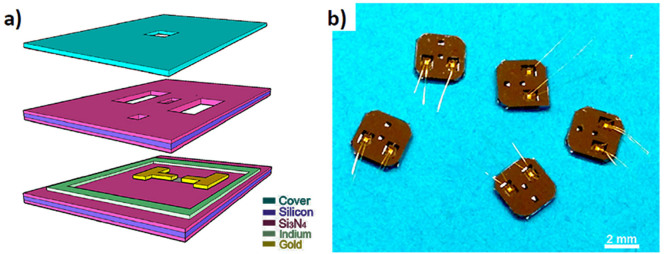
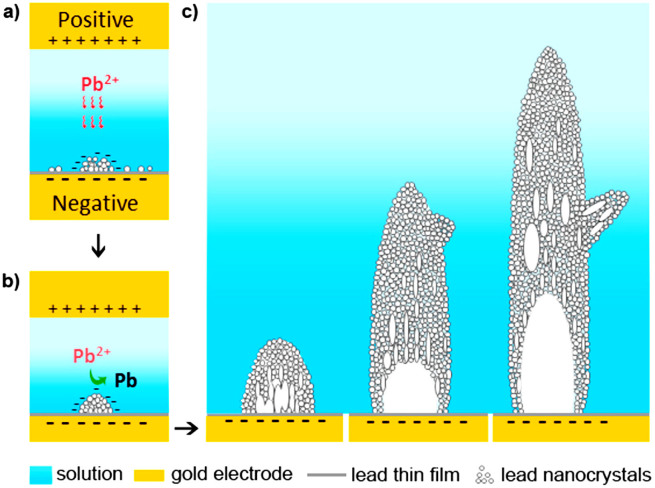
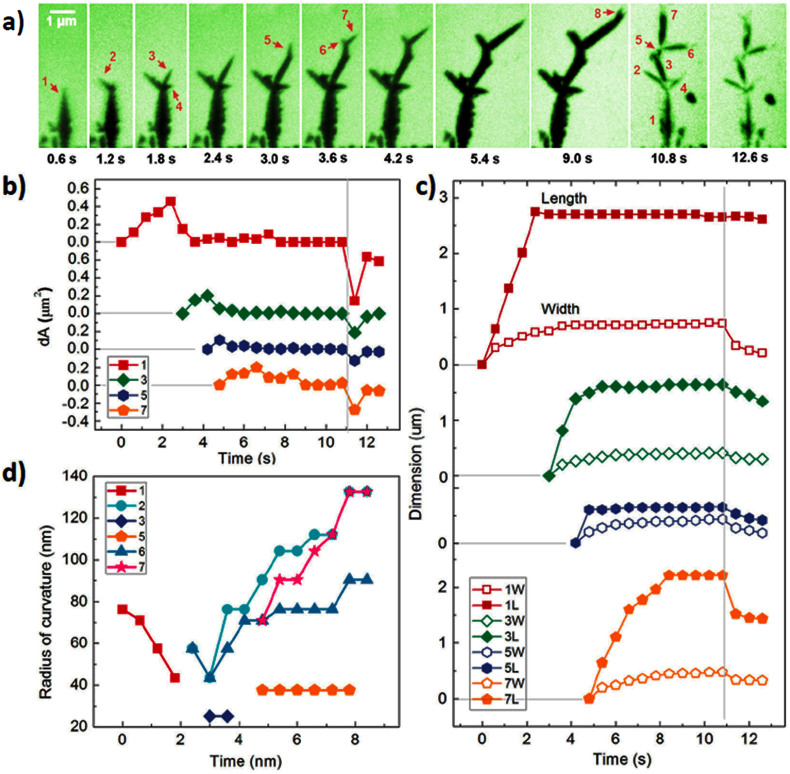
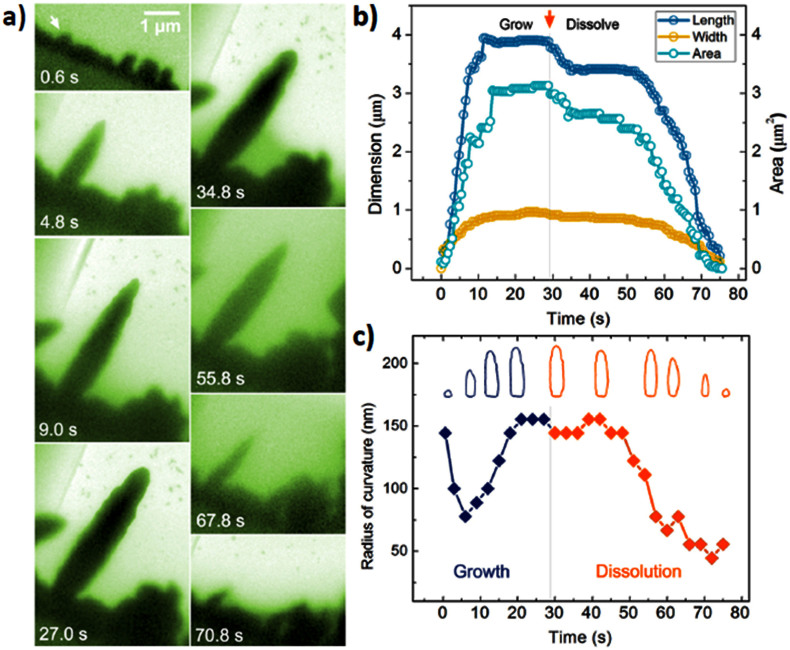
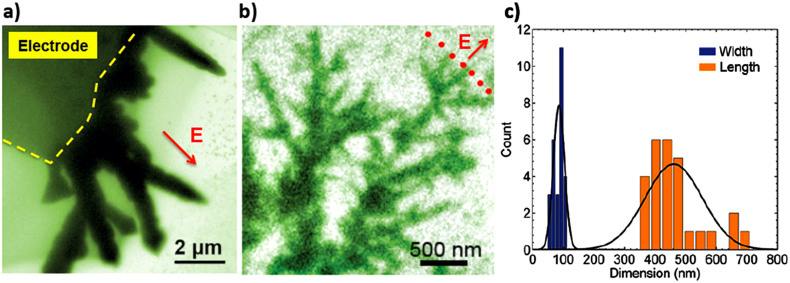
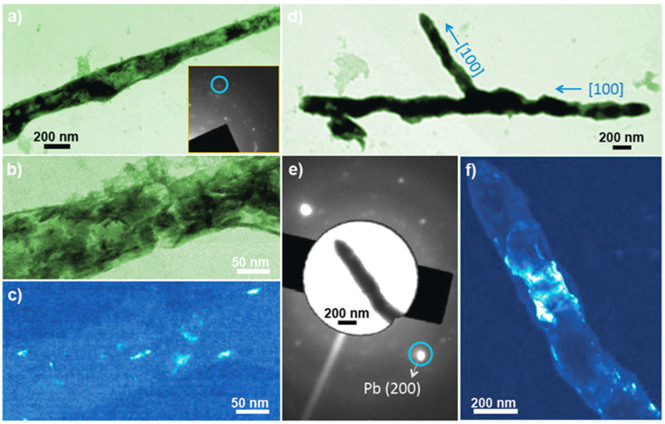
The electrochemical deposition and dissolution of lead on gold electrodes immersed in an aqueous solution of lead nitrate were studied in situ using a biasing liquid cell by transmission electron microscopy (TEM). We investigate in real time the growth mechanisms of lead dendrites as deposited on the electrodes under an applied potential. TEM images reveal that lead dendrites are developed by the fast protrusion of lead branches in the electrolyte and tip splitting. And, the fast growing tip of the dendritic branch is composed of polycrystalline nanograins and it develops into a single crystalline branch eventually. This study demonstrated unique electrochemical growth of single crystal dendrites through nucleation, aggregation, alignment and attachment of randomly oriented small grains. Additionally, we found the lead concentration in the electrolyte drastically influences the morphology of dendritic formation.
利用透射电子显微镜(TEM)的偏置液体池,对浸入硝酸铅水溶液中的金电极上铅的电化学沉积和溶解进行了原位研究。我们实时研究了在施加电势下沉积在电极上的铅枝晶的生长机制。TEM图像显示,铅枝晶是由电解质中铅枝晶的快速突出和尖端分裂形成的。而且,树枝状分支的快速生长尖端由多晶纳米颗粒组成,最终发展成单晶分支。这项研究通过随机取向的小晶粒的成核、聚集、排列和附着,展示了单晶枝晶独特的电化学生长过程。此外,我们发现电解质中的铅浓度对树枝状晶体形成的形态有很大影响。