C R Rao Advanced Institute of Mathematics, Statistics and Computer Science, Hyderabad, India.
PLoS One. 2013 Dec 2;8(12):e81766. doi: 10.1371/journal.pone.0081766. eCollection 2013.
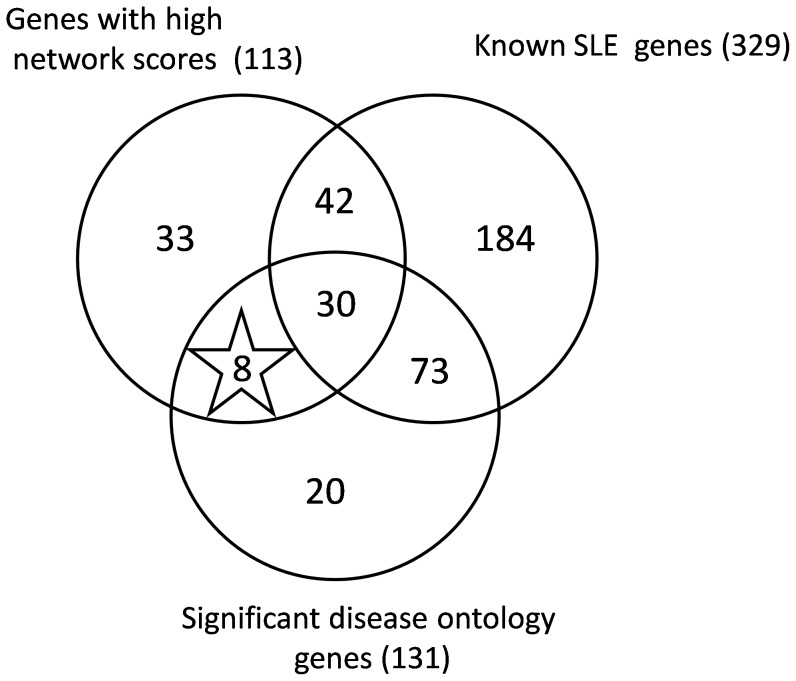
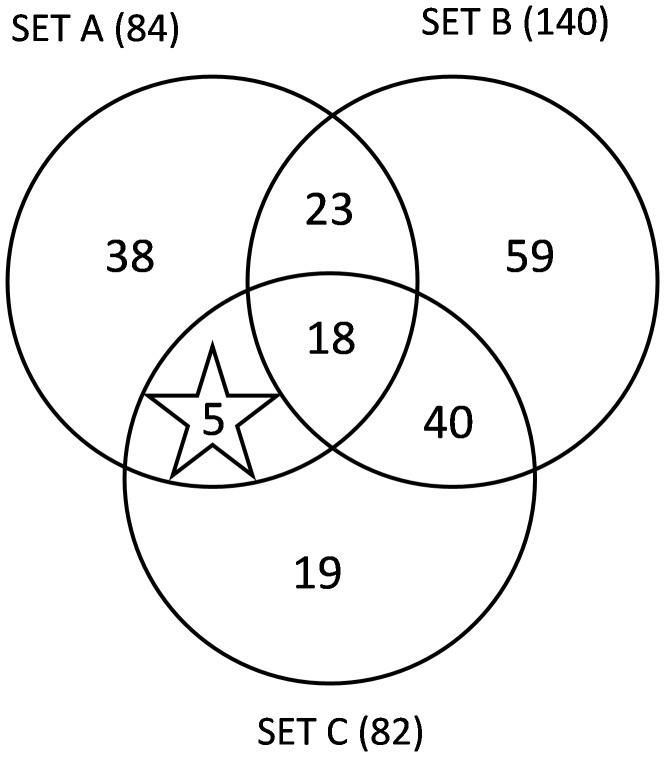
Systemic lupus erythematosus (SLE) commonly accredited as "the great imitator" is a highly complex disease involving multiple gene susceptibility with non-specific symptoms. Many experimental and computational approaches have been used to investigate the disease related candidate genes. But the limited knowledge of gene function and disease correlation and also lack of complete functional details about the majority of genes in susceptible locus, encumbrances the identification of SLE related candidate genes. In this paper, we have studied the human immunome network (undirected) using various graph theoretical centrality measures integrated with the gene ontology terms to predict the new candidate genes. As a result, we have identified 8 candidate genes, which may act as potential targets for SLE disease. We have also carried out the same analysis by replacing the human immunome network with human immunome signaling network (directed) and as an outcome we have obtained 5 candidate genes as potential targets for SLE disease. From the comparison study, we have found these two approaches are complementary in nature.
系统性红斑狼疮(SLE)通常被称为“模仿大师”,是一种高度复杂的疾病,涉及多个基因易感性和非特异性症状。许多实验和计算方法已被用于研究与疾病相关的候选基因。但是,对基因功能和疾病相关性的了解有限,以及易感基因座中大多数基因的完整功能细节的缺乏,阻碍了 SLE 相关候选基因的识别。在本文中,我们使用各种图论中心性度量方法与基因本体术语相结合,研究了人类免疫组网络(无向),以预测新的候选基因。结果,我们确定了 8 个候选基因,它们可能作为 SLE 疾病的潜在靶点。我们还通过用人类免疫组信号网络(有向)替换人类免疫组网络来进行相同的分析,结果得到了 5 个候选基因作为 SLE 疾病的潜在靶点。通过比较研究,我们发现这两种方法在本质上是互补的。