Department of Stem Cell Biology and Regenerative Medicine, 2 Department of Cellular and Molecular Medicine, and 3 Department of Cancer Biology, Lerner Research Institute; 4 Department of Colorectal Surgery, Digestive Disease Institute; 5 Department of Anatomical Pathology, Pathology and Laboratory Medicine Institute, Cleveland Clinic, Cleveland, OH 44195.
J Exp Med. 2013 Dec 16;210(13):2851-72. doi: 10.1084/jem.20131195. Epub 2013 Dec 9.
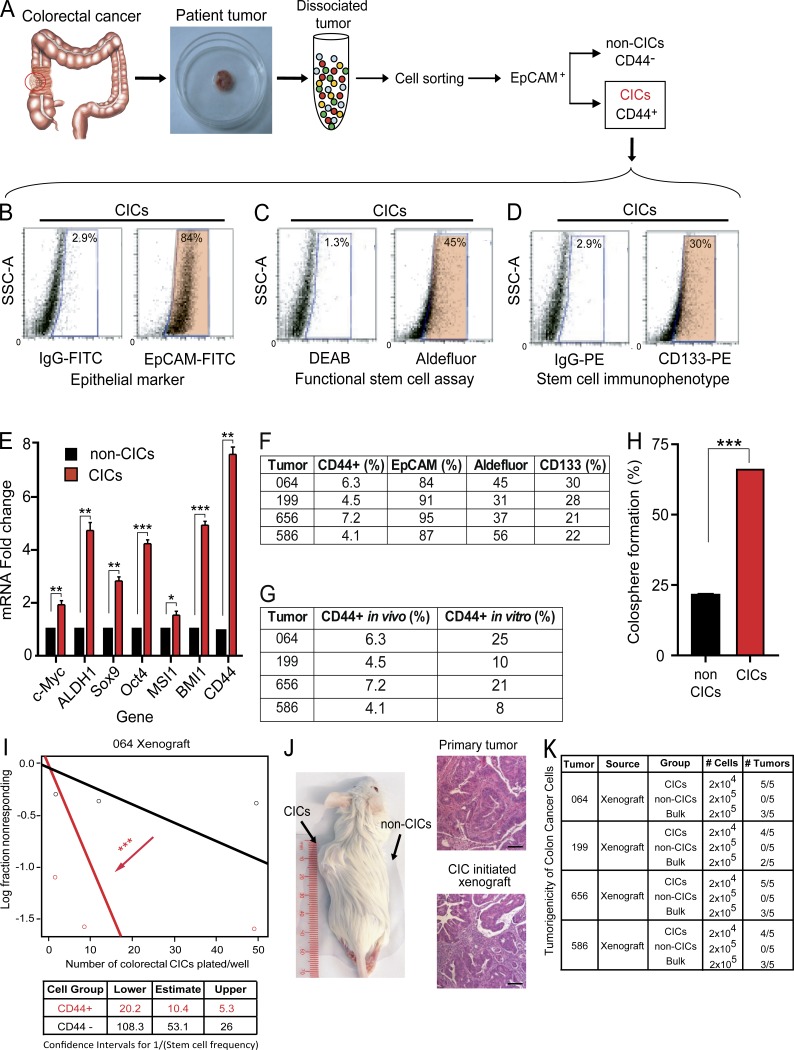
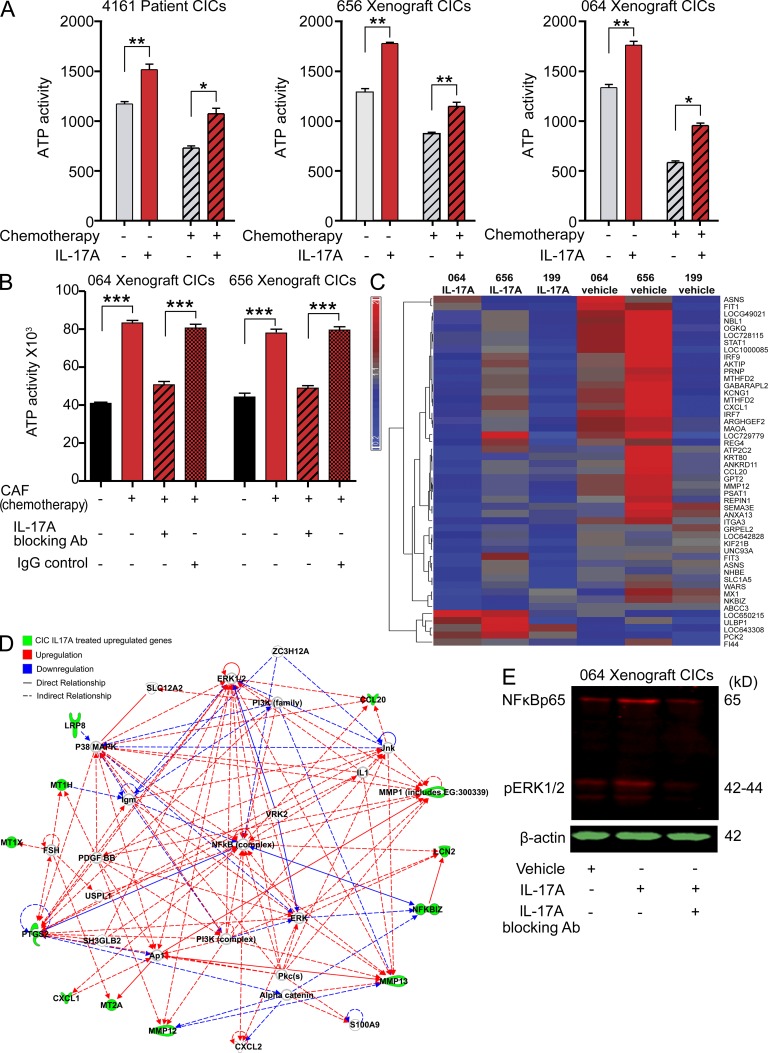
Many solid cancers display cellular hierarchies with self-renewing, tumorigenic stemlike cells, or cancer-initiating cells (CICs) at the apex. Whereas CICs often exhibit relative resistance to conventional cancer therapies, they also receive critical maintenance cues from supportive stromal elements that also respond to cytotoxic therapies. To interrogate the interplay between chemotherapy and CICs, we investigated cellular heterogeneity in human colorectal cancers. Colorectal CICs were resistant to conventional chemotherapy in cell-autonomous assays, but CIC chemoresistance was also increased by cancer-associated fibroblasts (CAFs). Comparative analysis of matched colorectal cancer specimens from patients before and after cytotoxic treatment revealed a significant increase in CAFs. Chemotherapy-treated human CAFs promoted CIC self-renewal and in vivo tumor growth associated with increased secretion of specific cytokines and chemokines, including interleukin-17A (IL-17A). Exogenous IL-17A increased CIC self-renewal and invasion, and targeting IL-17A signaling impaired CIC growth. Notably, IL-17A was overexpressed by colorectal CAFs in response to chemotherapy with expression validated directly in patient-derived specimens without culture. These data suggest that chemotherapy induces remodeling of the tumor microenvironment to support the tumor cellular hierarchy through secreted factors. Incorporating simultaneous disruption of CIC mechanisms and interplay with the tumor microenvironment could optimize therapeutic targeting of cancer.
许多实体瘤显示出具有自我更新能力的肿瘤起始细胞(cancer-initiating cells,CICs)或肿瘤干细胞样细胞的细胞层次结构,位于顶端。虽然 CICs 通常对常规癌症治疗具有相对抗性,但它们也从对细胞毒性治疗有反应的支持性基质成分中获得关键的维持信号。为了研究化疗与 CICs 之间的相互作用,我们研究了人结直肠癌中的细胞异质性。在细胞自主测定中,结直肠 CICs 对常规化疗具有抗性,但 CIC 化疗耐药性也被癌症相关成纤维细胞(cancer-associated fibroblasts,CAFs)增加。对接受细胞毒性治疗前后患者匹配的结直肠癌标本的比较分析显示 CAFs 显著增加。化疗处理的人 CAFs 促进 CIC 自我更新和体内肿瘤生长,与特定细胞因子和趋化因子(包括白细胞介素-17A(interleukin-17A,IL-17A))的分泌增加有关。外源性 IL-17A 增加了 CIC 的自我更新和侵袭能力,而靶向 IL-17A 信号通路则损害了 CIC 的生长。值得注意的是,结直肠 CAFs 在对化疗的反应中过表达 IL-17A,并且在没有培养的情况下直接在患者衍生标本中验证了表达。这些数据表明,化疗诱导肿瘤微环境重塑,通过分泌因子来支持肿瘤细胞层次结构。同时破坏 CIC 机制并与肿瘤微环境相互作用可能会优化癌症的治疗靶向。