Bactéries Lactiques & Immunité des Muqueuses, Centre d'Infection et d'Immunité de Lille, Institut Pasteur de Lille, U1019, UMR 8204, Université Lille Nord de France, 1 rue du Pr Calmette, Lille cedex, BP 245, F-59019, France.
BMC Pharmacol Toxicol. 2013 Dec 11;14:62. doi: 10.1186/2050-6511-14-62.
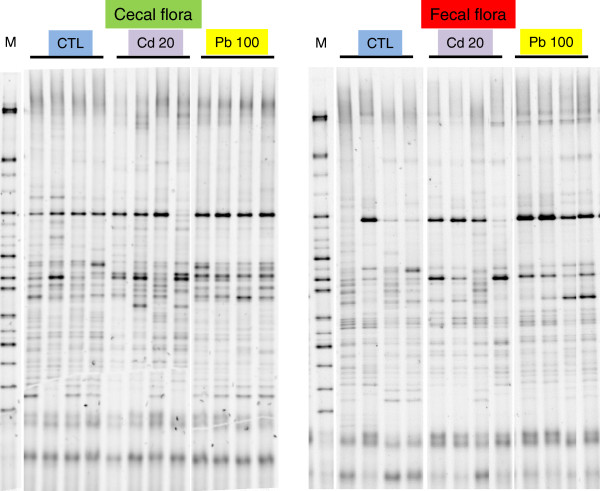
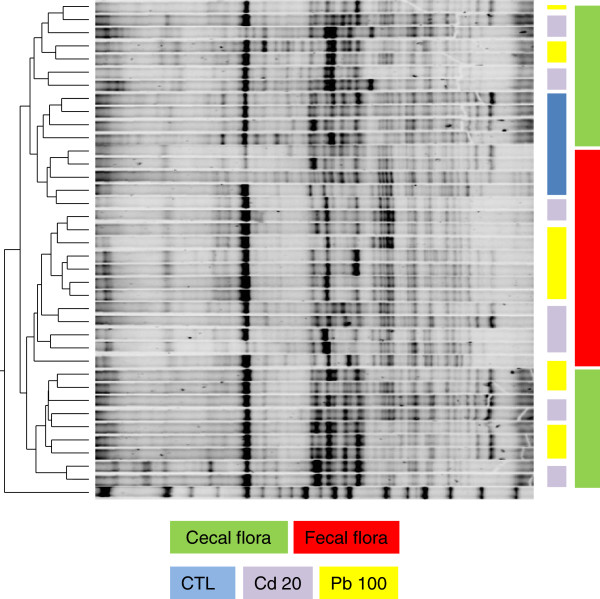
The gut microbiota is critical for intestinal homeostasis. Recent studies have revealed the links between different types of dysbiosis and diseases inside and outside the intestine. Environmental exposure to pollutants (such as heavy metals) can also impair various physiological functions for good health. Here, we studied the impact of up to 8 weeks of oral lead and cadmium ingestion on the composition of the murine intestinal microbiome.
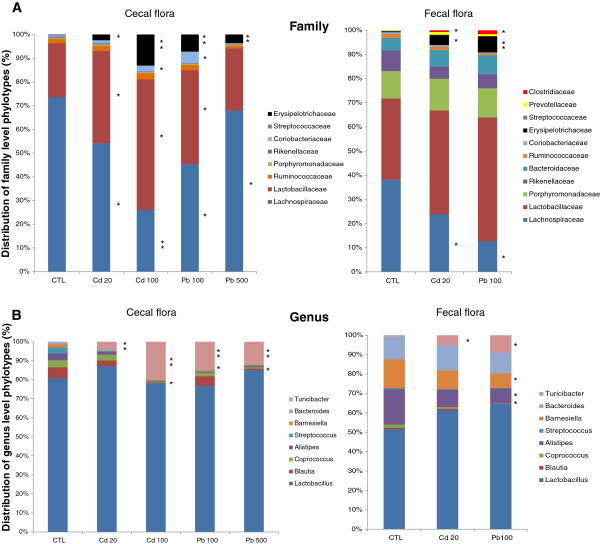
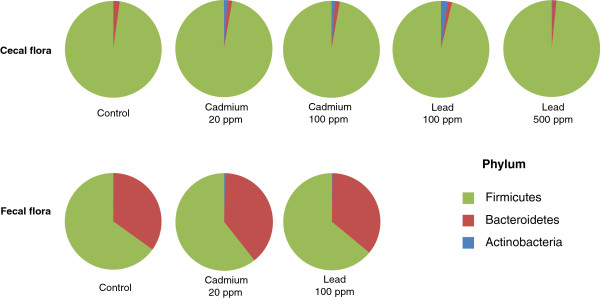
Pyrosequencing of 16S RNA sequences revealed minor but specific changes in bacterial commensal communities (at both family and genus levels) following oral exposure to the heavy metals, with notably low numbers of Lachnospiraceae and high numbers levels of Lactobacillaceae and Erysipelotrichaceacae (mainly due to changes in Turicibacter spp), relative to control animals.
Non-absorbed heavy metals have a direct impact on the gut microbiota. In turn, this may impact the alimentary tract and overall gut homeostasis. Our results may enable more accurate assessment of the risk of intestinal disease associated with heavy metal ingestion.
肠道微生物群对于肠道内稳态至关重要。最近的研究揭示了不同类型的肠道微生态失调与肠道内外疾病之间的联系。环境暴露于污染物(如重金属)也会损害各种有益于健康的生理功能。在这里,我们研究了长达 8 周的口服铅和镉摄入对鼠肠道微生物组组成的影响。
16S RNA 序列的焦磷酸测序显示,口服暴露于重金属后,细菌共生群落(在科和属两个水平上)发生了微小但特定的变化,与对照组动物相比,lachnospiraceae 的数量明显减少,而 lactobacillaceae 和 erysipelotrichaceae 的数量水平较高(主要是由于 turicibacter spp 的变化)。
未被吸收的重金属对肠道微生物群有直接影响。反过来,这可能会影响消化道和整体肠道内稳态。我们的结果可以更准确地评估与重金属摄入相关的肠道疾病的风险。